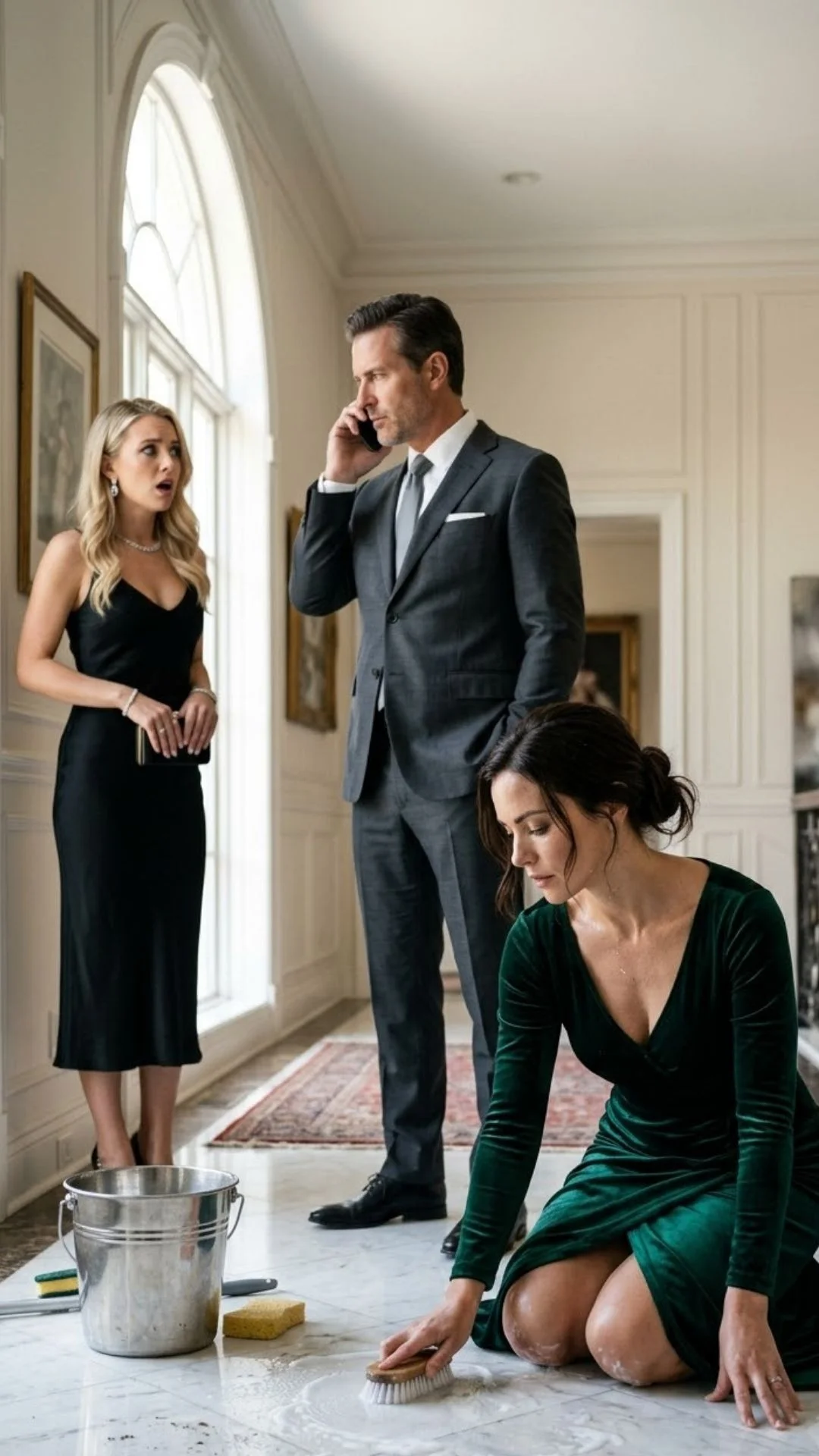
Small Town's Dark Secret: My Sister, My Husband's Mistress, and the Ledger That Brought Her Down


One year later, on the anniversary of Vivian’s arrest, I sat alone in my small, newly rented apartment in Caldwell’s Crossing. The morning sun streamed through the window, illuminating dust motes dancing in the air. The silence was different here, not the oppressive quiet of Arthur’s mansion, but a quiet that felt… empty.
After the trial, after Arthur’s plea bargain, I had made a clear break. I sold the house I shared with Arthur. It had been a complicated process, but I managed to secure a modest sum, enough to finally stand on my own two feet. He hadn’t fought it much, eager to put the scandal behind him.
My apartment was simple, furnished with pieces I’d bought myself, reflecting my own taste, not Arthur’s opulent severity. It was a liberation, a physical manifestation of my hard-won independence.
I picked up the local newspaper from my coffee table. The headline on page three caught my eye: “Finch Case One Year On: Vivian Finch Continues Prison Sentence.” Below it was an article summarizing the details of her conviction, her appeals, and her current incarceration. It mentioned Arthur’s role in her downfall, framing him, per his plea deal, as the unwitting benefactor of a manipulative sister-in-law.
But then, my gaze snagged on a paragraph, subtle, almost an aside, deep within the article. It spoke of the “Caldwell-Finch Scandal,” and then, almost casually, referenced my own “fragile mental state” during the ordeal. It mused on my “questionable past financial decisions” and hinted that I might have been “complicit in some of the initial chaos,” even though I had been the one to expose it.
My hand tightened around the paper. It wasn’t an accusation, not directly. It was an insinuation. A gentle, lingering poison, subtly reminding the town of the narrative Vivian had so carefully constructed about me. Even with Vivian in prison, even with Arthur exposed, the whispers remained. The judgment of Caldwell’s Crossing, once so suffocating, still clung to me like a persistent scent.
I looked out my window at the familiar town square. Life was going on. Children laughed as they chased pigeons. Mrs. Henderson walked her dog, her head held high. Arthur Caldwell still held immense sway, his business empire mostly intact, his social standing battered but not broken. His image, though tarnished, was already being carefully rebuilt. The powerful rarely fall completely.
My phone buzzed. It was a text message from Brenda.
_Hey, thinking of you today. Hope you’re alright._
A small, genuine smile touched my lips. Brenda. She was a constant, a rare beacon of unwavering support in this treacherous town.
I typed back, _I’m fine, Brenda. Just reading the paper._
I didn’t elaborate. She would understand. She knew the undercurrents of Caldwell’s Crossing better than anyone.
I set the newspaper down, the subtle insinuation about my mental state a dull ache in my chest. Vivian was gone. Arthur’s power had been exposed. I had found my financial independence, my own small corner of peace. But the town hadn’t forgotten, or forgiven, entirely. The judgment, the suspicion, it was always there, a shadow that never quite lifted.
I walked to my small balcony, gazing at the quaint, picturesque streets below. The air was cool and crisp. I was free. Free from Vivian’s malicious grasp, free from Arthur’s suffocating control. But true liberation, I realized, wasn’t just about escaping an abuser; it was about reclaiming your sense of self and finding resilience amidst an unyielding environment, even when the underlying systemic issues remained. Some scars heal on the surface, but the echoes of past battles can linger, reminding you that strength isn’t about victory, but about enduring the quiet everyday fight.
More Stories















+ There are no comments
Add yours