
The Prom Date Who Uncovered a Small Town's Decades-Old Secret of Forbidden Love and Manipulation



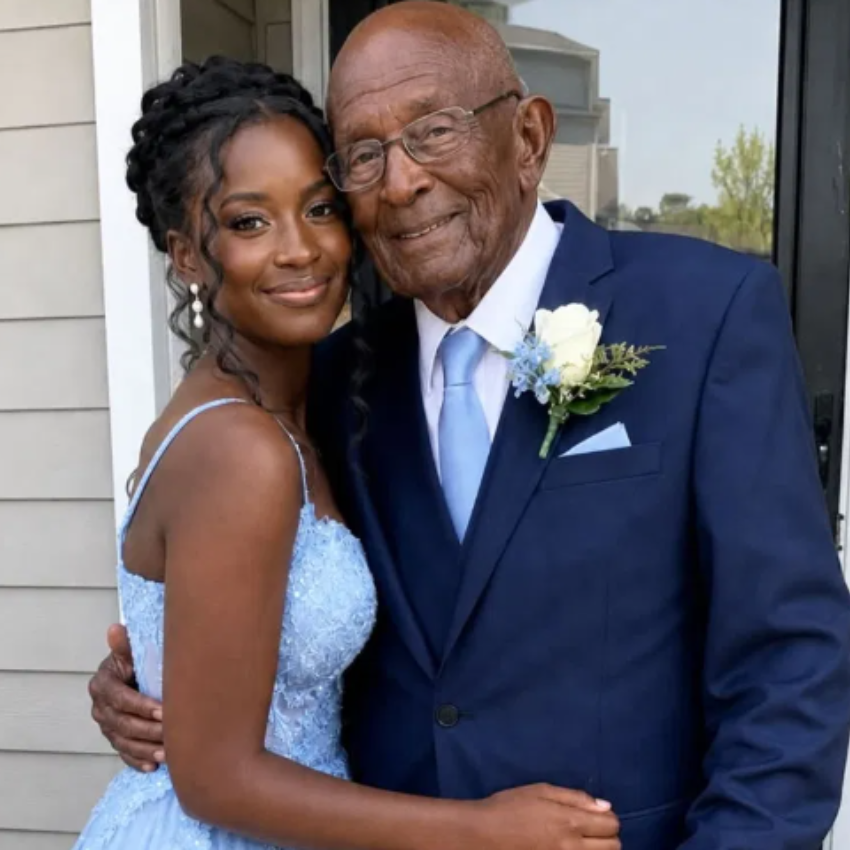
The next morning, Nia’s phone buzzed with an unfamiliar number. It was Dr. Arlo Davis. Her heart leaped. His voice, usually composed, held a hint of urgency.
“Nia, I’ve had a sleepless night,” he began, without preamble. “My conscience won’t allow me to remain silent. What you’re investigating, it resonates with something I’ve long suspected about our community’s history.”
He asked her to meet him discreetly at the small, independent coffee shop on the edge of town, away from the prying eyes of Mrs. Henderson and other community gossips. Nia agreed immediately, her anticipation bubbling over. This was it; Dr. Davis was crossing the line.
She arrived at “The Daily Grind,” a cozy spot with mismatched furniture and the aroma of roasted beans. Dr. Davis was already seated at a back table, nursing a black coffee. He looked tired, his eyes still shadowed, but there was a quiet determination in his posture.
He slid a brown envelope across the table to her. It was thin, unassuming. “These are scanned copies of a town council minute from 1948,” he explained, his voice low. “They were uncatalogued, tucked away in a mislabeled box in the archives. I’ve only just stumbled upon them myself during my own ‘side research,’ as I mentioned.”
Nia’s fingers trembled as she took the envelope. This felt like holding a piece of forbidden history, a secret document finally seeing the light of day. The personal cruelty of this situation was clear: the truth had been deliberately obscured, hidden away from the people it directly impacted.
“This is highly confidential, Nia,” he stressed, his gaze serious. “And technically, I am crossing a significant professional boundary by sharing it. But I believe the truth about certain segments of our community’s history, especially the lives of individuals like Clara Owens and Walter Dixon, is more important than protocol.”
Nia nodded, her throat tight with gratitude. “Thank you, Dr. Davis. I understand.”
“The document details a proposal for a ‘Community Moral Uplift Initiative,’ led by the Jenkins family,” he explained, leaning forward slightly. “It was ostensibly designed to promote civic virtue and family values in the post-war era.”
Nia pulled out the scanned pages, her eyes immediately drawn to the official heading: “Town Council Meeting Minutes, October 14, 1948.” The date sent a shiver down her spine; it was exactly when Clara and Walter’s relationship would have been at its peak.
She began to read, her gaze sweeping across the formal, bureaucratic language. Paragraph after paragraph described various proposals: initiatives for youth recreation, programs to support returning veterans, and committees to address public morality. All seemed perfectly innocuous.
Then, her eyes landed on a specific section, highlighted faintly by Dr. Davis with a yellow marker. It was a sub-clause under “Guidance for Community Standards for Youth and Returning Servicemen.” The language was careful, almost poetic, but the underlying intent was chilling.
It spoke of “fostering appropriate social attachments” and “steering young hearts away from unsuitable entanglements that may impede their moral and economic progress within the community.” The words were abstract, but the meaning, in the context of Clara’s letter, was stark. This was the blueprint for Mrs. Jenkins’s manipulation.
And then, she saw it. A notation, almost an aside, in a coded section about “guidance for young women of promise.” It mentioned: “Case study: C. Owens – requires delicate intervention regarding romantic prospects to ensure alignment with community welfare.”
“C. Owens.” Clara Owens.
The breath left Nia’s lungs in a sudden rush. This wasn’t a vague reference; it was Clara, by name, singled out for “delicate intervention.” The casual, almost clinical tone of the notation was a profound personal cruelty. Clara wasn’t a person with feelings; she was a “case study,” an object to be manipulated for “community welfare.”
Nia looked up at Dr. Davis, her eyes wide with shock. “This… this is Clara. By name.”
He nodded gravely. “Indeed. A deeply unsettling detail, isn’t it? It suggests a deliberate, targeted approach, cloaked in the language of civic duty. The ‘Community Moral Uplift Initiative’ was a guise for social engineering, and the Jenkins family were its architects.”
This was undeniable proof. Not only did it confirm Mrs. Jenkins’s family’s role, but it showed that their actions were part of a formalized, community-sanctioned initiative. It made Clara’s forced decision, her suffering, not just a personal tragedy but a historical injustice, documented in official town records.
“They planned this,” Nia whispered, the full weight of the revelation settling upon her. “They codified their control.”
Dr. Davis nodded again. “It appears so. This document suggests that individual relationships were actively monitored and, if deemed ‘unsuitable’ by certain influential figures, became targets for ‘guidance.’ The consequences for non-compliance, while not explicitly stated, were understood.”
He pushed his coffee cup aside. “I must warn you, Nia. This kind of information, if brought to light, could cause significant disruption. The Jenkins family remains very powerful. Mrs. Beatrice Jenkins, in particular, is fiercely protective of her family’s legacy.”
Nia held the scanned pages, her fingers tracing the words that had stolen decades of happiness from Clara and Walter. This was not just a document; it was a window into the cold, calculated cruelty that had been inflicted upon them. It was a tangible, undeniable piece of the truth, hidden away for decades, now finally unearthed.
“I understand the risks, Dr. Davis,” Nia said, her voice firm. “But this truth deserves to be heard. For Clara. For Walter. For anyone else who might have been a ‘case study.'”
He offered her a small, weary smile. “Then you know what you must do.” He rose, leaving a few dollar bills on the table. “Good luck, Nia. Be careful.” He then walked out of the coffee shop, leaving Nia with the weight of the document, the truth it contained, and the profound moral choice he had made.
Nia sat there, the pages spread before her. The coded reference to Clara, the deliberate framing of her personal life as a “case study” for “community welfare,” was a profound personal cruelty. It dehumanized her grandmother, reducing her love and her agency to a bureaucratic problem to be “intervened” upon. This document was the key. It confirmed Mrs. Jenkins’s manipulation and provided the systemic context for her actions. The next step was clear: confronting Mrs. Jenkins with the undeniable evidence.
More Stories











+ There are no comments
Add yours