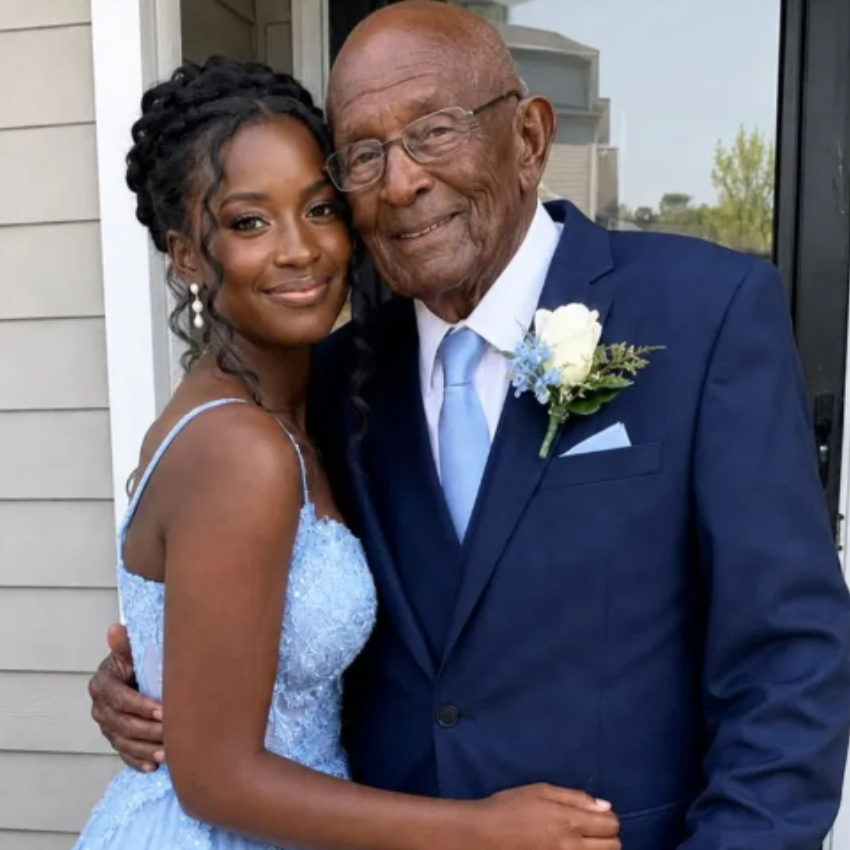
The Prom Date Who Uncovered a Small Town's Decades-Old Secret of Forbidden Love and Manipulation




The archival research room, Nia soon discovered, was not a place one simply walked into. It required a scheduled appointment, a formal request, and a clear purpose. Discouraged but not defeated, Nia managed to secure a slot for the following afternoon. She hoped a more specialized approach might yield better results than her broad search through public records.
The next day, she presented her academic ID to the librarian, Mrs. Gable, who led her to a small, secluded room. The air here was cooler, hushed, filled with the scent of aged paper and preservation chemicals. Shelves lined the walls, stacked high with meticulously labeled boxes and bound volumes.
Sitting at a large oak table, his back to her, was a man with a shock of neatly combed gray hair. He wore a tweed jacket despite the mild weather, and was carefully cataloging what appeared to be old photographs, using delicate white gloves. This was Dr. Arlo Davis, the local historian and archivist, known for his encyclopedic knowledge of the town’s past.
Mrs. Gable introduced them. “Dr. Davis, this is Nia Owens. She’s a college student researching local history.”
Dr. Davis turned, his face kind, his eyes sharp and intelligent behind wire-rimmed glasses. He offered Nia a slight, polite nod. “Pleasure to meet you, Nia. What particular aspect of our illustrious history brings you to these hallowed halls?”
Nia felt a blush creep up her neck. She couldn’t reveal the true, raw nature of her quest, not yet. “I’m… I’m trying to understand the social dynamics of the post-war era in our community,” she began, choosing her words carefully. “Specifically, how community leaders influenced personal lives, particularly for young African Americans and returning veterans.”
Dr. Davis’s eyebrows rose slightly. He paused, his gaze thoughtful. “An interesting and often overlooked area of study,” he mused. He removed his gloves, setting them aside with precision. “Many of our official records focus on economic growth and civic pride, but the personal stories, the nuances of social control, are often much harder to unearth.”
“Exactly,” Nia said, feeling a flicker of hope. “I’ve been going through old newspapers and ledgers, but I’m finding it difficult to trace specific pressures. It all seems so…benevolent on the surface.”
Dr. Davis leaned back in his chair, a knowing look in his eyes. “Ah, ‘benevolent’ social engineering. Yes, that’s a common thread in many communities of that era, ours included. Especially when influential families sought to maintain certain moral or social orders.”
He picked up a small, leather-bound notebook from his desk, flipping through its pages. “I’ve actually been doing some preliminary research myself into how some prominent families in this community, during that very period you’re studying, exerted social and even financial pressure to enforce what they considered ‘moral compliance’ on young Black individuals.”
Nia’s breath hitched. This was it. This was the thread she had been searching for. The specific, personal cruelty of this type of “moral compliance” was insidious. It wasn’t about public shaming; it was about stripping away personal autonomy, dictating who people could love, what careers they could pursue, all under the guise of “doing good” for the community.
“Particularly returning soldiers,” Dr. Davis continued, as if reading her mind. “They often came back with new ideas, new experiences, and sometimes, new relationships that didn’t always fit the community’s established expectations. And certain families, with significant influence, sometimes took it upon themselves to ‘guide’ these young people back into line.”
He didn’t mention the Jenkins family by name, but Nia felt an undeniable connection. The way he spoke, the careful choice of words like “guided” and “moral compliance,” perfectly mirrored Clara’s description of Mrs. Jenkins’s manipulations. This wasn’t a coincidence; it was fate, a thread woven into the fabric of their shared history.
“What kind of ‘guidance’?” Nia asked, trying to keep her voice steady. She didn’t want to sound too eager, too revealing.
“Oh, it varied,” Dr. Davis replied, his gaze drifting to a shelf filled with obscure documents. “Sometimes it was subtle, like denying access to resources or job opportunities. Other times, it was more direct, involving threats to reputation, or even family livelihoods. Especially if a young person’s choices were perceived to threaten the family’s standing or the community’s ‘moral fabric.'”
He paused, then added, “It was rarely documented explicitly, of course. These things were handled through social networks, veiled warnings, and quiet conversations. But the impact was very real, and often devastating.”
Nia thought of Clara’s forced lie, her decades of silent pain. This “guidance” was the personal cruelty that ripped lives apart. It wasn’t just abstract social pressure; it was direct, targeted, and designed to cause maximum personal suffering to achieve compliance.
“Are there any records of these… ‘guidance’ initiatives?” Nia ventured, hoping for a lead. “Beyond just general newspaper articles?”
Dr. Davis tapped his chin thoughtfully. “Well, that’s the tricky part. As I said, they were rarely explicit. But sometimes, if you know where to look, you can find subtle hints. Obscure town council meeting minutes, for instance. Or church committee notes from that era.”
He looked at Nia, a spark of understanding passing between them. “They might not directly state ‘we forced young Clara Owens to break off her engagement,’ but they might discuss ‘community moral uplift initiatives’ or ‘guidance for young women entering relationships,’ with very specific, though coded, intent.”
The idea of “coded intent” sent a shiver down Nia’s spine. It was a language designed to hide the truth in plain sight. This was exactly what Mrs. Jenkins had done to Clara.
“Thank you, Dr. Davis,” Nia said, a genuine warmth in her voice. “That’s… incredibly helpful.”
“Just following the threads of history, Nia,” he replied, giving her a small, encouraging smile. “Sometimes, the most important stories are the ones that have been deliberately buried.” He then turned back to his photographs, but Nia knew his words held a deeper significance than a simple academic discussion.
She left the archival room feeling a surge of renewed hope. The coincidental encounter with Dr. Davis, his unexpected insight, felt like a divine push, a fated convergence. She had found someone who understood the subtle, insidious nature of the power Mrs. Jenkins had wielded, and he had given her a roadmap to uncover the hidden truth. The puzzle wasn’t missing pieces; they were just coded.
More Stories





+ There are no comments
Add yours