
My Family Celebrated My Sister's Birthday While I Buried My Husband and Children — Then My Late Husband's Secret Fortune Revealed a Sinister Truth

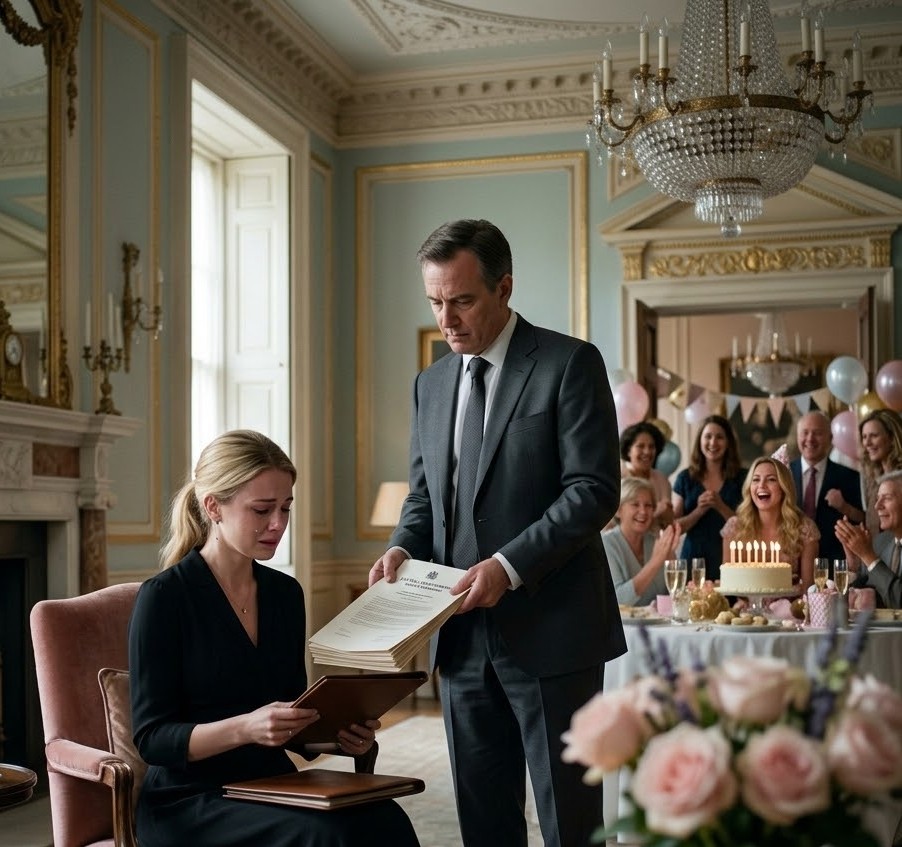


The “intervention” was a stark reminder of their relentless determination. Two days later, a thick packet arrived from Pembroke & Associates. This time, it wasn’t just a letter. It was a formal legal document: a Petition for Conservatorship.
My hands trembled as I read the first few lines. It sought to declare me legally incompetent to manage my own affairs, specifically Daniel’s estate. The justification was a chilling mix of fabricated evidence and twisted truths.
“They’re alleging ‘severe mental distress and delusional behavior’,” Ms. Davies explained over the phone, her voice tight with professional indignation. “They claim your grief has led to a complete break with reality.”
The petition cited “multiple instances of erratic behavior.” It referenced my supposed “disturbing obsession with ancient artifacts,” a direct jab at the obsidian shard and Daniel’s research.
It even quoted excerpts from my own journal, the one I had started to keep after Daniel’s death, detailing my experiences with the whispers and visions. They had somehow obtained copies, twisting my raw, confused entries into proof of my instability.
“They must have found a way to access your files,” Ms. Davies speculated grimly. “Or someone close to you shared information. Possibly during their ‘intervention’.”
The betrayal stung. Had Bethany or Carol rifled through my private things while I was distracted, while I was ordering them out of my house? It was precisely their kind of underhanded malice.
The petition also cited “Marcus Reed’s expressed concerns regarding Evelyn’s withdrawal and erratic behavior,” taking Marcus’s genuine, generalized worries completely out of context.
“Marcus just told them I was grieving and isolating myself,” I protested, my voice choked with disbelief. “He was worried about my mental state, yes, but not that I was delusional!”
“They’ve twisted his words to fit their narrative,” Ms. Davies confirmed. “It’s a common tactic. They’ve spun a picture of a grieving widow descending into madness, unfit to manage a large fortune.”
The sheer audacity was breathtaking. They were weaponizing my grief, my private struggles, against me. Their callousness knew no bounds.
I imagined Carol, her cold, precise voice dictating specific phrases to Pembroke. Bethany, her eyes glittering with malicious glee, offering suggestions, fabricating details. Robert, passively standing by, allowing it all to happen.
The petition even included “psychiatric evaluations” from doctors I had never seen, commissioned by the Reed family, all concluding that I was unstable.
“These are clearly biased, and likely based on hearsay from your family,” Ms. Davies said, her voice firm. “But they are still official-looking documents that will carry weight in court.”
It was a masterclass in psychological warfare. They weren’t just after the money. They were trying to erase my identity, to strip me of my agency, to silence me by declaring me insane.
I thought back to Daniel’s journals, to his account of the Threshold’s insidious influence, the gradual drain. They were trying to achieve, through legal means, what the artifact threatened to do more subtly. To isolate me, to control me, to diminish me.
My focus shifted from panic to a simmering resolve. I would not let them win. I would not allow them to define my reality.
Ms. Davies assured me we would fight it. We would get my own, independent psychiatric evaluations. We would present evidence of Daniel’s true nature, his academic pursuits, his unconventional interests.
But the fight would be public. Humiliating. Every aspect of my grief, my solitude, my strange discoveries, would be dissected in a courtroom.
I felt a profound sense of isolation. Even Marcus, with his genuine concern, had unknowingly contributed to their dossier. The family had perfected the art of turning even legitimate worry into a weapon.
I remembered a small porcelain doll, a treasured childhood keepsake, that my mother had casually given to Bethany when I was away at college, saying, “Evelyn doesn’t want it anymore; she’s too old.” It was a pattern of subtle erasure, of dismissing my possessions, my feelings, my very existence. This conservatorship petition was the ultimate expression of that pattern.
The weight of the legal papers in my hands felt suffocating. They represented everything I was fighting against: their greed, their control, their relentless denial of my humanity.
But as I looked at the dark, polished surface of the obsidian shard, which I had placed on my desk after the latest “intervention,” a strange sense of calm settled over me. It pulsed faintly, a silent companion in my terrifying new reality.
They called me delusional. But the shard, the whispers, the chilling journals – they told a different story. A story of a truth far stranger and more profound than my family could ever comprehend. A truth I was now bound to protect, at all costs.
More Stories



+ There are no comments
Add yours