On the last night of 1972, millions of people were preparing to celebrate the arrival of a new year.
Families gathered for dinner.
Fireworks were being prepared.
Cities across the world were counting down the final hours of December 31.
But in Puerto Rico, one of the greatest athletes in baseball history was preparing for a very different journey.
Roberto Clemente was not heading to a celebration.
He was not traveling for a baseball game.
He was not chasing another record or another championship.
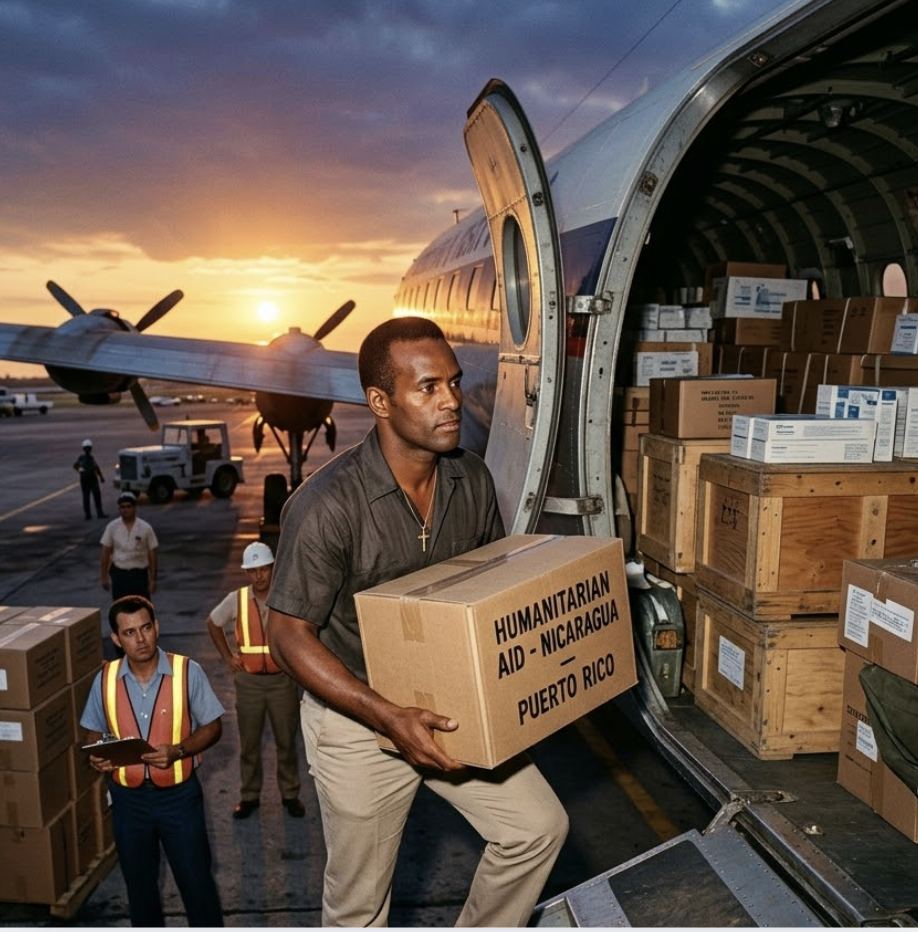
Instead, he was preparing to accompany a shipment of humanitarian aid to victims of a devastating disaster.
Within hours, he would be gone.
More than fifty years later, his final flight remains one of the most heartbreaking stories in sports history—not because of how it ended, but because of why he chose to take it.
A Baseball Legend Beyond The Game
Long before his final journey, Roberto Clemente had already become one of the most respected figures in Major League Baseball.
Born in Puerto Rico in 1934, Clemente grew up in a modest family and developed an extraordinary talent for baseball at a young age.
His athletic ability quickly attracted attention, eventually leading him to the United States and the Major Leagues.
In 1955, he joined the Pittsburgh Pirates.
Over the next eighteen seasons, Clemente established himself as one of the greatest players the sport had ever seen.
His achievements were remarkable.
He won multiple batting titles.
Collected exactly 3,000 career hits.
Captured numerous Gold Glove Awards for defensive excellence.
Helped lead the Pirates to World Series championships.
And earned a reputation as one of the most complete players in baseball history.
Yet statistics alone do not explain why people admired him.
Clemente was known for something far larger than baseball.
He cared deeply about people.
Throughout his career, he frequently used his fame to support charitable causes and help disadvantaged communities, especially throughout Latin America and the Caribbean.
For many Puerto Ricans, he was not simply an athlete.
He was a symbol of pride.
A representative of their culture on one of the biggest stages in the world.
And he never forgot where he came from.
The Earthquake That Changed Everything
On December 23, 1972, a powerful earthquake struck Nicaragua.
The disaster devastated large portions of the capital city, Managua.
Thousands of people were killed.
Many more were injured.
Entire neighborhoods were destroyed.
Hospitals struggled to cope with the overwhelming number of victims.
Food, medicine, clothing, and shelter became desperately needed.
As images of the destruction spread across television screens and newspapers, relief efforts quickly began throughout the Americas.
Governments, charities, churches, and private citizens organized donations.
Puerto Rico was among the places that responded.
Roberto Clemente immediately became involved.
Like many others, he wanted to help.
But as aid shipments began moving toward Nicaragua, troubling reports started to emerge.
There were growing concerns that some relief supplies were not reaching the people who needed them most.
Stories circulated that shipments were being diverted, mishandled, or intercepted before reaching disaster victims.
Whether every report was accurate or not, the rumors deeply disturbed Clemente.
He believed aid should reach those suffering.
Not disappear somewhere along the way.
As the days passed, his frustration grew.
Donating supplies was no longer enough.
He wanted to ensure the shipment actually arrived.
That decision would ultimately cost him his life.
A Personal Mission
Most famous athletes would have sent money.
Many would have appeared at fundraising events.
Some might have issued public statements encouraging donations.
Roberto Clemente chose something different.
He decided to personally accompany a cargo flight carrying relief supplies to Nicaragua.
Friends and colleagues reportedly questioned the decision.
The mission carried risks.
The aircraft was not a luxury passenger plane.
The trip would take place on New Year’s Eve.
Yet Clemente remained determined.
For him, the issue was simple.
If people were suffering, and he had the ability to help, then he felt obligated to do so.
That sense of responsibility defined much of his life.
By late December, arrangements had been made.
The aircraft would transport aid supplies from Puerto Rico to Nicaragua.
Clemente would travel with the shipment.
His presence, he hoped, would help guarantee that the cargo reached its intended destination.
He was not thinking about legacy.
He was thinking about people who needed help.
The Final Takeoff
As evening arrived on December 31, 1972, preparations were completed.
The aircraft was loaded with humanitarian supplies.
Crew members prepared for departure.
Roberto Clemente boarded the plane.
Few people could have imagined it would be the final hours of his life.
Shortly after takeoff from Puerto Rico, disaster struck.
The aircraft encountered serious difficulties.
Not long after becoming airborne, it crashed into the Atlantic Ocean off the northern coast of Puerto Rico.
The accident happened quickly.
There was little opportunity for recovery.
Witnesses reported seeing signs of trouble before the aircraft disappeared into the darkness.
Within a short time, authorities realized a major tragedy had occurred.
Search operations began immediately.
Rescue teams rushed to locate survivors.
The ocean was searched extensively.
Aircraft and boats combed the area.
Family members waited desperately for news.
But no survivors were found.
Roberto Clemente and the others aboard the aircraft were lost.
He was only thirty-eight years old.
Shock Across Puerto Rico And America
The news spread rapidly.
For Puerto Rico, the loss felt personal.
Clemente was more than a baseball star.
He was one of the island’s most beloved public figures.
Many people struggled to comprehend what had happened.
Only days earlier he had been celebrated as a champion athlete.
Now he was gone.
In Pittsburgh, where Clemente had spent his entire Major League career, fans gathered to mourn.
Newspapers across the country featured his photograph on their front pages.
Television networks interrupted holiday coverage to report the tragedy.
The baseball community reacted with profound sadness.
Players, coaches, executives, and fans paid tribute.
Many spoke not only about his accomplishments on the field but about his character away from it.
Again and again, people returned to the same point.
He had died trying to help others.
That fact made the tragedy even more painful.
The Investigation
Investigators examined the circumstances surrounding the crash.
The aircraft’s condition became a major focus.
Questions emerged regarding maintenance, loading, and operational issues.
Over time, investigators identified concerns involving the aircraft and factors that may have contributed to the accident.
The technical details were important.
They helped explain how the tragedy occurred.
But for many people, those findings never became the central story.
Instead, what endured was the image of Roberto Clemente choosing to board the flight.
He did not have to go.
Nobody forced him.
Nobody expected him to accompany the shipment personally.
Yet he believed it was the right thing to do.
That choice transformed the accident into something larger than a transportation disaster.
It became a story about responsibility, compassion, and sacrifice.
A Legacy That Never Disappeared
In the years following his death, Roberto Clemente’s legacy continued to grow.
Major League Baseball honored him in numerous ways.
The Roberto Clemente Award became one of the most prestigious recognitions in the sport.
Unlike awards focused purely on athletic performance, this honor celebrates players who demonstrate exceptional character, community involvement, and humanitarian efforts.
The award reflects the values Clemente represented throughout his life.
Schools, parks, and community organizations were named in his memory.
Books were written about him.
Documentaries examined his life and career.
New generations discovered his story.
For many young athletes, Clemente became an example of what it means to use success for the benefit of others.
His influence extended far beyond baseball.
He became a symbol of service.
A reminder that greatness is measured not only by achievements but by actions.
The Most Heartbreaking Part Of The Story
The saddest aspect of Roberto Clemente’s death is not simply that he died young.
Many great athletes have seen their lives cut short.
What makes this story different is the reason he was on that plane.
He was not chasing money.
He was not seeking publicity.
He was not pursuing personal glory.
He was trying to make sure food, medicine, and supplies reached people who desperately needed them.
He believed his presence could make a difference.
And that belief led him onto the aircraft.
In many ways, the final chapter of Roberto Clemente’s life perfectly reflected the values he carried throughout it.
He saw suffering.
He refused to ignore it.
And he acted.
Even when it required personal sacrifice.
Conclusion
Roberto Clemente’s story is often remembered through baseball statistics and championship highlights.
Those accomplishments were extraordinary.
But his final flight revealed something even more important.
It revealed the kind of person he was.
On December 31, 1972, he boarded a plane carrying hope to earthquake victims in Nicaragua.
The mission ended in tragedy.
Yet the reason he took that journey continues to inspire millions of people decades later.
His final act was not a swing of a bat.
It was an act of compassion.
And that may be why Roberto Clemente remains one of the most admired figures in sports history.


