
I stepped off the bus in West Philadelphia holding my four-year-old son’s hand, ready to surprise my parents with my culinary school diploma.




Part 1
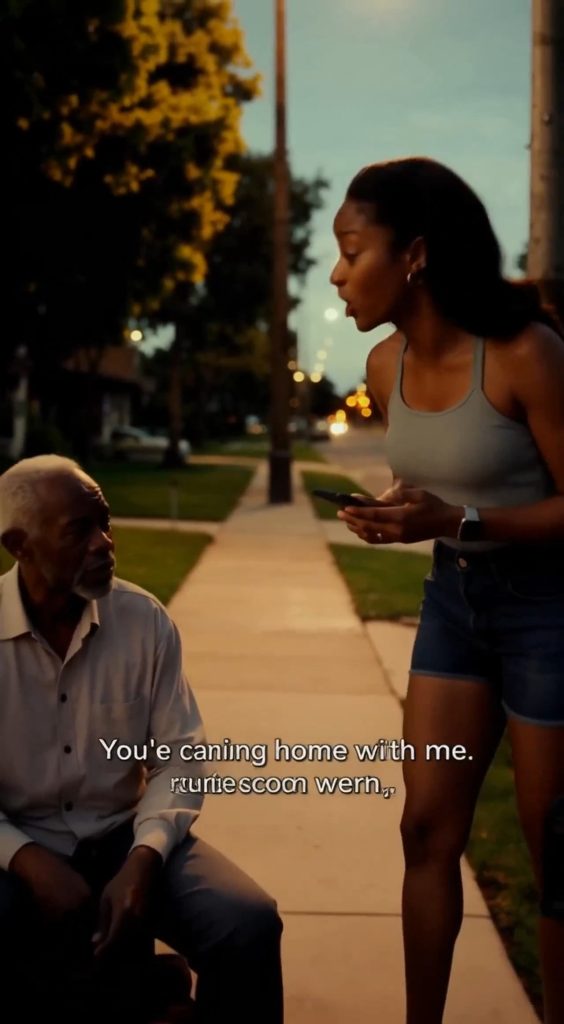
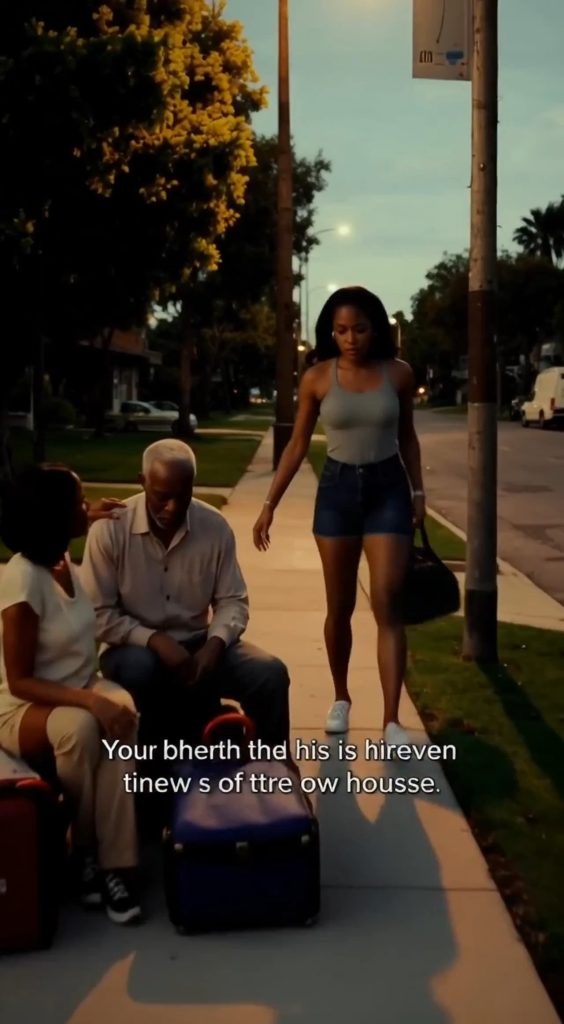
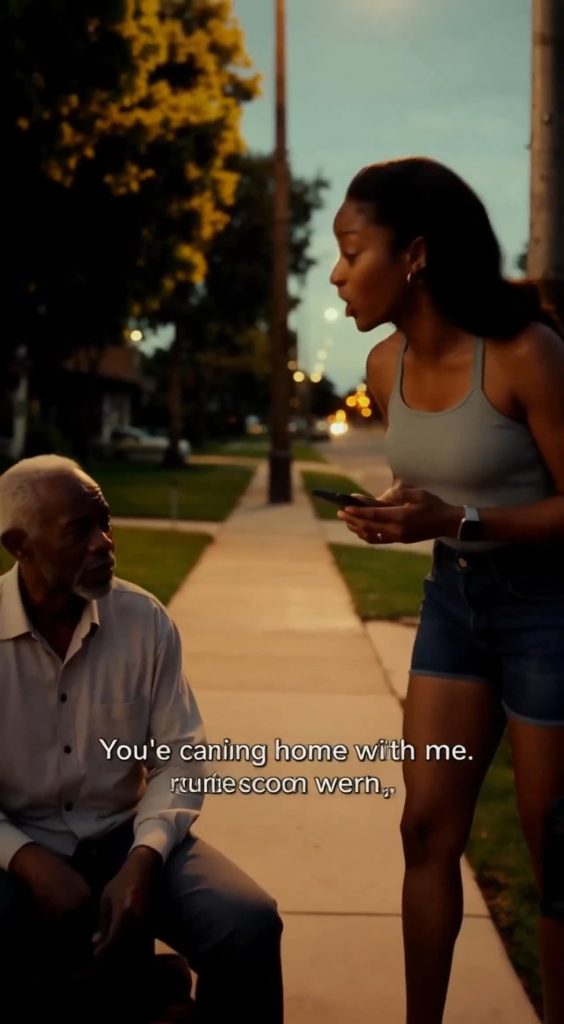
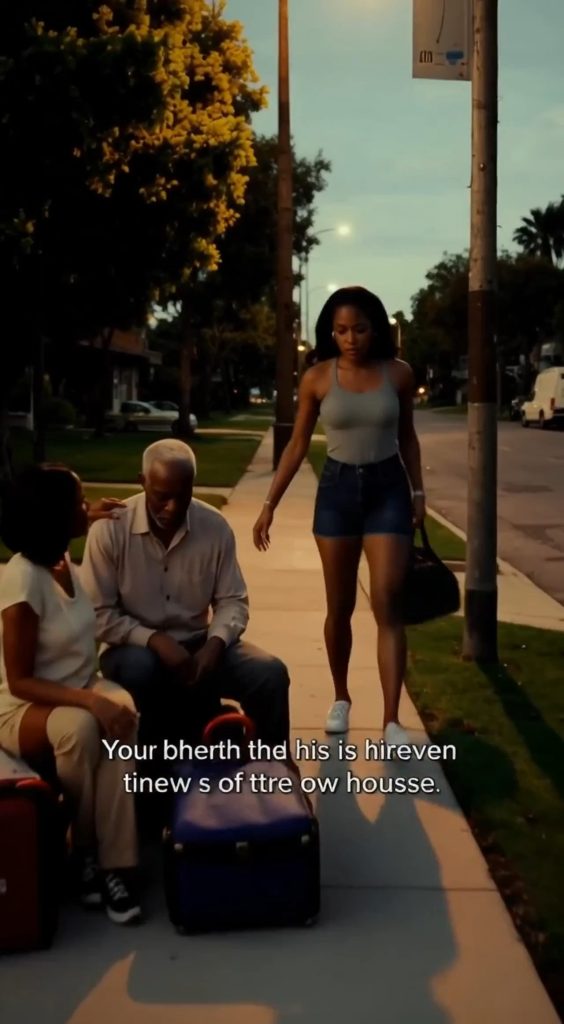
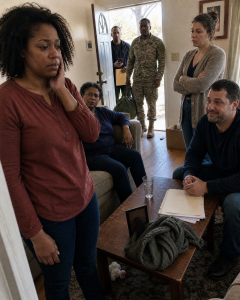
Instead, I found my father Arthur and my mother Evelyn sitting on the cold concrete curb outside our rowhouse, surrounded by four taped cardboard boxes.
Our next-door neighbor Marcus, a man my father had called a brother for thirty years, stood on the porch with a fresh set of padlock keys.
He had exploited my father’s trust, forged a debt assignment form, and locked them out of both their home and their neighborhood bakery while I was away at school.
My father sat weeping quietly on the street, refusing to involve the authorities because of their shared history.
I put down my bags, looked at my son, and realized I had to grow up fast to save my family.
The hum of the regional bus faded as it pulled away from the curb, leaving behind the familiar scents of West Philadelphia: exhaust fumes, blooming jasmine from Mrs. Rodriguez’s porch, and the faint, sweet smell of yeast from my father’s bakery down the block. I adjusted the strap of my oversized canvas bag on my shoulder. Leo, my four-year-old son, gripped my hand tightly, his eyes wide with the excitement of arriving somewhere new.
“Grandma and Grandpa’s house, Mama?” he chirped, his voice cutting through the urban symphony.
“That’s right, baby,” I said, a smile blooming on my face. “And wait till you see the surprise I have for them!”
My culinary school diploma was tucked safely in a reinforced tube inside my bag, a tangible testament to eight months of grueling work in Pittsburgh. I had imagined this moment a hundred times: my parents’ beaming faces, my mother’s proud tears, my father’s booming laughter. We would celebrate with a feast, and I would finally show them what their sacrifices had bought me.
But the scene before us stole the air from my lungs.
Our bright red brick rowhouse, the home I’d known my entire life on 52nd Street, stood silent and desolate. My father, Arthur Jenkins, a man whose shoulders had always seemed broad enough to carry the world, was hunched on the cold concrete curb. His usually immaculate blue mechanic’s coveralls were rumpled, and his head was bowed, his silver hair catching the dull afternoon light.
Beside him, my mother, Evelyn Jenkins, sat ramrod straight, her arms crossed, but her gaze was fixed on nothing, hollow and distant. Around them, neatly stacked, were four taped-up cardboard boxes, their contents clearly visible: a framed photo of me as a child, a worn Bible, a porcelain figurine. They looked like refugees in their own neighborhood.
A wave of nausea washed over me. This wasn’t right. This wasn’t the homecoming I’d envisioned. Leo, sensing my sudden tension, tugged on my hand again, his small brow furrowed in concern.
Then I saw him. Marcus Washington. Our next-door neighbor, a man my father had mentored since he was a teenager. Marcus stood casually on our front porch, his silhouette framed by the familiar white storm door. In one hand, he dangled a glinting set of brand-new brass padlocks. In the other, he held a piece of paper, folded neatly, a stark white rectangle against his dark skin.
My legs moved on their own, carrying me forward, Leo stumbling to keep up.
“Mama?” Leo asked, his voice barely a whisper.
I didn’t answer. My eyes were locked on my parents.
“Mama! Papa!” I called out, my voice cracking.
My mother’s head snapped up first, her eyes widening in disbelief, then flooding with something I couldn’t quite decipher—a mix of relief and profound anguish. My father slowly lifted his head, his face a roadmap of despair, tears streaking his cheeks. He looked utterly broken.
“Maya?” my mother gasped, pushing herself up with a visible effort. “What are you doing here, honey?”
“I came home,” I said, dropping my heavy bag with a thud. My diploma tube rolled out slightly, unnoticed. “What’s going on? Why are you sitting out here?”
My father just shook his head, unable to speak, his gaze darting from me to Marcus, then back to the scuffed concrete.
Marcus Washington descended the three steps from the porch, his face devoid of emotion. He was dressed in a crisp polo shirt, looking like he was about to attend a church service, not evict his lifelong neighbors.
“Arthur, Evelyn,” Marcus said, his voice flat, his eyes carefully avoiding my father’s. “I’m sorry it had to come to this.”
My mother stepped forward, her usual composure fractured. “Marcus, how could you? After everything? What is this?” She gestured wildly at the boxes, at the padlocks in his hand.
Marcus held up the paper in his hand. It was a formal-looking document, with official seals. “The house deed, Evelyn. It’s legally mine now.”
He paused, letting the words hang in the air, heavy and suffocating.
“Arthur signed it over as settlement for the private loan from a few years back,” Marcus continued, his voice still unnervingly calm. “Fifteen thousand dollars. It was all legal.”
My father let out a choked sob. He reached a trembling hand toward his face, wiping away the tears, but more followed. He still couldn’t look at Marcus. Or me.
“A loan?” I managed, my voice raspy. “What loan? Papa, what is he talking about?”
Arthur just slumped further onto the curb, his shoulders shaking. My mother placed a comforting hand on his back, but her own eyes were filled with fury as she glared at Marcus.
Marcus shifted his weight, his gaze finally meeting mine, but there was no warmth, no regret, only a chilling resolve. “Arthur and I had a private agreement. He defaulted. Now the house is mine. I have the new deed transfer notice right here.” He held it up slightly higher, showing the bold black lettering at the top. “And I have the new locks.”
He jingled the brass padlocks, the sound sharp and final in the quiet street.
My father, Arthur, remained on the curb, completely stunned, the weight of Marcus’s words crushing him, rendering him utterly speechless and homeless.
Part 2
I pulled my father up from the curb, his hand limp in mine. My mother, Evelyn, grabbed what she could of the boxes. Leo, confused and quiet, clutched my leg.
We couldn’t stay there. Not with Marcus watching from his porch, still jingling those keys.
My remaining student stipend from culinary school was supposed to cover my first month’s rent. Now, it had to cover a motel.
We found a cramped room on Market Street, two double beds, worn carpet, and the faint smell of cleaning solution. I laid Leo down on one bed, giving him his favorite toy truck. My parents sat on the edge of the other, silent.
I unfolded the deed transfer notice Marcus had posted on the door. The paper was crisp, official-looking, with a notary stamp.
My eyes scanned the fine print, searching for the date of the supposed loan, Arthur’s signature.
And there it was. Not a new signature, not on a loan document.
The signature page, attached separately, was dated August 12, 2019. It wasn’t a loan agreement. It was a mutual garage-sharing authorization.
“Papa, what is this?” I held the paper up. “This isn’t a loan. This is from when Marcus asked to store his tools in your garage so he could work on his side projects.”
My father finally looked at the paper, his eyes clearing slightly through his tears. “He said he needed my signature for insurance reasons. Said it was standard for a partnership agreement, in case he accidentally scratched my car or something.”
My blood ran cold. He had trusted Marcus completely.
Marcus hadn’t just claimed a debt; he had taken an old, innocuous signature and attached it to a fraudulent deed transfer. He had stolen our home.
“This is fraud,” I said, my voice rising. “We can call the police. They’ll see this isn’t right.”
My father shook his head, a fresh wave of despair washing over him. “No, Maya. No police.”
“But why?” I demanded. “He just took everything from us!”
“Marcus’s mother, Beatrice… she was a good woman,” he murmured, his gaze distant. “She did a lot for this block. I can’t bring the police to her son’s door.”
My mother put a hand on his arm, her expression grim. “He’s right, Maya. It would cause too much trouble. Too much shame.”
My stomach churned. My father, always so honorable, was paralyzed by misplaced loyalty.
We had no home, no bakery, and my father wouldn’t fight back through the proper channels.
I looked at my sleeping son, then at my broken parents. This was on me now.
More Stories




+ There are no comments
Add yours