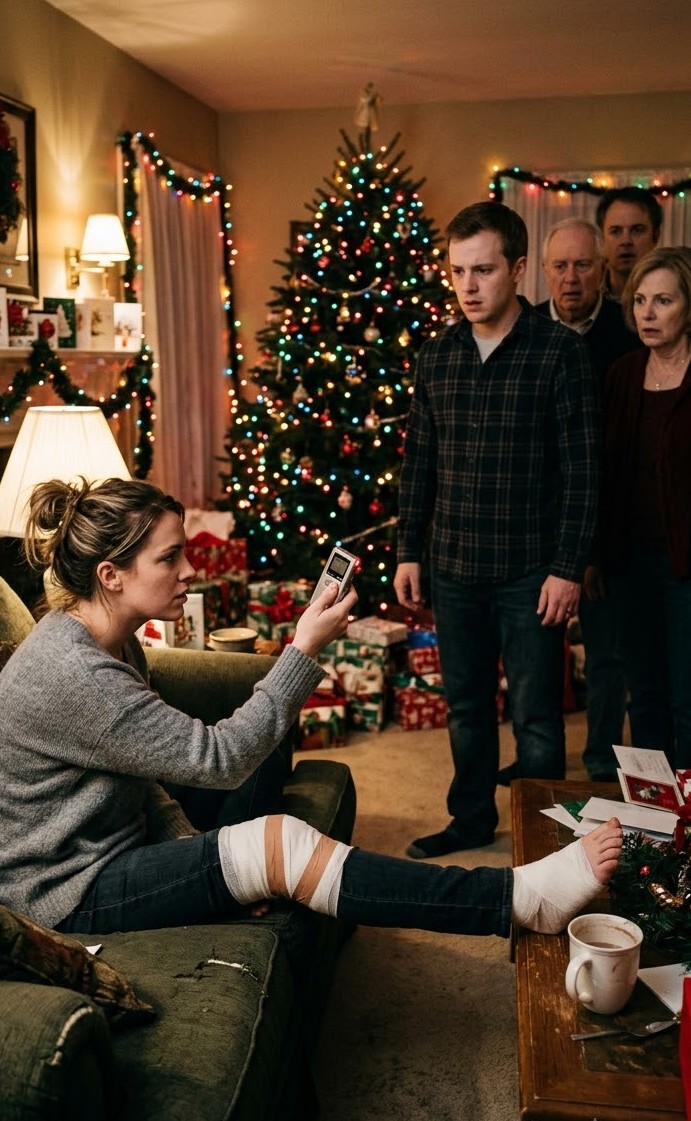
Celebrity Husband Mocked My Injured Stepdaughter, Then Used His Public Image To Isolate Me When I Tried To Expose His Abuse


I opened the newest navy blue notebook, the pages stiff and cool beneath my fingertips. Julian’s elegant, looping script filled the first page, and I leaned in, my breath catching in my throat.
The early entries were seemingly mundane, detailing his professional frustrations, his endless pursuit of new projects, his irritation with industry rivals. But beneath the surface, a chilling undercurrent began to emerge.
He wrote extensively about his “brand,” the meticulously cultivated image of the devoted family man, the charismatic star. He viewed our family not as a living, breathing unit, but as an extension of his public persona, a vital component of his carefully constructed narrative.
“Maya’s recent… assertiveness,” one entry read, dated several months before her injury, “is becoming a liability to the family dynamic. Her independent streak could be perceived as disloyalty to the ‘Astor unit’.”
My stomach clenched. He wasn’t seeing Maya as a developing young woman; he saw her as a component, a part that was malfunctioning. The petty cruelty here was Julian’s cold, detached way of viewing his own daughter as a mere “liability” to his public image, reducing her individuality to a brand problem.
His frustration escalated with each passing page. He detailed Maya’s growing independence in her acrobatic training, her desire to choreograph her own routines, to experiment with new, challenging moves. He saw it not as artistic growth, but as “rebellion.”
“Her insistence on her own vision is a direct challenge to my authority,” another entry stated, his words growing sharper. “It undermines the patriarchal structure essential for a harmonious public image.”
He was obsessed with control, with maintaining his authority not just in his career, but within his own family. Any deviation from his carefully planned narrative was met with a simmering, vengeful anger.
He detailed his growing anger at any perceived challenge to his authority, describing Maya’s independent choices as “ingratitude” and “disrespect.” He wrote about how he couldn’t allow such “insubordination” to continue, especially in the public eye.
“A subtle course correction is required,” he mused in one entry, his tone chillingly detached. “Something that reminds her of the consequences of straying too far from the path I have laid.”
I flipped through the pages, a growing sense of dread building within me. He wasn’t just expressing frustration; he was plotting. The words painted a terrifying picture of a man spiraling into vengeful control, a narcissist whose ego was so fragile that he viewed his own daughter’s autonomy as an existential threat.
He wrote about conversations he had with Maya, twisting her genuine desire for artistic expression into veiled acts of defiance. He recalled specific arguments, always framing himself as the patient, understanding father, and Maya as the stubborn, rebellious child. It was a complete inversion of reality.
The entries became increasingly unsettling, detailing his imagined scenarios for bringing Maya back into line. He mused about “softening her resolve,” “re-establishing clear boundaries.” These benign-sounding phrases masked a sinister intent.
He expressed his contempt for anything that wasn’t perfectly aligned with his image, anything that threatened his absolute power. Maya’s burgeoning independence was not a phase; it was an obstacle to be removed.
I could feel the fear building, a cold knot in my stomach. The notebooks were not just a record of his thoughts; they were a roadmap of his abuse, meticulously laid out, step by horrifying step. He was a monster, not of impulse, but of chilling calculation.
I closed the notebook for a moment, pressing my hand against my forehead. The sheer audacity of his evil, the way he calmly documented his plans to harm his own child, was almost incomprehensible. This was beyond callousness; it was pure, unadulterated psychopathy.
My initial assumption that Julian’s dismissiveness was merely callous now felt utterly naive. He had planned this. He had orchestrated Maya’s injury, not out of a sudden fit of rage, but out of a cold, rational decision to exert control.
The reality of his premeditation was a crushing blow. It cemented the truth I had suspected all along. He was a danger to Maya, and to anyone who stood in his way. I had to expose him, not just for justice, but for their very safety.
I reopened the notebook, knowing that the worst was yet to come. The build-up of fear, the chilling portrait of his spiraling control, was just the prelude. The confession itself, the explicit details of Maya’s “accident,” would be next.
More Stories





+ There are no comments
Add yours