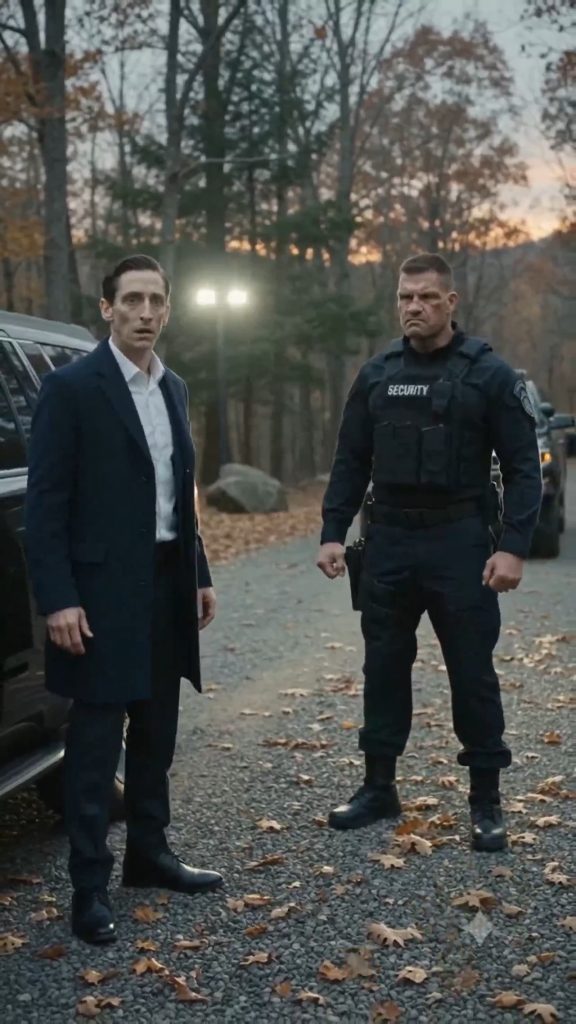
While I was at the Capitol finalizing my congressional committee report, my son-in-law Julian moved his entire staff, my daughter, and my grandchildren toward my mountain retreat in the Blue Ridge...







Part 1
He posted a livestream video announcing: “Our family is establishing the Kincaid Estate as the official headquarters for our new political action committee—family assets belong to the movement.”
He didn’t know I had spent twenty years as an NSA signal intelligence engineer before running for office.
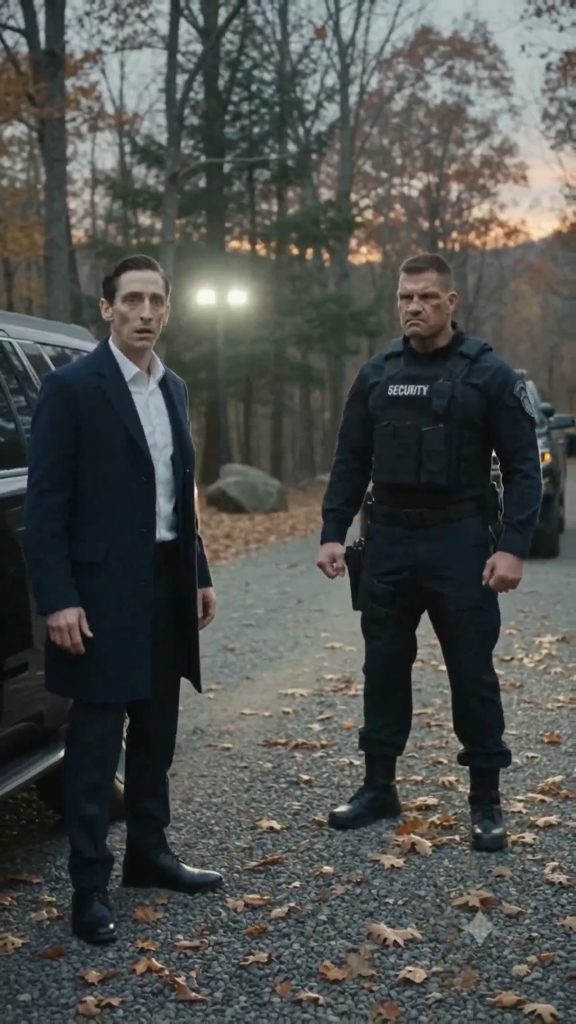
When Julian’s three-vehicle convoy pulled up to the mountain access road, they were met by four marked security units from a private tactical firm and a reinforced iron gate locked with biometric frequencies he couldn’t breach.
What he hasn’t realized yet is that the secret buried inside that lodge is about to turn his legal takeover into a federal crisis.
The fluorescent lights of my Capitol Hill office hummed, a stark contrast to the quiet calm I usually found among the Blue Ridge peaks. My legislative assistant, a young woman named Sarah, handed me a freshly printed draft of the committee report.
“Congressman,” she began, “the final amendments are in. We’re ready for your signature.”
I nodded, my gaze fixed not on the document, but on the small, custom-built console tucked discreetly beneath my desk. It was an antique-looking piece of equipment, but its internal components were anything but.
Two days ago, the console had chirped softly, registering an unusual spike in unauthorized radio frequency pings emanating from a known logistics contractor in Arlington, Virginia. Julian’s usual team.
The pings were faint, fragmented bursts of data, but distinct enough for me to reconstruct their general intent. Cargo manifests. Vehicle routing. An urgent, non-standard delivery schedule.
He hadn’t even tried to be subtle. My former NSA training kicked in automatically. It was a digital breadcrumb trail leading directly to my mountain home.
Now, as Sarah prattled on about legislative footnotes, I saw a new alert flash on the console. A real-time data stream, patched through an encrypted satellite link from a hidden camera on my mountain road.
Julian Albright, my son-in-law, stood triumphantly in front of his lead SUV, a sleek black Mercedes G-Wagen. The late afternoon sun glinted off the polished chrome, and behind him, a small entourage, including my daughter Clara and my two grandchildren, milled around, looking slightly bewildered.
He held a phone aloft, its screen glowing with the tell-tale green light of a live social media broadcast. His voice, amplified by the camera’s microphone, carried a distinct note of self-importance.
“Citizens,” he declared, his smile wide and practiced for the camera, “today marks a new chapter for the American patriot movement!”
Clara, dressed in a tasteful but somewhat rumpled linen dress, forced a tight smile. She held our granddaughter, Lily, by the hand. Lily, all of six years old, fidgeted, clearly more interested in the fallen leaves than her father’s grand pronouncements. My grandson, Michael, ten, stood a little further back, clutching a comic book.
Julian pivoted slightly, gesturing grandly toward the tree-lined access road behind him, though the house itself was still out of sight, nestled deep within the woods.
“The Kincaid Estate,” he announced, his voice booming with forced gravitas, “will now serve as the official headquarters for our newly established political action committee! This is where we will strategize. This is where we will mobilize. This is where we will win!”
He paused for dramatic effect, letting the silence hang, then added, “Because true family assets belong to the movement, not to an individual.”
My jaw tightened, not from surprise—I’d anticipated this for days—but from the sheer arrogance of it all. To use my own grandchildren as props for this charade.
He had no idea.
The camera view shifted, showing the three-vehicle convoy begin to move slowly up the gravel track, churning up dust that shimmered gold in the afternoon light. The lead SUV, Julian’s, was followed by a large cargo van, packed presumably with his staff and equipment, and then a more modest family sedan carrying Clara and the children.
The convoy snaked along the winding mountain road, climbing steadily. The sound of their engines was faint on the remote feed, overridden by the gentle whir of my office air conditioning. I watched them pass familiar landmarks: the old oak, the moss-covered stone wall, the bend in the road where the cell service usually dropped out.
Then, the final turn.
The G-Wagen rounded the corner, and Julian’s triumphant expression, still visible on his live feed, instantly dissolved into a mask of disbelief.
Ahead of them, where the Kincaid Estate’s access road met the main property, stood not the familiar, rustic wooden gate I’d inherited, but a formidable barrier of reinforced, dark-grey iron. It was solid, imposing, and clearly brand-new.
Flanking the gate were four identically marked black SUVs, large and tactical, their engines idling softly. Each vehicle bore the distinctive logo of “Blackwatch Tactical Solutions”—a private security firm I had commissioned weeks ago, not days, specifically for this purpose.
Two uniformed security personnel, their stances alert and professional, stood by the gate. They wore dark fatigues, tactical vests, and carried visible sidearms, their expressions unreadable behind dark sunglasses. Two more were visible near their vehicles.
Julian’s driver instinctively slowed the G-Wagen to a halt, raising a cloud of dust that momentarily obscured the scene. Clara’s sedan, bringing up the rear, pulled up behind the cargo van.
The iron gate itself was a masterpiece of modern security, taller and thicker than any ordinary barrier. Integrated into its heavy frame, just above a clearly visible “No Trespassing” sign, was a small, polished chrome panel with a blinking blue light. A biometric frequency scanner.
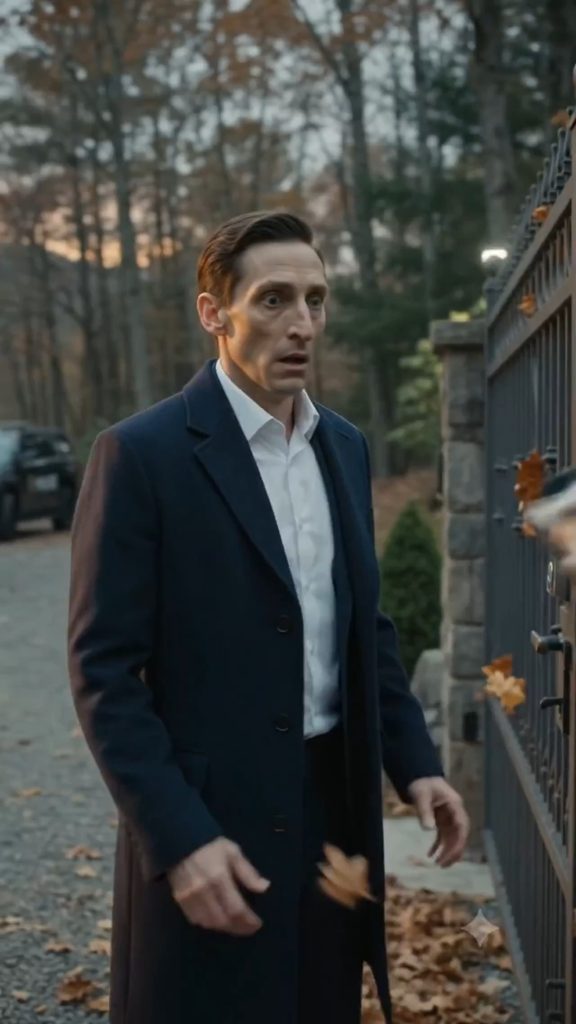
Julian, still clutching his phone, stumbled out of the G-Wagen. His livestream, I noted with grim satisfaction, was still running, capturing his very public humiliation in real time.
He stared at the imposing setup, his eyes wide, then turned to his driver, muttering something I couldn’t quite discern on the distant audio feed.
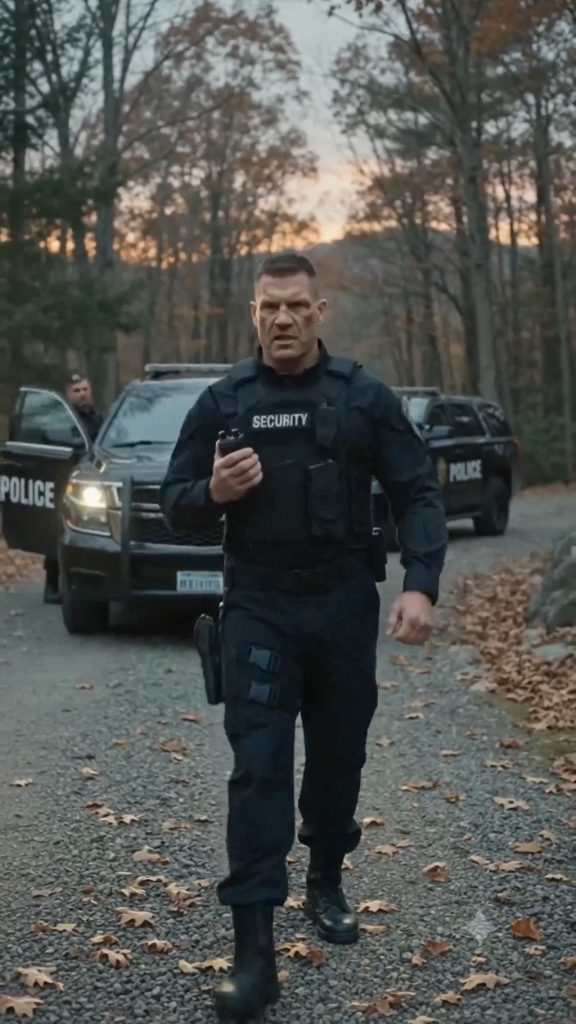
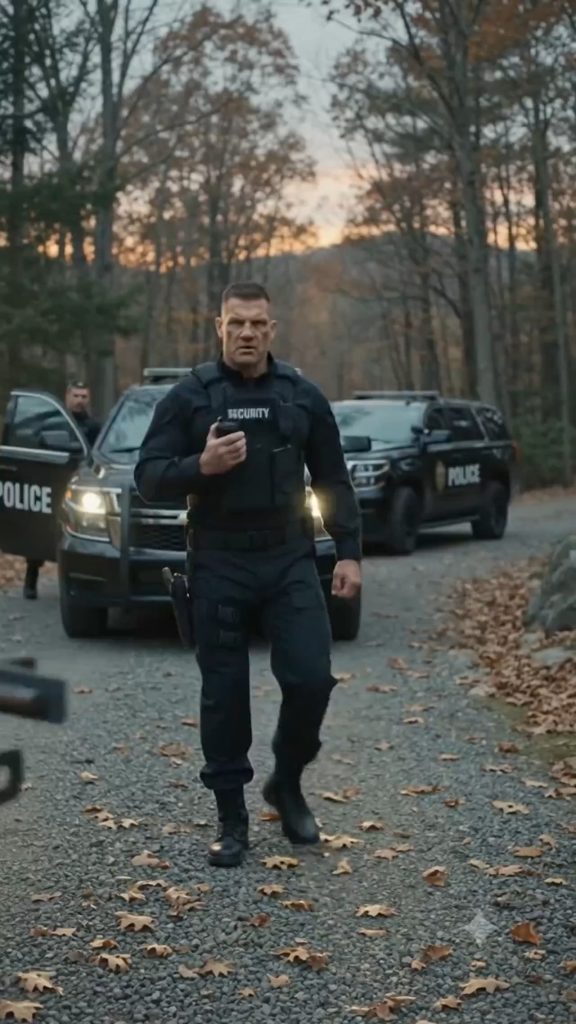
One of the Blackwatch guards, a broad-shouldered man with a closely cropped haircut, stepped forward. He held a small, handheld radio.
“This is private property,” the guard’s voice crackled through my console’s speaker, clear and calm. “You are not authorized to proceed.”
Julian, regaining some semblance of composure, strode forward, phone still recording. His face was flushed, but he managed a tight, indignant smile.
“I am Julian Albright,” he announced, projecting his voice for the livestream audience. “I am here to take possession of this property.”
The guard remained unmoved. “You are trespassing. Turn your vehicles around now.”
Julian’s eyes narrowed. He took another step forward, attempting to appear authoritative, but his posture betrayed a growing unease. He looked toward the biometric scanner, then back at the impassive guard.
“This is absurd,” Julian sputtered, his voice losing its confident edge. “I have every legal right to be here. This is a family estate!”
The guard simply shook his head, his gaze unwavering. He tapped his radio.
“Sir, your legal claims are contested,” he stated, his voice flat and professional. “This gate is secured by advanced biometric systems. You do not possess the necessary authorization frequencies. Any attempt to force entry will be met with appropriate action.”
Julian’s face went white. He tried to open the heavy iron gate, pushing against it with both hands, but it didn’t budge an inch. The biometric scanner’s blue light continued to pulse, an impenetrable, silent defiance. He hammered on the metal, his frustrated grunts audible even through the distant feed, but the gate remained locked, a stark, unyielding barrier.
Part 2
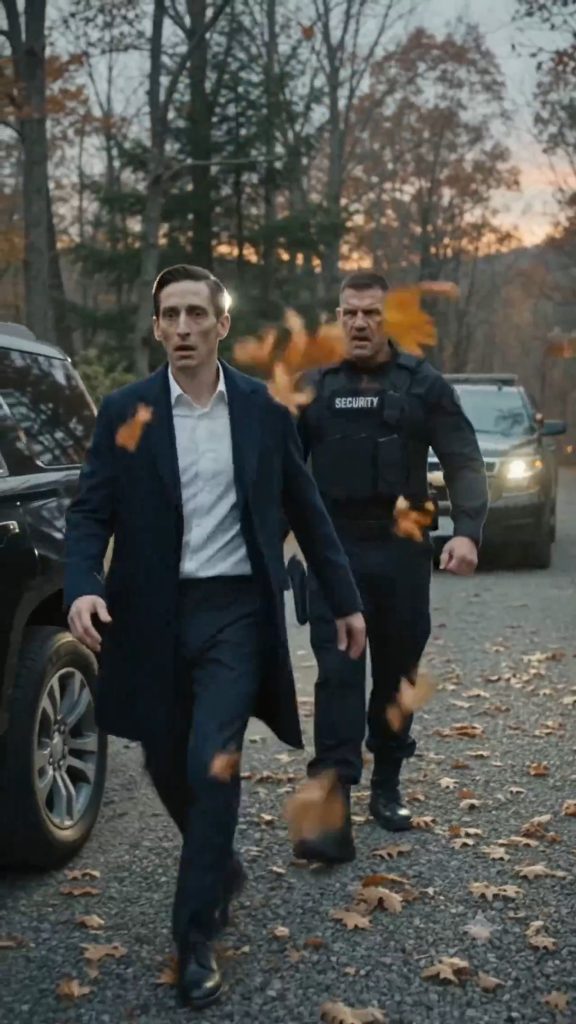
Julian’s face was beet red, veins prominent on his forehead as he pushed uselessly against the iron. He stumbled back, glaring at the gate as if it had personally offended him.
The live feed from my office console showed him pacing, running a hand through his perfectly coiffed hair. He looked desperate for a new plan, any plan.
Then, a new vehicle appeared on the winding mountain road, lights flashing. A county sheriff’s cruiser.
Sheriff Wayne Callahan. I recognized his slow, methodical approach from our infrequent encounters at county events. He pulled up behind Julian’s convoy.
Julian’s eyes lit up with a renewed sense of purpose. He practically sprinted back to his G-Wagen, fumbling for something in the passenger seat.
Sheriff Callahan, a weary-looking man with salt-and-pepper hair, emerged from his cruiser. He exchanged a brief, curt nod with the Blackwatch guard who had spoken earlier. That was Douglas Carver, my security chief.
Julian, now holding a sheaf of official-looking documents, approached the Sheriff. His composure, once shattered, seemed to magically reappear.
He held out the papers.
“Sheriff Callahan,” Julian announced, his voice regaining its performative edge, “I have an emergency conservatorship order here.”
My blood ran cold, even in the climate-controlled office. A conservatorship. This wasn’t about land deeds anymore; it was about me.
“My father-in-law, Arthur Kincaid,” Julian continued, his tone laced with false concern, “has unfortunately been suffering from acute cognitive decline.”
He looked directly at Sheriff Callahan, then subtly at the camera still recording.
“His mental state has deteriorated rapidly,” Julian fabricated, “rendering him incapable of managing his own affairs, much less holding private property.”
Sheriff Callahan took the documents, his expression unreadable as he scanned the first page. He raised an eyebrow.
“This states Congressman Kincaid is a danger to himself and others,” the Sheriff murmured, reading from the page.
Julian nodded solemnly. “Precisely. This order grants me temporary conservatorship over his assets, including this estate, for his own safety.”
My radio frequency console hummed with the intercepted audio. I heard Sheriff Callahan clear his throat, then look at Douglas Carver.
“Chief Carver,” the Sheriff said, gesturing toward the gate, “this is a court order. I need you to open this gate.”
Carver, my former Master Sergeant, stood firm. His voice came through my console, calm and unwavering.
“Sheriff,” Carver replied, “this is a private security operation, fully compliant with federal law.”
“This order supersedes private contracts, son,” Callahan insisted, his voice hardening slightly.
“Not without a verified federal warrant, Sheriff,” Carver said, his eyes meeting Callahan’s directly. “My standing orders are clear. We do not recognize a county conservatorship for a sitting US Congressman without direct federal authorization.”
More Stories




+ There are no comments
Add yours