
A Post-War Mother’s Desperate Act Reveals Her Eldest Son’s True Identity, Forcing Her to Confront Decades of Lies


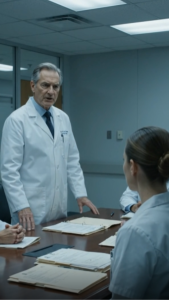
Dr. Finch shifted in his seat, the subtle movement breaking the heavy silence that had fallen between us. His eyes, though kind, held a new, sharper focus, as if he were re-reading an old, forgotten medical chart. He seemed to weigh his words carefully before speaking.
“The Caldwell family,” he began, his voice a quiet murmur.
“They were prosperous, one of the wealthiest in the county, before the war. Their plantation, ‘Summer’s End,’ was truly magnificent.”
I listened, my heart pounding a rhythm against my ribs. I had heard the name, of course. Everyone in the region knew of the Caldwells, their vast lands and their abrupt, tragic disappearance during the war.
“A skirmish,” he continued, “a brutal, confused affair. Confederate cavalry, then Union raiders. The plantation was caught in the middle. Most of the family scattered, or… worse.”
He didn’t need to elaborate on “worse.” The war had left a trail of such stories, a chilling tapestry of loss and destruction. My own family had been decimated, leaving me with only Thomas and the ghost of a husband.
“There was a child,” Dr. Finch said, his gaze fixed on a distant point, as if pulling the memory from the very air.
“A younger son. No more than three years old. He had a distinctive birthmark, just behind his ear. A raised, almost silvery scar, though it wasn’t from an injury.”
My breath caught in my throat. My confession, my desperate secret, was now aligning with his fragmented memories, forming a terrifying, undeniable picture. The birthmark. Not a scrape from a fall, but an inherent mark.
He did not accuse, not directly. He simply laid out the pieces of the puzzle, allowing me to see the monstrous shape they formed. The boy I had found, the scar I had often seen, the wealthy family whose estate lay in ruins nearby.
“His name,” he said, “was Elias. Elias Caldwell.”
The name hung in the air, a stark contrast to “Silas Shaw.” The thought of the boy I had raised, the boy who had brought so much pain into my home, being a Caldwell heir, was almost unbearable. It felt like a cruel cosmic joke.
“The family searched for years,” Dr. Finch added, a note of quiet sorrow in his voice.
“Or what was left of them. But the chaos… it swallowed so many. They eventually presumed him dead, an unfortunate casualty.”
He looked at me then, his eyes filled with a complex mix of pity and grim understanding. The seed of possibility, once vague, was now firmly planted, sprouting fear and a strange, cold anger in my gut.
I imagined my young Silas, the traumatized toddler, finding his way through the rubble, clinging to his carved wooden horse, a silent witness to unimaginable horrors. The notion that he belonged to a wealthier lineage, a life of comfort he was cruelly robbed of, somehow clarified his present cruelty. It did not excuse it, but it gave it a context, a twisted logic.
I remembered a day, years ago, when Thomas, then a very small boy, had been excitedly showing me a butterfly he’d caught. Silas, perhaps seven or eight, had walked over and, with a casual flick of his wrist, simply crushed it in his hand, laughing at Thomas’s heartbroken gasp. It had been such a small, sickening act, one that had made Thomas cry for hours. I had dismissed it as a child’s thoughtless cruelty then, but now it felt like a deliberate, chilling act of dominion, a subtle assertion of power over the vulnerable.
“He never said a word about it,” I repeated, my voice hollow. “Never a hint.”
Dr. Finch shook his head slowly.
“Children are resilient, Eleanor. They adapt. They survive. But the memories… they leave their mark, even if unspoken.”
He rose from his seat, gathering his bag. The conversation was over, at least for now. But his words lingered, echoing in the quiet room. The man who had entered my parlor as a trusted physician now left as the bearer of an unbearable truth.
I watched him go, my mind racing through fragmented memories of finding young Silas. Had he truly been too traumatized to speak? Or had some nascent, cunning part of him understood the advantage of silence, of appearing utterly bereft and dependent? The thought chilled me to the bone.
The sun dipped below the horizon, painting the sky in hues of orange and purple. The beauty of the evening felt like a mockery of the turmoil within me. I was a mother, but perhaps not to the child I thought I knew.
I felt a profound sense of loss, not for a child I might be forced to give up, but for the son I thought I had raised. The Silas I knew was a fiction, a persona built on a foundation of unspoken secrets and a potential stolen identity. And that realization felt like a deeper betrayal than any physical wound.
My vision blurred with unshed tears. The memory of Silas casually flicking Thomas’s beloved pet frog into the well, “because it was making too much noise,” surfaced with painful clarity. I had scolded him, of course, but his eyes had held a cold satisfaction. It was another small, specific act of cruelty, meant to assert his dominance and disregard for Thomas’s feelings, that I now recognized as a pattern, not an accident.
I walked to the window, staring out at the darkening fields. The air was cool, carrying the scent of damp earth. My life, my entire existence, had been built around these boys, around protecting and providing. Now, the very foundation of that life felt brittle, ready to crack.
The thought of Abigail Caldwell, the lost sister, flashed through my mind. What would her arrival mean? What legal claims, what emotional demands would she bring? The doctor had not shared this for gossip; he had shared it because he believed a reckoning was coming.
I had to face this, not just for myself, but for Thomas. The frail, sensitive boy upstairs, unknowingly at the mercy of a manipulative brother who might not even be my son. The truth, once so carefully buried, was now clawing its way to the surface, demanding to be seen.
More Stories



+ There are no comments
Add yours