
Disgraced Former State Senator Confronts Public Humiliation at Grandson's Graduation, Exposing Decades of Political Manipulation


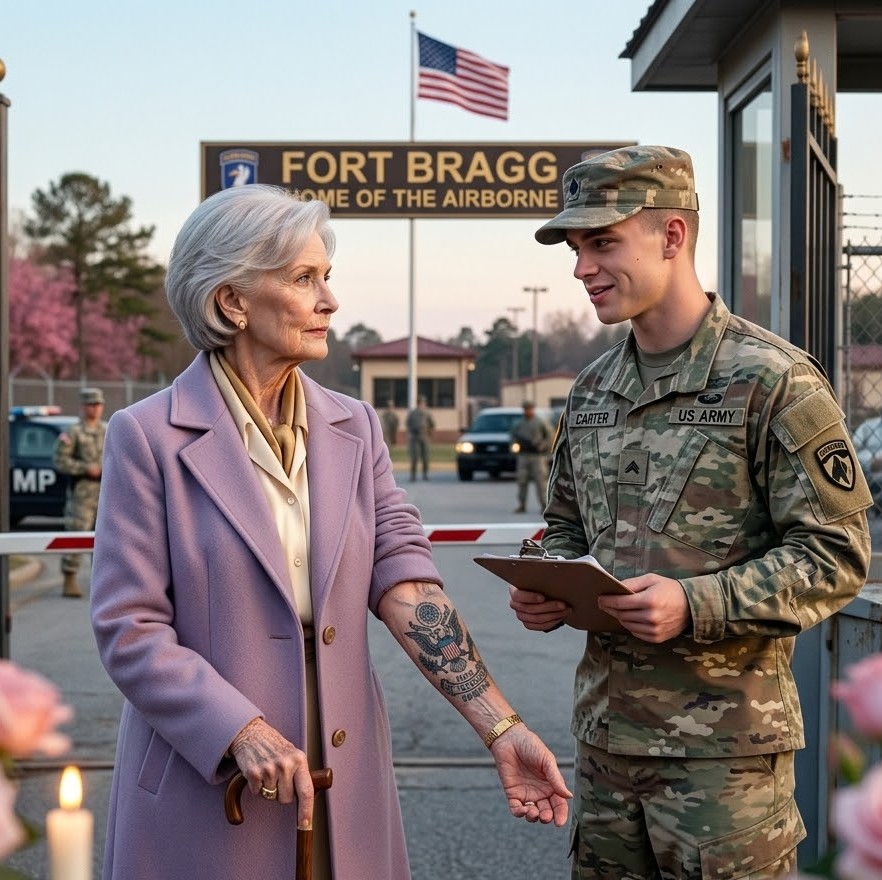


The following morning, I decided to act, unable to shake the chill of Michael’s revelation. The Marine Corps base was still buzzing, though less intensely than the day before. I sought out Captain David Davies, the head of graduation security, hoping for some clarity. I found him in a temporary office, a large tent repurposed for administrative duties. He was a man of precise movements and an unyielding gaze, his uniform immaculate.
“Former Senator Reed,” Captain Davies acknowledged, standing politely as I entered.
His tone was formal, his expression unreadable, a stark contrast to Corporal Holloway’s blatant dismissiveness. He offered me a seat, gesturing to a folding chair opposite his desk, which was piled high with various reports and checklists.
“Captain,” I replied, sitting down. “I wanted to follow up on yesterday’s incident at the gate.”
He nodded, a tight, controlled movement. He already knew why I was there. My presence was probably noted the moment I stepped onto the base.
“Yes, ma’am,” he said. “I’ve already reviewed Corporal Holloway’s report and checked your credentials. Everything is in order.”
He then offered a crisp, formal apology, his words measured and professional. “On behalf of the Marine Corps, I offer my apologies for any inconvenience or offense caused by Corporal Holloway’s initial demeanor. He was simply following protocol.”
I met his gaze, searching for any hint of evasion. His sincerity seemed genuine, at least on the surface. He wasn’t malicious like Kincaid, or easily swayed like Holloway. He was a by-the-book officer.
“I appreciate that, Captain,” I said, a flicker of doubt still lingering. “However, the corporal specifically mentioned ‘standing orders’ and that I was ‘specifically flagged.’ Can you elaborate on that?”
Captain Davies leaned back slightly in his chair, his posture still rigid. He sighed, a soft expulsion of air that seemed to signal a shift in the conversation. The atmosphere in the tent, previously all business, seemed to subtly thicken.
“Senator Reed,” he began, choosing his words carefully, “security at high-profile events like this requires meticulous planning.”
He paused, then continued, his voice lowering just a fraction. This was the moment of revelation, the thread he was about to offer.
“Sometimes, alongside standard security assessments, there are… external considerations.”
I waited, my gaze fixed on him, my hand clenching slightly around the strap of my purse. He seemed to struggle for the right phrasing, as if weighing each word’s potential consequence. The small cruelty of yesterday’s public shaming seemed to echo in the tent. It wasn’t just a security concern, but a matter of how I *appeared*.
“These events,” he continued, “especially with the attendance of several prominent political figures, often come with certain ‘political optics.'”
He stressed the phrase “political optics,” making it clear that it was a euphemism. It was a formal, sterile way of saying “political pressure.” The implication was clear: someone with political influence had dictated my treatment, not a military regulation. My internal suspicion hardened into a grim certainty.
“What kind of external considerations, Captain?” I pressed, unwilling to let him off the hook so easily.
He held my gaze, his professionalism preventing him from naming names, but his meaning was unmistakable. The tent itself, with its utilitarian furnishings, felt like a silent witness to this unspoken transaction of power. He glanced at the stacks of paperwork on his desk, as if seeking refuge in their objectivity.
“Let’s just say,” he replied, his voice a low, even tone, “that the Marine Corps strives to ensure all attendees adhere to certain… unstated expectations of decorum and public image, particularly when our distinguished guests are present.”
The message was clear: my “public image,” tarnished by Kincaid’s past machinations, was deemed unsuitable, likely by Kincaid himself. It was a quiet confirmation that Kincaid had manipulated the Marine Corps security detail through indirect means, using political influence rather than direct orders. The indignity of the situation settled over me like a heavy blanket. They hadn’t wanted me to “make a scene,” which in Kincaid’s twisted mind, simply meant *being* there.
“So, someone, from outside the military chain of command, requested special attention be paid to my presence?” I asked, pushing him for as much as he would give.
Captain Davies merely held my gaze, his lips pressed into a thin line. He didn’t confirm, but he didn’t deny. His silence was louder than any direct statement. It was a frustrating, yet illuminating, interaction. He was a professional, caught between protocol and political interference. The incident at the gate, Holloway’s casual sneer, had been Kincaid’s way of ensuring I felt his influence, his power, even in a place meant to celebrate honor and service. It was a calculated, deliberate act of public shaming, orchestrated to make me feel small and unwanted.
“I understand,” I finally said, though my understanding was laced with a fresh wave of resentment.
The Marine Corps, an institution I had once served and respected, had been used as a tool in Kincaid’s petty political games. It was a violation of the very principles it stood for. The knowledge that such a respected institution could be subtly bent to a politician’s will was a disheartening realization, a stark reminder of the pervasive nature of Kincaid’s influence. It felt like another layer of betrayal, a cold, institutional endorsement of my “disgraced” status.
I stood to leave, the interview concluded. Captain Davies rose with me, his posture impeccable.
“Is there anything else, Senator Reed?” he asked, his voice returning to its initial, purely formal tone, as if the brief moment of shared understanding had never occurred.
“No, Captain,” I replied. “Thank you for your honesty.”
As I walked out of the tent, the sun felt less warm, the air less clear. The conversation with Captain Davies had removed any lingering doubt. The anonymous text, the gate incident, Kincaid’s presence – it was all connected. Kincaid was not just my former boss, he was an active, manipulative force, determined to keep me out of any spotlight, even one as benign as my grandson’s graduation.
The “political optics” were carefully managed to diminish me. The cruelty was in the subtlety, the way he could twist an honorable event into a stage for my quiet humiliation. He didn’t need to shout to exert his power; a whisper to the right person, a strategically placed “concern,” was enough.
My steps quickened as I left the base. The captain’s cautious words fueled a quiet fire within me. Kincaid believed he had effectively silenced me years ago. He believed my reputation was too shattered to ever truly recover. But he had miscalculated. He had underestimated the tenacity of a woman who had already lost everything, and now had nothing left to lose. He had crossed a line, drawing my grandson into his machinations. That was unforgivable.
The sting of the public humiliation at the gate, the corporal’s casual contempt, now made even more sense. It wasn’t just a random act; it was a targeted slight, a message delivered with precision. Kincaid wanted me to feel the weight of my past disgrace, to be reminded of my position.
But the Captain’s words had also given me a vital piece of information: Kincaid operated through influence, through “political optics.” This wasn’t a direct order that could be traced back to him easily. It was a shadow game. And to fight shadows, I needed to understand their shape.
The air on the base, which had seemed so clean and purposeful just moments before, now felt tainted by the invisible threads of political maneuvering. It was a disheartening realization, that even institutions dedicated to service could be subtly compromised by the machinations of power.
I drove away from the base, my mind already sifting through possibilities. This wasn’t just about reclaiming my dignity; it was about exposing the rot that Kincaid represented. The “unforeseen complications” were coming, but not for me, for him.
More Stories



+ There are no comments
Add yours