
Disgraced Former State Senator Confronts Public Humiliation at Grandson's Graduation, Exposing Decades of Political Manipulation




Back home, the quiet of my small house felt both a refuge and a burden. I had postponed sorting through boxes from my old life for years, clinging to a quiet existence, a deliberate withdrawal from the public eye. But the events of the last two days had shaken that complacency. Kincaid’s malice was ongoing, active, and disturbingly personal. It was time to dig.
I started in the dusty attic, where boxes marked “SENATOR REED – CORRESPONDENCE” and “OLD CAMPAIGN MATERIALS” lay untouched. The air was thick with the scent of aged paper and forgotten ambition. Each box was a time capsule, a reminder of a life I had once lived, a life that had crumbled so spectacularly.
I opened one box labeled simply “MISC. CLIPPINGS – 1980s,” a collection of random articles I’d kept from my early career. My hands, still slightly trembling from the adrenaline of the last two days, rummaged through yellowed newspaper pages and faded photographs. Dust motes danced in the single shaft of sunlight piercing the gloom.
Beneath a pile of generic local news stories about community events, my fingers brushed against a thicker, slightly brittle piece of paper. I pulled it out. It was a newspaper clipping, an old, almost forgotten article from a national political journal, likely from around twenty years ago. The headline, in a bold, serious font, read: “Kincaid Rises: Young Aide’s Ascendance in Defense Politics.”
My breath hitched. Kincaid. The name alone was enough to send a cold shiver down my spine. The article detailed his early political career, painting him as a rising star, a shrewd and ambitious young staffer. I remembered the article vaguely, from a time when he was still an ally, a mentor. The personal cruelty of his current actions now felt even more potent, given our shared history.
I scanned the body of the text, my eyes racing over the familiar political jargon. The journalist lavished praise on his “keen strategic mind” and his “unwavering commitment to national security.” But then, one sentence leaped out, pulling me up short, a chilling connection clicking into place.
The article specifically mentioned his “crucial role on the then-nascent Congressional Defense Oversight Committee.”
My heart pounded, a frantic drum against my ribs. The Congressional Defense Oversight Committee. The words echoed in my mind, stark and terrifying. This was no ordinary committee. This was *the* committee.
It was the very same clandestine committee that had secretly approved and provided oversight for my highly classified deep-cover intelligence operation in the 1980s. The one that, in theory, only a handful of individuals with the highest security clearances were privy to.
I remembered the secrecy surrounding that mission, the layers of compartmentalization, the absolute need-to-know basis. Our identities were phantom, our actions untraceable. And yet, Kincaid, as a “young aide,” was intricately involved.
A wave of nausea washed over me. It wasn’t just a general connection to politics, or a shared history in the state legislature. This was a direct, irrefutable link to the most sensitive, most vulnerable part of my past. My “disgrace,” the alleged leak that had ruined my career, had been tied to that very operation.
I ran my thumb over the faded newsprint, the irony of finding this now almost unbearable. For years, I had believed my political downfall was due to a genuine, if tragic, security breach. I had carried the burden of that supposed failure, that perceived lapse in judgment, with a quiet resignation. But now, Kincaid’s name, woven into the fabric of that critical oversight, cast everything in a sinister new light.
He wasn’t just my former boss. He wasn’t just a political rival who had capitalized on my misfortune. He was intimately connected to the very secret that had destroyed my life. The petty cruelty of his current actions now felt like an extension of a much deeper, more ingrained pattern of manipulation.
I sank onto a low, dusty stool, the article clutched tightly in my hand. The attic, once a place of forgotten memories, now felt like a vault of buried secrets. The heat in the confined space suddenly felt oppressive.
Could he have known about the specific details of my mission? Could he have used that knowledge, even back then, to further his own ambitions? The thought sent a cold dread through me. It wasn’t just that he knew; it was the potential for betrayal, for a calculated destruction of my life that stretched back decades.
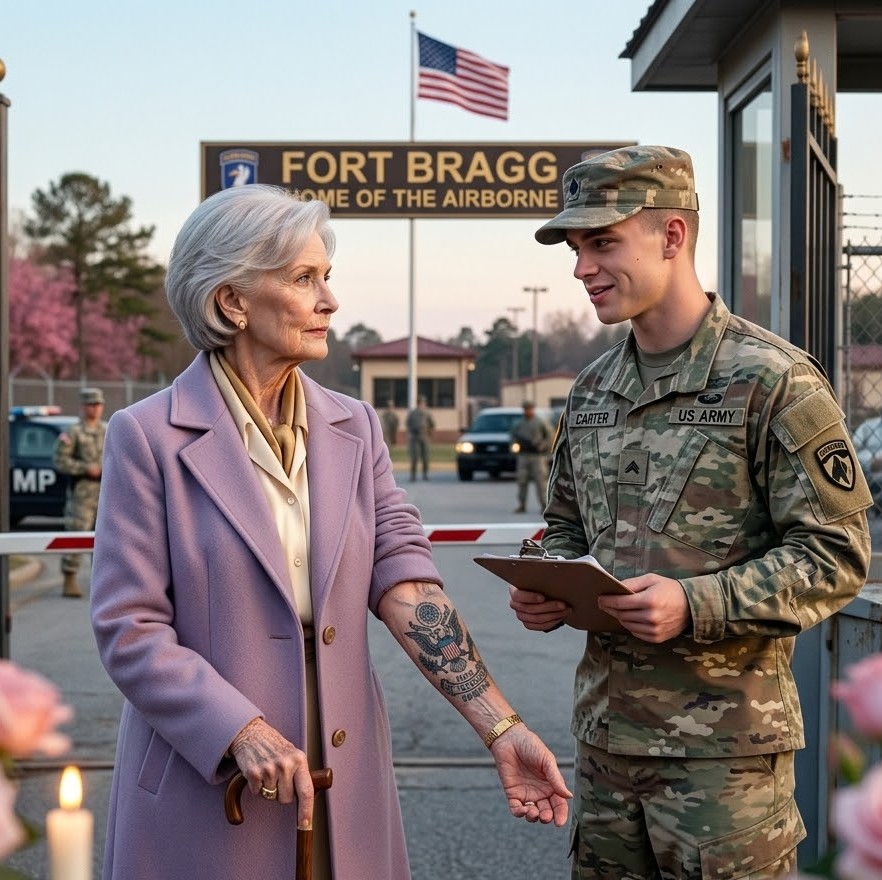
The faded tattoo on my forearm, which Holloway had scoffed at, now felt like a burning brand. It wasn’t just a “cheap souvenir”; it was a symbol of that classified operation, a mark of a loyalty that had been betrayed. And now, I had a name, a direct connection. Kincaid.
I stared at the clipping, the words blurring on the page. Twenty years ago, he was praised for his defense acumen. Twenty years later, he was orchestrating petty humiliations at my grandson’s graduation, all while trying to bury a past that was intertwined with my own. The pieces of a much larger, more terrifying puzzle were beginning to fall into place.
The revelation felt like a physical blow, a punch to the gut. All those years, I had walked around with a manufactured guilt, believing I was somehow responsible for the leak, for my own downfall. The public narratives, the whispers, the political maneuvering – it had all pointed to me. But if Kincaid was involved from the beginning, if he had access to the very secrets I was sworn to protect, then the entire story changed.
This wasn’t just about my dignity anymore. This was about a profound, decades-long betrayal. The article lay open on my lap, a silent accusation against a man who had built his career on the ashes of mine. The smell of dust and old paper filled my nostrils, thick with the weight of hidden truths.
I slowly refolded the clipping, tucking it carefully into my purse. It was a tangible link, a concrete piece of evidence that tied Kincaid not just to my political downfall, but to the very operation that had been the catalyst. The casual mention of his committee role was a mundane detail that unlocked a world of suspicion.
The attic’s silence now felt charged, heavy with the ghosts of ambitions and betrayals. I knew I couldn’t ignore this. The anonymous text, Captain Davies’s guarded words, and now this clipping – they all pointed to a deliberate, long-standing campaign against me. And Kincaid was at its heart.
My hands instinctively went to my forearm, tracing the barely visible lines of the tattoo. It was more than just a symbol of service; it was a mark of a life that Kincaid had touched, and potentially, had deliberately destroyed. The game had just become far more dangerous.
More Stories





+ There are no comments
Add yours