
My Father Took My Car, Gave It To My Sister, And Lost Everything Else


The call from Aunt Eleanor came the very next day. Her voice, usually calm and measured, held an unusual urgency.
“Ethan, dear, could you come over for tea?” she asked. “There’s something I need to discuss with you. Something private.”
I knew immediately it wasn’t about tea. Eleanor rarely called outside of family gatherings, and her tone suggested a weight of unspoken words. The smear campaign was clearly reaching her.
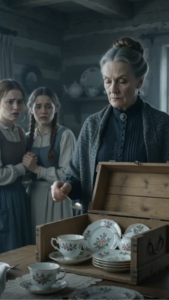
I arrived at her modest home, a place filled with the scent of lavender and old books. Eleanor, elegant even in a simple cardigan, gestured me to the worn armchair facing hers. The afternoon sun filtered through lace curtains, illuminating dust motes dancing in the air.
“Arthur has been quite vocal lately,” she began, her gaze steady, “about your recent… disagreements.” She poured us both cups of Earl Grey, her hands surprisingly steady. “He’s painting a rather vivid picture of an ungrateful son, trying to undermine his father.”
I braced myself for the lecture, for more of the family pressure. But Eleanor merely took a sip of her tea, her eyes thoughtful.
“Your father has always had a way with narratives,” she continued, a faint, almost sad smile touching her lips. “He builds them, polishes them, and then starts to believe them himself.”
I waited, a knot forming in my stomach. “Aunt Eleanor, I assure you, my disagreements with Arthur are… justified.”
She nodded slowly. “I don’t doubt it, Ethan. Not for a moment. Arthur has always had a blind spot when it comes to money. And responsibility.”
Then she leaned forward, her voice dropping to a near whisper. “There’s something you need to understand about Arthur, about why he is the way he is with money, with the house, with… control.”
My heart hammered against my ribs. This was it.
“Our parents bought this house, your family home, decades ago,” Eleanor explained. “It was their pride and joy. When they passed, it was left jointly to Arthur and me. But Arthur, being the older brother, always saw it as *his* legacy.”
She paused, looking out the window as if seeing ghosts. “He was always a gambler, even back then. Not with cards, but with schemes. Grand ideas for quick money, ‘innovative investments,’ he called them. He always thought he was smarter than everyone else.”
My mind flashed back to “Hedgehog_Alpha” and his boasts of “innovative strategies.” The pattern extended further back than I had ever imagined.
“About twenty-five years ago,” Eleanor continued, her voice heavy, “Arthur got himself into a deep hole. A real estate venture, something about developing land upstate, went south spectacularly. He’d leveraged everything. The house, all his savings, even borrowed against his share of my inheritance.”
I stared at her, stunned. “He nearly lost the house?”
“He *did* lose it, effectively,” she corrected softly. “The bank was foreclosing. He never told anyone, not really. Kept up appearances, of course. But it was happening. He was terrified. He was convinced the family name would be ruined, that he would be disgraced.”
She picked up a framed photo on the side table, a faded image of a stern-looking man with kind eyes. “That’s my late husband, George. He was a quiet man, but sharp. He saw what was happening. He knew Arthur was too proud, too ashamed to truly ask for help.”
Eleanor’s gaze returned to me. “George, bless his soul, went behind Arthur’s back. He secretly liquidated some of his own retirement savings, enough to pay off Arthur’s most pressing debts and halt the foreclosure. He bought the house back, in a way, without Arthur ever knowing the full truth.”
“George made Arthur sign papers, though,” she clarified, “stating that if anything like that ever happened again, George would have first claim to the property. He just wanted to protect me, to protect the family. But Arthur never saw that part, or he chose to ignore it. He just saw the problem vanish, the house saved, and he attributed it all to his own ‘brilliant negotiation skills.’”
A chilling realization washed over me. “So, he never truly faced the consequences of his recklessness.”
“Never,” Eleanor confirmed. “And that, Ethan, is why he believes he is untouchable. He thinks he can always pull a rabbit out of a hat. He thinks he’s entitled to escape the consequences because, in his mind, he always has. George’s generosity, his sacrifice, inadvertently fed Arthur’s deepest flaw: his unearned entitlement.”
The pieces clicked into place with a sickening thud. The old forum posts, the car in my name, the hidden liens, the tax notices, Olivia’s reliance. It was all a culmination of a lifetime of Arthur dodging accountability, convinced that a benevolent hand would always swoop in to save him.
I felt a complex mix of anger and a strange, profound sadness. My father wasn’t just a manipulator; he was a man trapped in a cycle of his own making, a cycle fostered by an unacknowledged bailout. It explained his arrogance, his refusal to admit fault, his casual disregard for other people’s money and well-being. He was a ghost of a consequence that never materialized.
“He always talks about how hard he works to maintain the family home,” I said, the words tasting bitter. “He uses it as an excuse for everything. For not helping me with college, for giving Olivia hand-me-down cars, for everything he wanted.”
“It’s his security blanket,” Eleanor agreed, her voice soft. “His image. His greatest asset, but also his greatest vulnerability. And now, you’re hitting him where he’s never been hit before.”
My earlier resolve, fueled by anger, now wavered. This wasn’t just about justice; it was about tearing down a man who had built his entire identity on an illusion. The ramifications suddenly felt immense. Could I truly bring Arthur to complete ruin, knowing this history? Was my plan, though justified, too harsh for a man whose self-deception had been so deeply ingrained, so profoundly enabled?
The moral ambiguity weighed heavily on me. I had wanted to expose him, to force him to face consequences. But to utterly destroy him, to strip him of everything he believed himself to be, felt… monumental. I remembered Olivia’s desperate pleas, Marcus’s struggles, and the predatory loan in my name. Arthur had directly caused real, tangible harm. This wasn’t just historical. It was current.
“What if he loses everything, Aunt Eleanor?” I asked, my voice barely a whisper. “The house… everything.”
Eleanor looked at me, her eyes filled with a deep, ancestral wisdom. “Sometimes, Ethan, the only way to break a cycle is to let it shatter. George gave Arthur a chance to learn, but Arthur never took it. He just rebuilt his fantasy. You can’t save someone who won’t acknowledge they’re drowning.”
Her words were a stark, cold comfort. They didn’t absolve me of my guilt, but they grounded me in the painful reality of Arthur’s character. He was not just the victim of circumstance; he was the author of his own, long-delayed reckoning. But the full scope of that reckoning, the complete collapse of everything he held dear, was a burden I now had to carry. I had to continue. For myself, for Olivia, for the cycle to finally break. The house, his sanctuary, was now his prison. And I held the key.
More Stories



+ There are no comments
Add yours