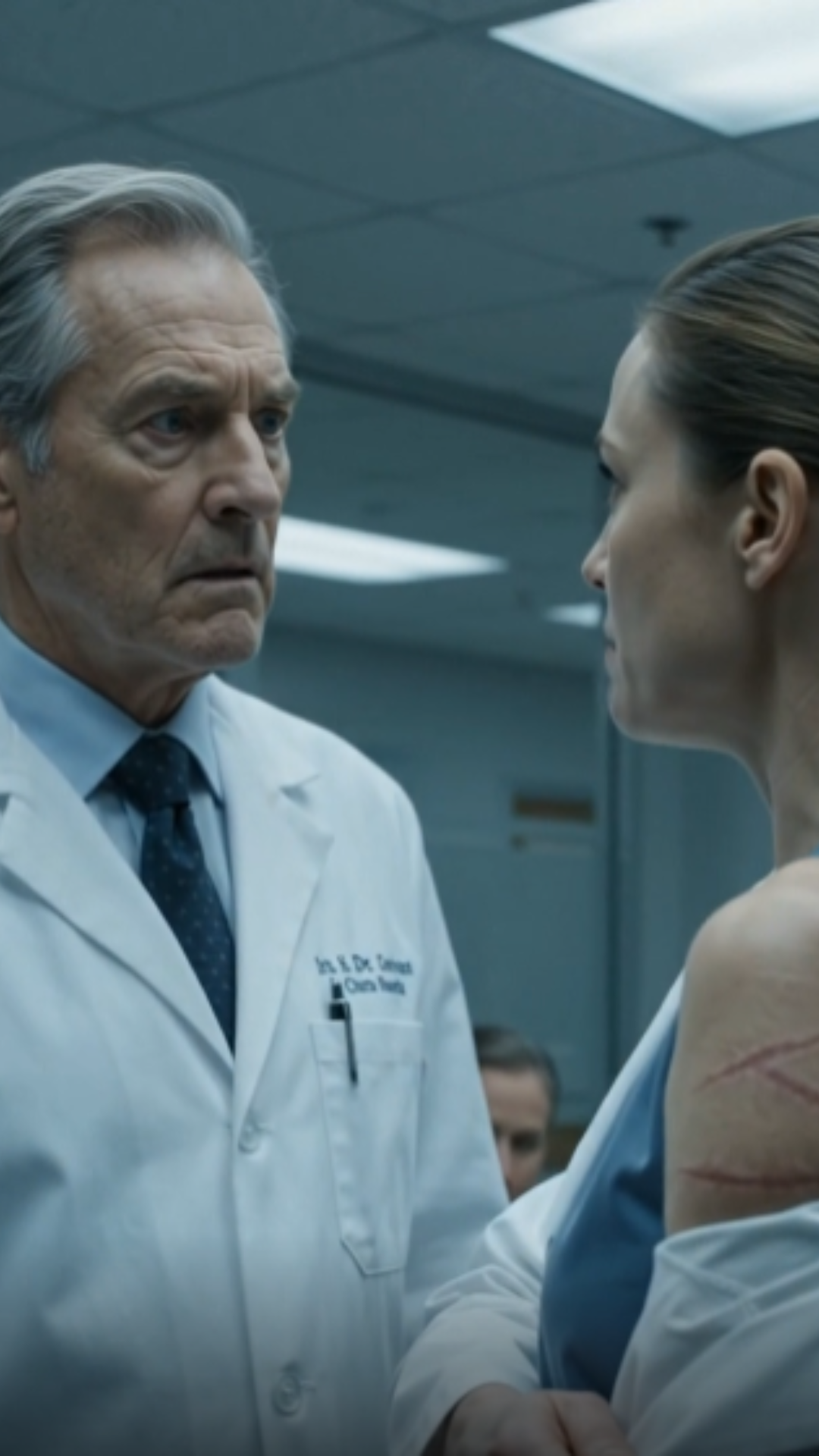
You are leaving Saint Jude Hospital with your medical license revoked and your career in ashes, my uncle declared before the ethics panel, standing beside his daughter with an arrogant smile.


Evelyn watched me until I was out of the resident lounge, then returned to her charts, humming a small, triumphant tune. I didn’t stop to argue. My instinct screamed to get out, to find a place where Arthur and Evelyn couldn’t see my every move.
I hailed a taxi outside Saint Jude, the familiar hospital sign now looking less like a beacon of healing and more like a fortress.
“Great-Aunt Clara DeWitt’s residence, please,” I told the driver, giving him the address.
Clara lived in a grand old brownstone, just a few miles from the hospital, a testament to the DeWitt family’s long-standing roots in the city. The cab pulled up to the curb. Her home, unlike the sterile hospital, smelled of old books and dried potpourri.
Her live-in nurse, Mrs. Henderson, greeted me at the door with a worried frown. “Dr. Montgomery? Is everything alright? You look quite pale.”
“I need to see Clara,” I said, pushing past her gently.
Great-Aunt Clara sat in her dimly lit study, framed by towering bookshelves filled with leather-bound volumes. She was a small, frail woman, her hands gnarled with age, but her eyes, behind wire-rimmed spectacles, were still sharp and perceptive. Original paper ledgers, yellowed with time, were stacked neatly on a side table. They looked like they belonged to another century.
“Iris, dear,” she said, her voice a soft rasp. “To what do I owe this unexpected visit? I thought you were busy saving lives.” A knowing glint flickered in her eyes.
I sat opposite her, trying to steady my breath. “Arthur is trying to revoke my license, Clara. He’s claiming I’m mentally unstable, fabricating evidence.”
Clara merely nodded, her expression unreadable. She gestured for Mrs. Henderson to bring us tea, then waved her away.
“He’s been using an experimental cardiac valve,” I continued, recounting the details of Tuesday’s patient, the altered logs, the fabricated peer review. “The same design that killed my mother fifteen years ago. He’s covering it up again.”
Clara listened, her hands resting calmly on her lap. Her gaze was steady, piercing through my distress. She didn’t interrupt, didn’t offer comfort. She simply absorbed every word.
When I finished, the silence in the room stretched, punctuated only by the soft tick-tock of an antique grandfather clock.
“Arthur has always been… ambitious,” Clara said at last, her voice dry. “And fiercely protective of his reputation. And the family’s, by extension.”
She pushed herself up from her chair, moving slowly but deliberately to a magnificent mahogany desk. She opened a small, ornately carved drawer.
“Physical records,” she murmured, her gaze distant. “Before everything went digital. They have a certain permanence, don’t they?”
She pulled out a rusted brass key, its intricate design hinting at an old-world lock. The metal felt cool and heavy in her palm.
“When your mother died,” Clara continued, her eyes now meeting mine, “Arthur wanted to burn all the research documents. He claimed they were ‘too sensitive’ for public eyes, ‘misleading’ even to the family.”
She extended the key to me. “I refused. I made sure they were archived. Not at the hospital, where he could control them. But in the DeWitt family estate’s private vault.”
My fingers closed around the cold, heavy brass. The key felt like a secret. “The records from 2008? They’re still there?”
Clara nodded slowly. “Everything related to Clara-Louise’s trial. Locked away. Down in the sub-basement of the hospital. Under my name.” A faint, almost imperceptible smile touched her lips. “I always believed in keeping receipts.”
More Stories




+ There are no comments
Add yours