
Neonatologist's Mother Demanded $3,000 for a Game Console Hours After Birth, Now I'm Exposing Her Decade of Lies


The attorney’s letter was heavy in my hands, a testament to a betrayal so profound it felt like a physical ache in my own chest. I couldn’t simply confront Vera with this; I needed irrefutable evidence of the consequences. The “jeopardized health” mentioned in the letter needed a medical voice, a definitive statement about what had been lost. There was only one person I trusted enough to consult without revealing the full, raw truth.
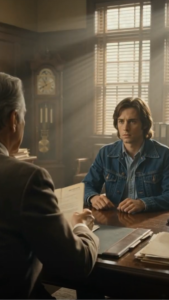
I arranged a discreet meeting with Dr. Alistair Finch, my mentor, under the guise of discussing a complex, historical case study I was researching. We met in a quiet corner of the hospital cafeteria, far from prying ears. The fluorescent lights hummed, casting a clinical glow on his kind, experienced face.
“Lena,” Dr. Finch began, a slight frown on his brow. “You look exhausted. Is everything alright?”
I forced a smile. “Just a challenging case I’m trying to unravel, Dr. Finch. It’s… historical. Involving an experimental cancer treatment from the early nineties.”
I handed him the relevant sections of my grandmother’s old medical records that I had managed to dig up from a family archive and a few public health databases — enough to reconstruct a basic timeline of her diagnosis and the proposed treatment. I omitted any mention of Vera or the diverted funds. I just presented the timeline of a patient who was diagnosed, recommended for a specific clinical trial, and then, inexplicably, missed the enrollment window.
“The patient, let’s call her ‘Mrs. P,’ was diagnosed with a particularly aggressive form of lymphoma,” I explained, pointing to the dates. “She was deemed an excellent candidate for this specific experimental therapy, a trial for a novel immunotherapy, correct?”
Dr. Finch donned his reading glasses, his expression thoughtful as he reviewed the old reports. He was a stickler for detail, and I knew he wouldn’t dismiss any medical fact.
“Ah, yes,” he murmured, tracing a line on the faded printout. “This was quite cutting-edge for its time. A high-risk, high-reward approach.”
He looked up, his gaze piercing. “So, what’s the question, Lena? Why the sudden interest in a thirty-year-old case?”
“Hypothetically, Dr. Finch,” I said, my voice carefully neutral, “if a patient like Mrs. P, with this specific diagnosis and health profile, was recommended for this particular experimental treatment… what would have been her prognosis, had she received it on time?”
Dr. Finch leaned back, his fingers steepled. He was quiet for a moment, processing the information, his mind sifting through decades of medical knowledge.
“Well,” he began slowly, “this trial, if I recall correctly, showed promising initial results. For patients who fit the exact criteria, like your ‘Mrs. P’ here, the data from follow-up studies indicated a remarkably high success rate.”
My heart pounded. “How high?”
He picked up a pen, tapping it against the table.
“Based on the subsequent long-term studies published a few years later,” he stated, his voice now grave, “we’re looking at a nearly 70% chance of full remission, and sustained recovery for those who received the full course of treatment within the specified timeframe. It was a breakthrough for that specific subtype of lymphoma.”
My breath hitched. Nearly 70% chance of full recovery. The words hung in the air, cold and definitive. Vera’s actions hadn’t just “jeopardized” my grandmother’s health. They had, with a devastating mathematical certainty, robbed her of a nearly two-thirds chance at life. She hadn’t just missed a crucial treatment window; she had been pushed out of it, directly into the path of death.
“A delay of even a few weeks,” Dr. Finch continued, oblivious to the storm raging within me, “could have made all the difference. Aggressive lymphomas progress rapidly. Once that window closed, the efficacy would have dropped dramatically, making any subsequent treatment far less likely to succeed.”
I felt a wave of nausea wash over me. My grandmother’s passing, always a vague, sad memory, now felt like a brutal, preventable tragedy. She hadn’t just succumbed to illness; she had been murdered, slowly, by her own daughter’s greed.
“Thank you, Dr. Finch,” I managed, my voice strained. “That’s… very insightful.”
He studied my face, his professional detachment giving way to a flicker of concern.
“Lena, you seem very shaken by this ‘hypothetical’ case,” he observed gently. “Is there something more you want to tell me?”
I shook my head, unable to meet his gaze. Not yet. Not until I had fully processed the enormity of what I had discovered. The moral dilemma that now gripped me was suffocating. Exposing Vera wasn’t just about financial abuse; it was about accusing my own mother of a crime that led directly to her own mother’s death. It was an act of matricide, plain and simple, orchestrated through paperwork and financial deceit.
I left the cafeteria in a daze, the bustling sounds of the hospital fading into a distant hum. The lawyer’s letter, combined with Dr. Finch’s medical confirmation, left no room for doubt. Vera’s “darkness about money” wasn’t a flaw; it was a deadly weapon. The casual way she’d dismissed my postpartum exhaustion, the subtle threats to my professional stability, her demands for money for a gaming console – they were all symptoms of a deeply ingrained pathology that had once before led to a fatal consequence.
The idea of confronting her, of bringing this truth to light, felt monumental. It would tear my family apart, irrevocably. Svetlana, my sister, would never forgive me. But could I live with myself, knowing what I knew, and allow this cycle of exploitation and silent complicity to continue? Could I let Elara grow up in the shadow of such profound, unpunished malice? The weight of this choice was unbearable, yet clarity began to emerge through the fog of my grief and shock. I had to choose justice, even if it meant sacrificing the illusion of family forever.
More Stories








+ There are no comments
Add yours