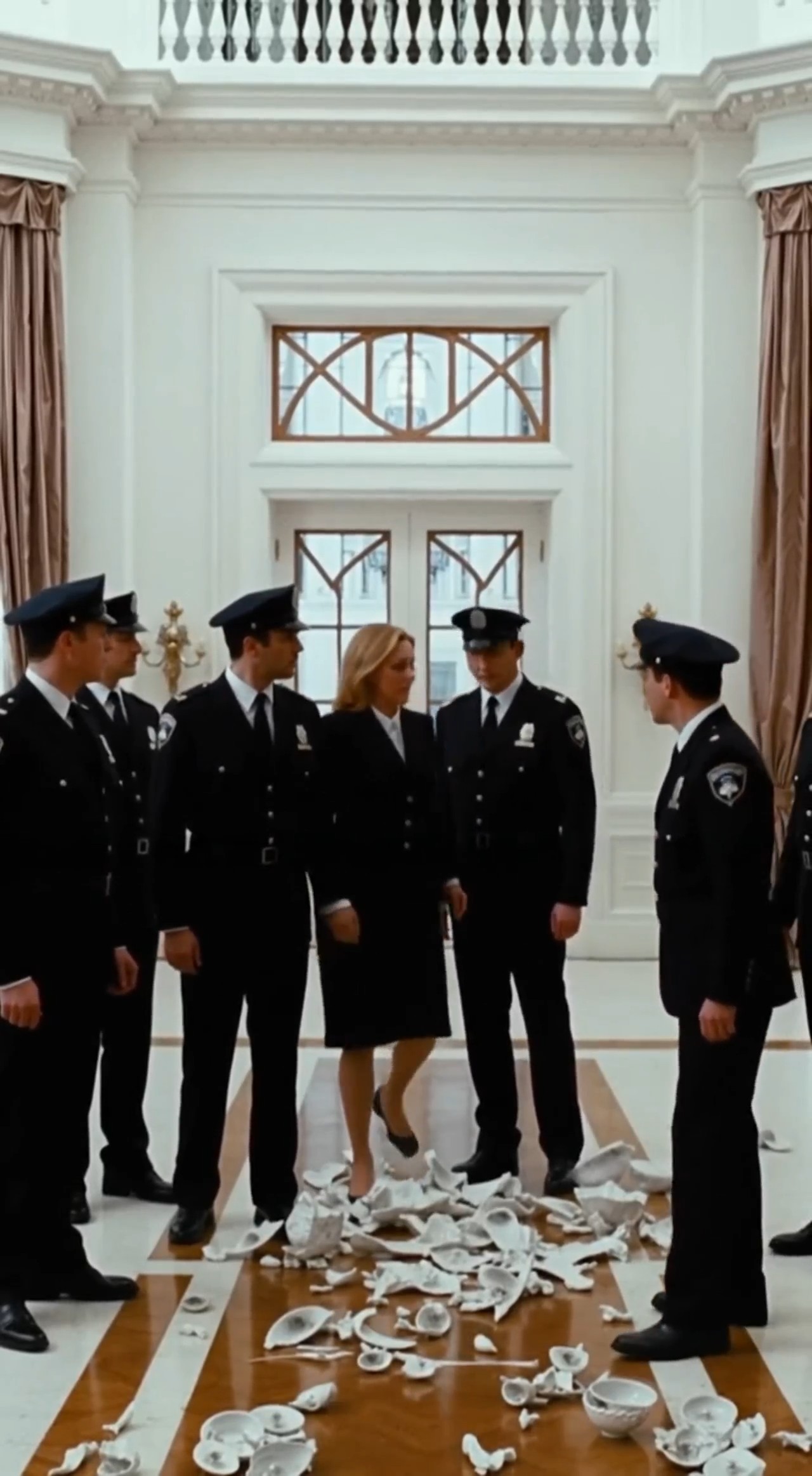
When a 66-Year-Old Estate Curator Is Framed by His Step-Mother Boss for Destroying $4 Million in Antiques, a Single Cashmere Fiber Exposes the Truth and Reshapes Their Family Legacy


Great-Aunt Beatrix moved with a quiet, determined energy that belied her eighty-nine years. Within twenty-four hours of my visit to Newport, she had pulled strings I didn’t even know existed, leveraging her matriarchal status and the Lansdale Trust’s rarely invoked “emergency counsel” clause. The entire board of trustees, a collection of Boston’s most influential, and usually slow-moving, figures, was summoned.
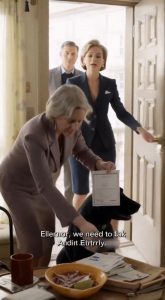
They gathered in the very gallery where the porcelain once stood, now stripped bare of the crime scene tape but still echoing with absence. The air was thick with whispered speculation and the scent of expensive cologne. Evelyn, impeccable in a charcoal power suit, stood near the podium, her usual composed demeanor barely masking a flicker of annoyance at Beatrix’s unexpected maneuver. She probably assumed this was a formality, a rubber stamp for my removal.
I sat in the front row, beside Clara, who had flown back to Boston immediately. She squeezed my hand, her expression a mix of apprehension and fierce loyalty.
Evelyn cleared her throat, attempting to seize control. “Thank you all for attending this rather abrupt meeting. As you know, we are here to discuss…”
“Evelyn,” Beatrix interrupted, her voice, though soft, cutting through the room like a silver blade. She moved with surprising speed to the podium, her cane tapping a rhythmic cadence on the polished floor. She wore a severe black dress, a stark contrast to Evelyn’s corporate sleekness, and her posture was ramrod straight.
Evelyn’s face stiffened. “Beatrix, I believe I was addressing the board.”
“And you shall again, dear,” Beatrix replied, her eyes, though watery, holding a steely glint. “But first, I will. This meeting was called by my authority, under Article Seven of the original Lansdale Trust covenants, which grants the eldest living direct heir, in times of ‘grave family and financial peril,’ the right to convene and address the board without prior executive approval.”
A ripple went through the room. Most of the board members, younger than Beatrix, knew of the clause but had likely never seen it invoked. Evelyn’s face paled, the carefully constructed mask of control beginning to crack.
Beatrix placed the lab report and a stack of yellowed envelopes on the podium. “We are here today to discuss the unfortunate incident regarding the Lansdale Heritage Collection. More specifically, the destruction of the Qianlong vase and its companions.”
She picked up the lab report, her gaze sweeping over the board, then settling on Evelyn. “Mr. Julian Vance-Oatridge, a forensic expert, was engaged by Arthur to conduct an independent investigation. His findings are conclusive.”
She read from the report, her voice clear despite her age. The details of the emerald cashmere fiber, its exorbitant value, the presence of human epithelial cells. Then, the damning conclusion: “DNA profile matches known sample: Evelyn Lansdale.”
A collective gasp filled the gallery. Whispers erupted. Evelyn stared at Beatrix, her jaw slack, her composure finally shattered. Her eyes darted to me, then to the board members, a wild desperation in them.
“This is outrageous!” Evelyn cried, her voice high-pitched and uncharacteristic. “A fabrication! A frame-up!”
“Is it, Evelyn?” Beatrix countered, her voice unwavering. “Did you fabricate this?” She held up a small, sealed evidence bag containing the emerald fiber itself, a tiny, glittering thread. “And this? Did you fabricate your DNA?”
She then picked up the stack of old letters. “But the story doesn’t end with a simple act of vandalism, regrettable as it is. It runs far deeper, into the very heart of this family’s history. Thirty years of suppressed pain. Thirty years of a proud woman’s insecurity.”
Beatrix began to read from the letters, not the one from my grandfather, but excerpts from Evelyn’s own correspondence, written in the years immediately following her marriage to my father. Letters of desperate pleas for inclusion, of heartbreak over being “tolerated” but never truly accepted, of shame at her “humble origins” being whispered about in Beacon Hill drawing rooms.
She read about Evelyn’s anguish at being explicitly excluded from the core trust, her name conspicuously absent from the founding documents that held the Lansdale legacy. She spoke of Evelyn’s fear that she would always be seen as an outsider, a “new money” interloper in a world built on generations of “old money.”
“Evelyn,” Beatrix concluded, looking directly at her, her voice resonating with an unexpected empathy, “I know you felt marginalized. Humiliated. That you believed this family, and particularly your husband’s father, denied you the respect you deserved. That this collection, these symbols of an unbending lineage, stood as a monument to your exclusion.”
Evelyn, once so formidable, now looked like a cornered animal. Her perfectly coiffed hair seemed disheveled, her hands clenched into fists at her sides. Her carefully constructed image, her entire persona, was crumbling before the gaze of Boston’s elite. Tears welled in her eyes, blurring the edges of her steely resolve. The board members shifted uncomfortably, some avoiding her gaze, others watching the raw display with morbid fascination. The sheer humanity of her decades-long hurt, laid bare, was far more shocking than the forensic report.
“The smashing of the porcelain,” Beatrix declared, her voice now softer, more sorrowful, “was not just an act of corporate sabotage, but a desperate cry. A scream of decades of bitter resentment, finally exploding. And unfortunately, Arthur, the innocent curator, became caught in the crossfire of her anguish.”
More Stories












+ There are no comments
Add yours