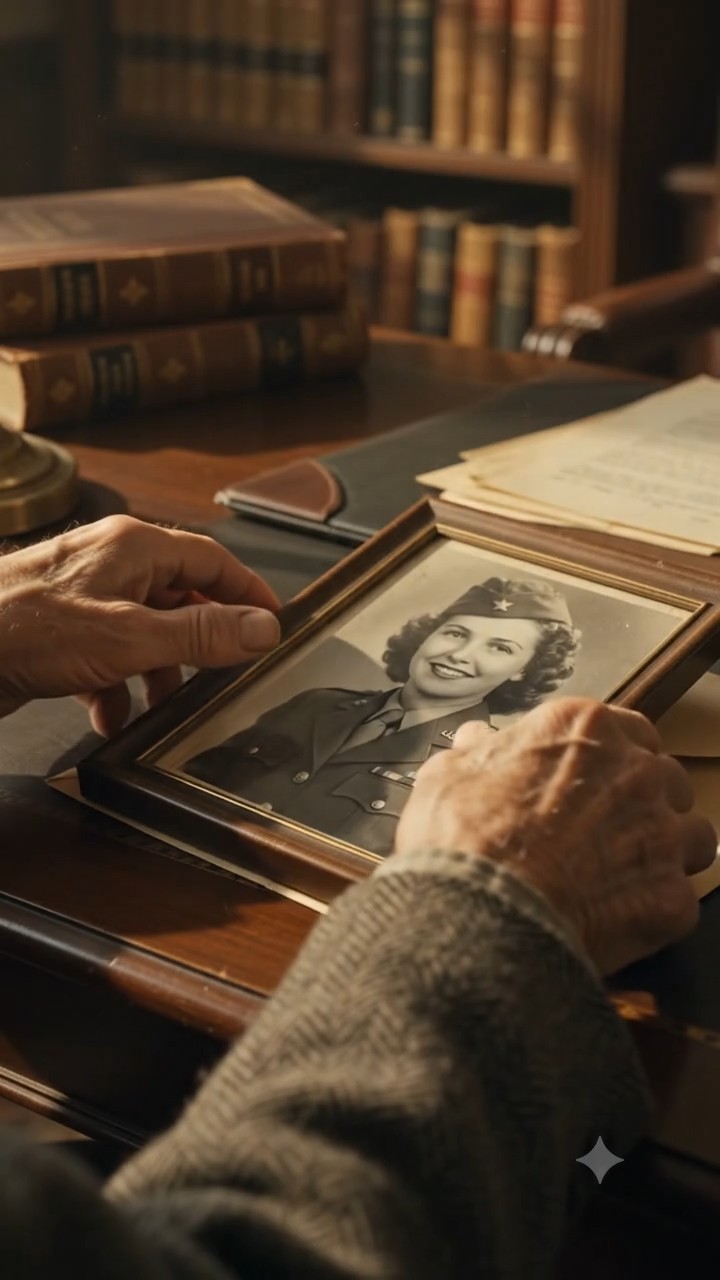
She doesn't need your wood, Caleb, and she certainly never needed your five-dollar soup jars, the estate attorney told me across a desk stacked with yellowing parchment in the winter of 1975.


Maya spent the next two days buried in county archives, poring over brittle ledgers and dusty maps. Meanwhile, I found myself drawn back to Eleanor’s cottage, the very place Arthur was fighting so hard to claim. I still had the task of cataloging her belongings, a morbid duty that felt like a quiet act of defiance.
The cottage was a testament to a life lived simply, yet filled with hidden depths. Old books lined shelves, their pages brittle. A stack of wartime magazines sat on a small table. I started in the attic, a forgotten space filled with trunks and cobwebs.
Dust motes danced in the slivers of sunlight piercing the grimy windows. I moved aside a stack of woolen blankets, uncovering a wooden crate. Inside, amidst yellowed blueprints and technical manuals, sat an old shortwave radio. It was a bulky, military-issue model, its bakelite casing still gleaming under the dust.
I ran my hand over its cool, smooth surface. Eleanor had always been private about her past, her stories vague. This radio, however, hummed with untold history. I picked up a thick manual, “Advanced Radio Communications: 1943 Edition.”
Its pages were dog-eared, covered in Eleanor’s precise, looping handwriting. As I leafed through it, a loose page slipped out from between the static-crinkled schematics. It wasn’t another technical drawing. It was a letter, dated October 12, 1944.
The paper was thick, aged to a creamy tan. The handwriting was unmistakably Eleanor’s, but bolder, more urgent. It was addressed to a “Dearest E.” and spoke of code patterns, intercepted signals, and the grim realities of wartime intelligence.
My breath hitched as I continued reading. Tucked inside the same manual, another, smaller slip of paper. This one was a military dispatch, dated 1971, bearing an official-looking stamp: “Department of Defense, Casualty Assistance.” It mentioned “Kingsford, Thomas, USMC.”
My own son, Thomas. The one I lost in Vietnam. How was he connected to Eleanor and this dispatch?
I returned to the 1944 letter. It didn’t mention Thomas. But it did mention, chillingly, something else entirely. A later addition, scrawled in faded ink at the bottom of the last page, almost an afterthought.
“P.S. Arthur’s visit this afternoon was most… illuminating. He believes an old woman has no need for a sturdy brass compass. How foolish of him to think I didn’t mark its absence, and its quiet return.”
My fingers tightened around the paper. Arthur. He had been here, searching, not just “checking on his father” as he claimed, but looking for valuables, even a small, brass compass. Eleanor had seen right through him. She had tested him, and he had failed.
More Stories








+ There are no comments
Add yours