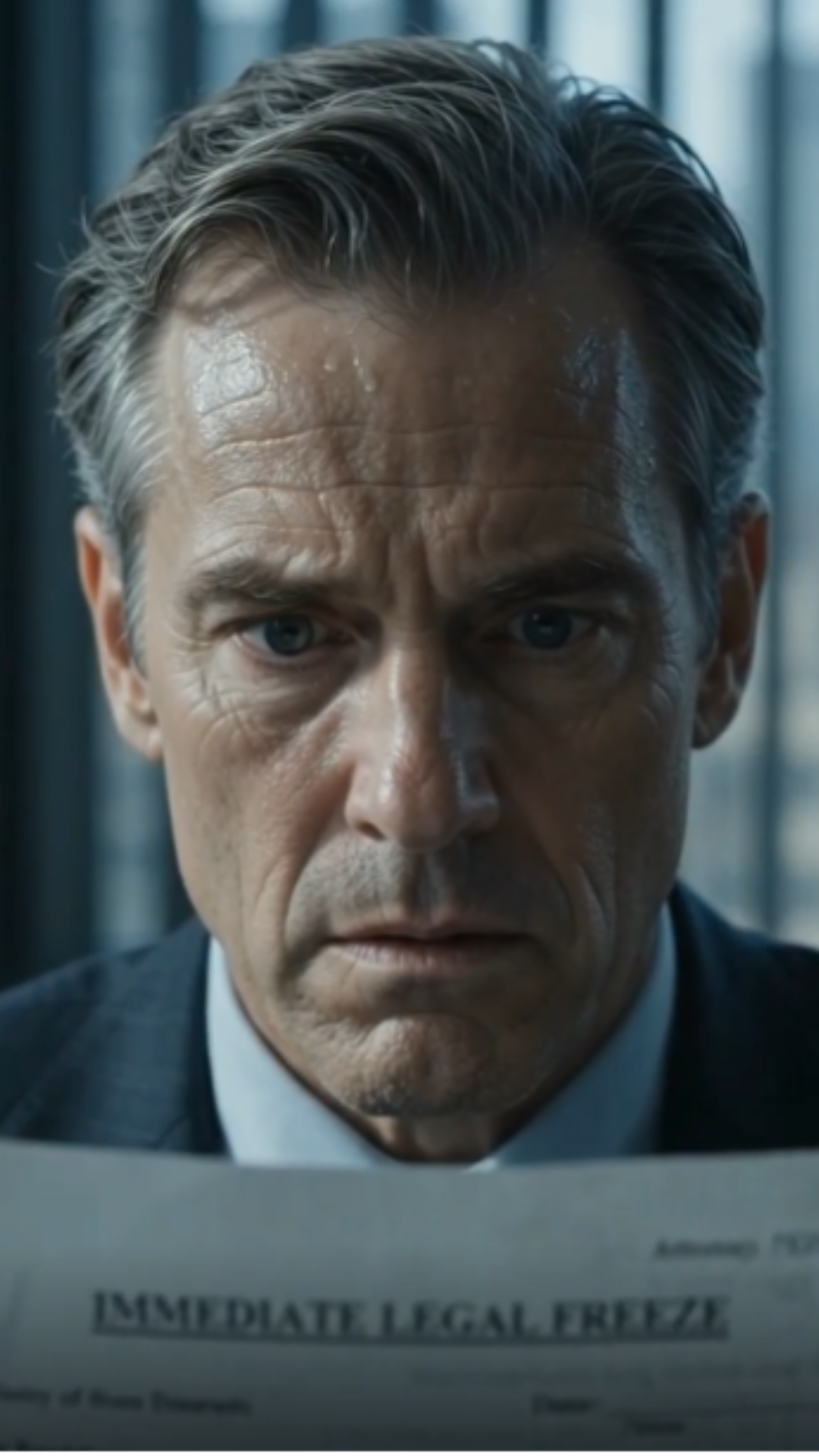
Your late wife did not die of chronic heart failure, Mr. Oakley, the attorney said, placing a heavy manila folder on the mahogany desk between them.


The shock of Eleanor’s profound generosity hung between Julian and me like a physical thing. He didn’t speak a word on the drive back, his usual frantic energy replaced by a heavy, self-inflicted silence. The news of the Clara Oakley Pediatric Foundation had shattered his world view, leaving him adrift.
But there was no time for processing grief or guilt. The next day, Attorney Garrison called an emergency meeting. The urgency in his voice was unmistakable.
We met in a bland, windowless conference room at the bank where the Montgomery trust funds were held. The air was sterile, smelling of stale coffee and fear. Two stern-faced men, both trustees of the Montgomery estate, sat opposite us, their expressions unyielding. Garrison occupied the head of the table, his usual procedural calm now tinged with an almost grim determination.
“Gentlemen,” Garrison began, his voice devoid of warmth, “the estate’s position remains unchanged. Mr. Oakley, the freeze on your business accounts is still in effect, and the liens on your workshop assets are active. You face total personal asset seizure within 48 hours.”
Julian stiffened beside me, a low groan escaping him. He ran a hand over his face.
“However,” Garrison continued, pulling a document from a briefcase, “there is a path to immediate resolution. A legal provision within the Montgomery trust allows for a specific renunciation.”
He slid the document across the polished table. It was a declaration, stark and uncompromising. My name was at the top.
“Mr. Oakley,” one of the trustees, a thin man with sharp eyes, said, his voice flat. “If you sign this sworn declaration, asserting that your marriage to Eleanor Montgomery was a fraudulent arrangement, designed solely to bypass the trust conditions, all financial holds on your business accounts will be immediately lifted. The liens will be dissolved. You will walk away financially whole.”
My gaze was locked on the words: “I, Arthur Oakley, hereby declare my marriage to Eleanor Montgomery to be a sham, entered into under false pretenses…”
My jaw tightened. This was the ultimate betrayal. To declare my love for Eleanor, a woman who had given away her fortune to honor my daughter, a fraud. It was unthinkable.
Julian grabbed my arm under the table, his grip like a vise. His eyes pleaded with me. “Arthur, don’t be stupid! It’s $142,000! Our workshop! It’s everything!”
“This declaration,” the second trustee added, his voice clipped, “would ensure the entire Montgomery estate, some $14 million, reverts to its original alternate beneficiary. It cleanses the record.”
“$14 million,” Julian whispered, his face a mask of desperation. “Arthur, please. It’s just words on paper. We can fight it later, sue them. But right now, we need to save the business.”
My eyes remained fixed on the document. The sterile room, the hard faces of the trustees, the desperate pleas of my brother—it all faded. All I could see was Eleanor’s kind smile, the warmth of her hand in mine, the selfless act of naming a foundation after Clara. To sign that paper would be to erase every true, honest moment we shared. It would be to betray her memory, to let her last, loving sacrifice be twisted into a cruel joke.
I pushed the paper back, my hand shaking. The choice was clear, agonizing, and immediate.
More Stories








+ There are no comments
Add yours