
A military mother's quiet vigil uncovers her daughter's powerful husband's cultural abuses


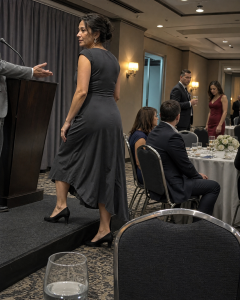
The community council meeting dissolved into a frenzied uproar. Several elders, their faces flushed with anger, openly challenged Layla and Tariq. Their whispers of concern turned into accusations of hypocrisy, echoing through the hall. Layla, her face a mask of furious defiance, was practically dragged from the podium by Tariq, who himself looked utterly blindsided. His charming façade had crumbled, revealing a panicked, cornered man beneath.
Dr. Khan, ever the professional, moved swiftly. Amidst the chaos, she managed to secure Anya’s safe transfer. A small, discreet car waited outside, whisking Anya away to a secure, independent residence, far from the Al-Hazari estate. It was a victory, undeniably. My daughter was free, physically.
But when I saw Anya at the new residence, my heart sank. She was safe, yes, but she was a ghost. Her eyes held a haunted look, her movements slow and uncertain. The public fallout, the brutal exposure of her tormentors, had left her more fragile than ever. She barely acknowledged my presence, retreating into a quiet corner, staring at nothing. Her trauma was profound, a deep wound that would not heal quickly, if ever.
I felt a surge of grim satisfaction that the truth was out. The Al-Hazaris, for all their power and influence, had been exposed. Their carefully cultivated image lay in ruins. Layla’s reign of quiet terror was over. The community, or at least a significant part of it, now knew the true face of the matriarch they had once revered.
But this triumph was tempered by Anya’s profound suffering. My daughter, though physically free, was a shadow of her former self. The Major Petrov I knew, the disciplined, fiercely independent woman, was gone. She was a casualty of this war, her spirit irrevocably broken by the systematic abuse she had endured. The cost of her liberation felt unbearably high.
Layla, despite her public disgrace, remained defiantly unbowed. The next day, word circulated through the community: she had issued a terse, unapologetic statement. It denounced the council meeting as a “malicious attack fueled by outside interference and false allegations,” implying it was a Western ploy to undermine their traditions. She vowed to “restore honor” to her family, not by seeking forgiveness, but by retreating.
Within weeks, the Al-Hazari family began to quietly liquidate several of their local assets. Their primary business operations, the source of much of their wealth, were swiftly relocated to a different city, a new market where their reputation had not been shattered. Layla planned to rebuild their social standing, to cultivate a new, less scrutinized reputation elsewhere. She would simply find a new community to impress, a new veil of respectability to wear.
Tariq, too, retreated from public life. He disappeared behind the walls of their remaining property, his charming façade irrevocably cracked, his power diminished but his wealth largely intact. He faced no legal charges; the resolution had been social, communal, not judicial. His family’s vast financial resources meant he could easily disappear and reappear elsewhere, with enough money to weather any storm.
Faisal, who had found a sliver of courage at the council meeting, now carried a different burden. He was ostracized by Layla and Tariq, his role in their public humiliation unforgiven. He moved out of the family compound, selling his shares in the local branches of their business at a significant loss. He was a pariah to his mother, but perhaps, a man finding a fragile peace in his own conscience. He had sacrificed his position for truth, a small, yet significant act.
The community, too, was fractured. Some rallied around Dr. Khan, praising her bravery and the exposure of the Al-Hazaris’ hypocrisy. Others, particularly those tied to the Al-Hazari network through business or social connections, remained cautious, preferring to believe Layla’s narrative of external meddling. They whispered about the “scandal,” but few were willing to openly condemn a family that still held considerable, if diminished, financial sway.
The victory felt hollow, a heavy weight in my chest. Anya was safe, but not whole. The Al-Hazaris were disgraced, but not ruined. They would simply transplant their power, their manipulations, to new ground. It was a stark reminder that justice, when confronted with deep-seated power and cultural hypocrisy, often came at a profound, unredeemable cost. The immediate danger was past, but the scars, on Anya and on the community, would linger. The battle was won, but the war for Anya’s true self was far from over.
More Stories



+ There are no comments
Add yours