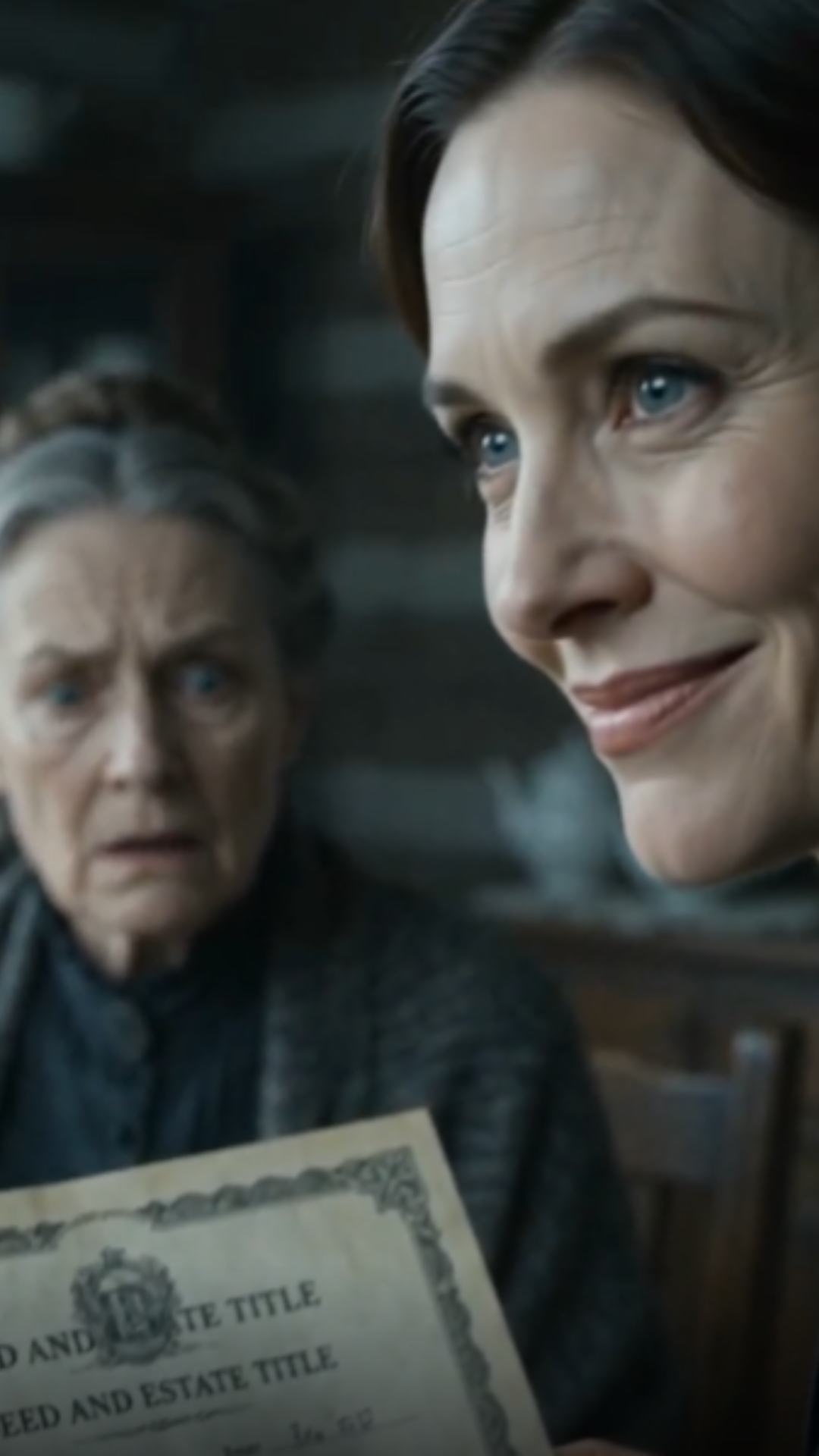
Only mothers of sons are entitled to hold the family porcelain, my mother-in-law Clara announced, her spoon clicking sharply against her teacup.


December settled over the Vermont ridge, bringing with it a profound stillness. The world outside the guest cottage was frozen, much like Clara’s life inside it.
She had locked herself away completely. No one saw her come or go. The cottage windows remained dark, and smoke no longer curled from its small chimney.
I knew she was there. A faint light sometimes flickered in her kitchen window late at night.
The silence between us was absolute, unbroken.
I started a new ritual. Every evening, just before dusk, I would prepare a tray of food. A steaming bowl of beef stew, a slice of fresh-baked bread, a piece of apple pie from our orchard.
I would walk it down the short, snow-covered path from my main house to her guest cottage.
The path was narrow, and sometimes the snow drifted so high it brushed against my knees. The air bit at my exposed skin.
When I reached her front door, I would place the tray silently on the small, unpainted porch.
I never knocked. I never called out her name. I simply left the food and walked back, leaving no trace but my footprints in the snow.
The next morning, the tray would be empty, left back on the porch. A silent acknowledgment. No note, no word, just the clean dishes.
My daughters watched me, bewildered at first. Sarah still harbored her anger.
“Why, Mom?” she asked one evening, as I ladled stew into a bowl. “Why are you still taking care of her?”
“She’s old, Sarah,” I replied, not looking up. “And she’s alone.”
“But she made her bed,” Sarah retorted. “She tried to ruin us.”
“Perhaps,” I said. “But letting someone starve, letting them freeze in winter… that’s not our way.”
Chloe, quieter, just observed. She would sometimes help me pack the tray, her movements deliberate.
The cold was fierce that winter. I worried about the cottage’s heating. The old wood stove in her living room was notoriously inefficient.
One evening, I bundled up an extra wool blanket and added it to the tray, draped over the hot stew.
The next morning, the blanket was gone. The tray was empty.
This silent exchange continued for weeks. Christmas came and went, a quiet affair in our house, devoid of the usual tension, but still shadowed by Clara’s isolation.
I pictured her in there, alone. The proud, rigid matriarch, stripped of her town offices, her social standing, her money.
All her accounts liquidated by regional creditors. The full $110,000 lost.
She was utterly bereft.
My daily act of leaving food was not about forgiveness, not yet. It was about basic humanity. It was about leaving a door ajar, just a crack, without demanding anything in return.
The guest cottage remained a fortress of silence. But the food, the returning trays, were a thin, fragile thread between us.
A thread of unspoken acknowledgment, stretched taut across the cold, snow-filled gap between our homes.
More Stories







+ There are no comments
Add yours