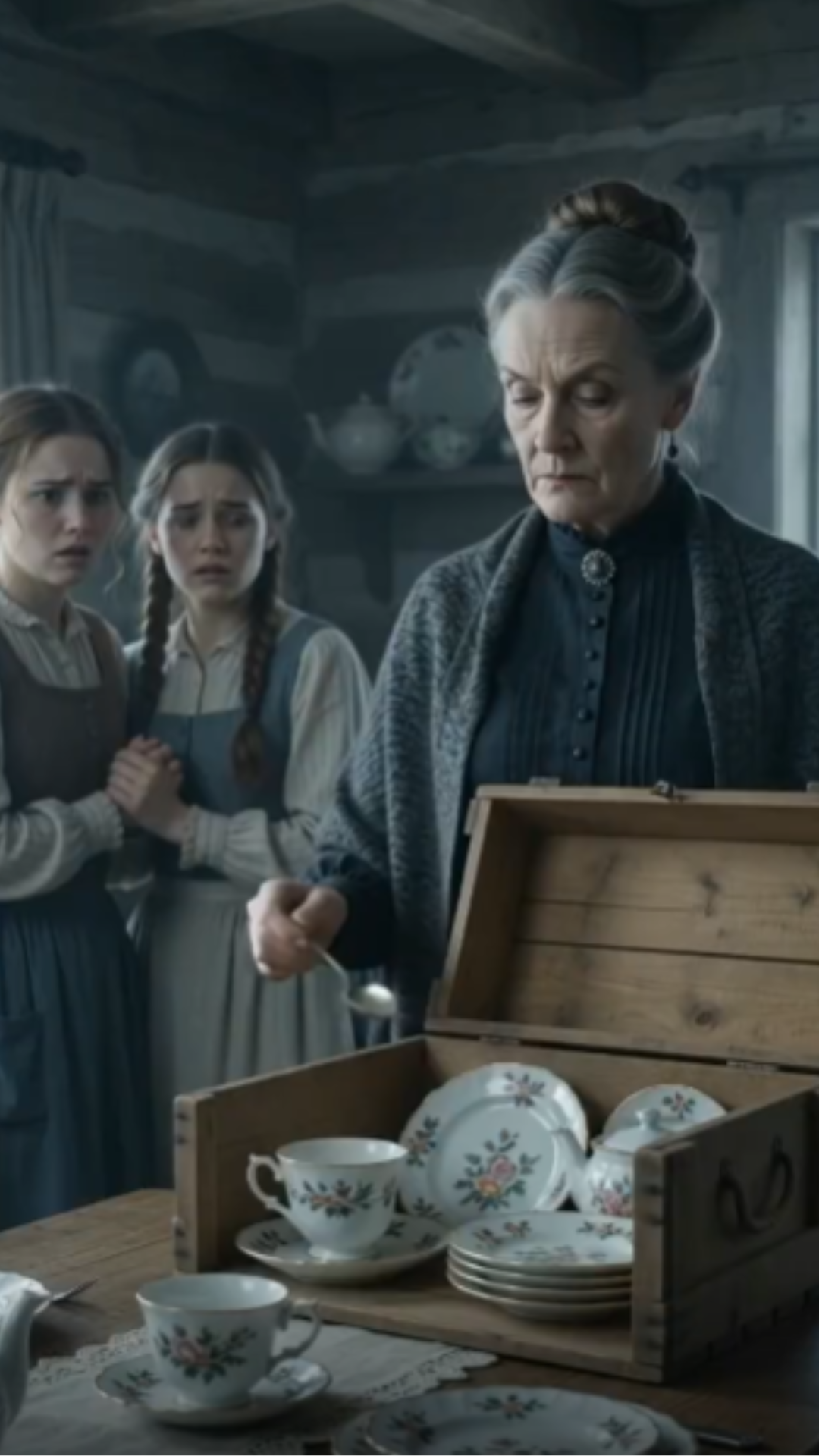
Only mothers of sons are entitled to hold the family porcelain, my mother-in-law Clara announced, her spoon clicking sharply against her teacup.


The heart of winter settled over Oakhaven, nights stretching long and dark. January’s grip was unyielding, bringing with it heavy, silent snowfalls.
I found myself waking often in the small hours, the old farmhouse creaking around me. One snowy night, around 2:00 AM, a faint sound drifted up from the kitchen.
A soft click. Then another.
I lay still, listening. It wasn’t the house settling. It was too regular, too deliberate.
My heart began to thump a little harder. We lived deep in the woods, on a farm. Unusual sounds after midnight put me on edge.
I slipped out of bed, pulling on my old wool robe. The floorboards were cold beneath my feet. I moved quietly, careful not to wake anyone.
As I crept down the stairs, the sound grew clearer. A gentle clinking, like ceramic.
I paused at the threshold of the kitchen, peering around the corner. The room was mostly dark, lit only by the faint glow of the outdoor security light filtering through the window.
And there, a shadow at the glass-fronted china cabinet.
Clara.
She stood with her back mostly to me, her slight frame hunched. Her hair, usually so meticulously pinned, was loose, a silver halo in the dim light.
Her hands, gnarled with age, were moving slowly, carefully.
I watched, holding my breath.
She reached into a canvas bag on the floor beside her. Her fingers trembled visibly as she pulled out a single, familiar item.
A Haviland porcelain plate. One of the twenty-four pieces she had packed away.
It glistened faintly, a delicate hand-painted rose peeking out from the shadow.
She meticulously wiped it with a soft cloth, even though it looked pristine. Then, with painstaking slowness, she lifted it and placed it back onto the shelf inside the glass cabinet.
Another soft click as it nestled into place.
She repeated the action. Another plate. Another slow, deliberate wipe. Another click.
Two plates. Just two.
She didn’t speak. She didn’t look around. Her focus was entirely on the task, her movements imbued with a quiet, profound remorse.
When the two plates were returned, she carefully folded the cloth, tucked it back into her bag, and then, as silently as she had arrived, she turned and left the kitchen.
Her footsteps were barely audible as she moved through the pantry, out the back door, and back into the snowy night.
I didn’t move until the sound of her receding steps faded completely.
The next night, it happened again. The same faint sounds, the same shadowy figure in my kitchen, the same two plates returned to the cabinet.
And the next night. And the night after that.
Over four long winter months, in the quiet hours of the night, Clara embarked on her silent pilgrimage.
One by one, plate by plate, she returned the porcelain. Sometimes it was just one, sometimes two. Always in silence. Always with those trembling, repentant hands.
She never spoke a word. I never confronted her. We maintained the careful, unspoken boundary.
It was her way of apologizing, her way of mending the tear she had made. Not with grand speeches, not with tearful confessions, but with the quiet, laborious act of restitution.
The china cabinet, piece by piece, was becoming whole again. And in that quiet, midnight ritual, something else, far more fragile, was slowly beginning to mend too.
More Stories







+ There are no comments
Add yours