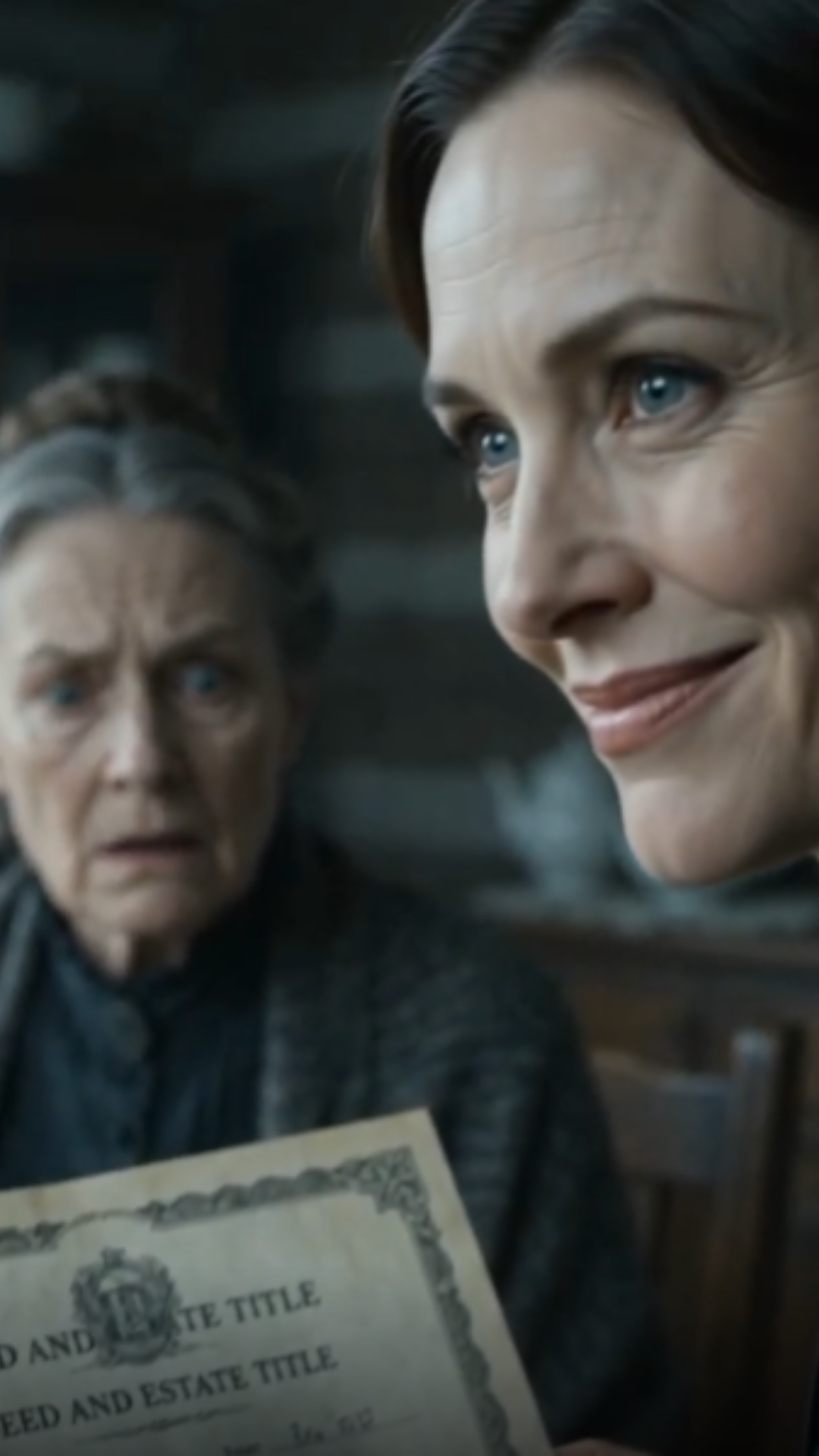
Only mothers of sons are entitled to hold the family porcelain, my mother-in-law Clara announced, her spoon clicking sharply against her teacup.


The news of Clara’s financial machinations didn’t spread through Oakhaven like whispers; it moved like a brush fire. Within twenty-four hours, the town was ablaze with it.
Rita Sanders, true to her word, had presented the ledger to the cooperative’s board. The board, composed of several prominent church elders and respected town figures, was furious.
They were especially incensed that community funds, meant to support local families and keep Oakhaven’s traditions alive, had been used to prop up Clara’s private, risky investments.
Mr. Henderson, the same church elder Chloe had mentioned, was overheard at the diner, his voice booming.
“She used our money! To save her own skin!”
The word “embezzlement” hung in the air, unspoken but understood.
The regional lenders, once they heard about the default and the missing co-op funds, moved quickly. Clara’s personal bank accounts were frozen. Her credit, already strained, was obliterated.
Her world, once so solid and imposing, began to fracture.
I saw the change firsthand when I went to the weekly farmers’ market. The previous weeks, people had actively avoided my stall. Now, they were avoiding Clara’s.
She usually had a small table for the craft cooperative, selling the remaining inventory. Today, it was empty.
Instead, she stood near the town bulletin board, pinning up a flyer for a “heritage tea,” her back straight, her chin held high.
But no one approached her. No one even made eye contact.
Mrs. Henderson, who had so recently worried about “outsiders” buying my farm, walked right past Clara without a glance, pulling her shopping cart tightly to her side.
Agnes Miller, the one who had given me the stiff nod, now stood talking animatedly with Martha Thorne, both of them studiously ignoring Clara’s presence.
The social isolation Clara had inflicted on me was now visited upon her, amplified by the sheer scale of her deception.
The community Clara had so meticulously cultivated and controlled for decades, the one she had tried to leverage against me, now turned its back on her completely.
Her carefully constructed image as the town matriarch, the guardian of tradition, crumbled.
She was no longer the respected Higgins elder, but the woman who had stolen from the craft cooperative, the woman whose guest cottage was under threat of foreclosure.
Clara stood there for a long time, frozen by the bulletin board. Her face remained impassive, but I saw the slight tremor in her hands as she finally pulled the unsold tea flyers off the board.
She folded them neatly, too neatly, and walked away. Not to the co-op shop, which was now effectively under interim management by Rita. But straight to her guest cottage.
The speed of her fall was breathtaking. It was a stark reminder that in a small town like Oakhaven, a reputation built on deceit could unravel faster than any meticulously mended sampler.
The irony was palpable. She had tried to destroy me with lies about heritage, only to be undone by her own betrayal of that very heritage.
Clara Higgins, the proud, rigid matriarch, was now utterly alone.
More Stories










+ There are no comments
Add yours