The old intake shack stood exactly where it always had, perched at the perimeter gate, marking the divide between Sanctuary Valley and the winding mountain road. Five years ago, its rusted iron and drafty walls had been a symbol of my forced exile, a cold, unheated prison where I was meant to break.
Now, a plume of woodsmoke curled lazily from its newly installed chimney. The walls were clad in fresh, smooth cedar planks. The windows, once broken and patched with plastic, gleamed.
Inside, the low hum of electric saws mingled with the scent of pine resin and brewing coffee. The “Sanctuary Way Transition Center” was etched in sturdy timber above the door, a name Seth had crafted. It was no longer a place of banishment, but a haven.
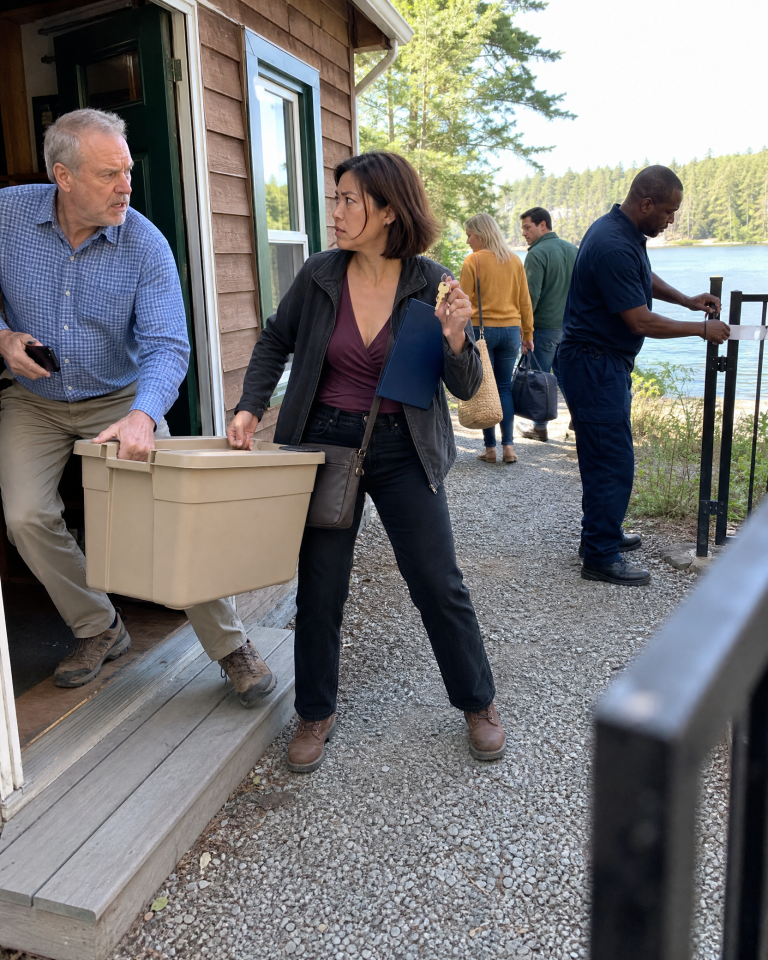
Today, the air bit with the familiar chill of a Utah winter. Snow crunched under our boots as Seth and I unloaded a fresh truckload of rough-cut lumber. Four new men, fresh from state correctional facilities, worked alongside us, their faces a mix of apprehension and quiet hope.
“Careful with that last stack, Michael,” Seth called out, his voice strong and clear, guiding one of the new arrivals. His movements were confident, his presence calm. There was still a seriousness to him, but the rigid fanaticism had melted away, replaced by a quiet, grounded wisdom.
He turned to me, wiping sawdust from his brow. “Good haul. Should keep the carpentry shop busy for a month at least.”
I nodded, heaving a heavy beam onto my shoulder. “Plenty of beds to build for the next intake.”
The commune itself had transformed, slowly, painstakingly. With Elder Jonah gone, the community elected a rotating council, moving away from single leadership. Sarah Jenkins had published a series of articles on the Apex Capital exposé, shining a light on their schemes and ultimately leading to federal investigations that had shut down their Utah operations. The community, once isolated, had cautiously re-engaged with the outside world, learning to discern true threat from perceived evil.
The biggest change, though, was here, at the intake shack. It was funded by the timber sales from the land and small, private donations from people Sarah Jenkins had connected us with. A place where men like me, fresh out of prison, could find honest labor, learn a trade, and rebuild their lives without judgment. A true sanctuary.
Seth walked beside me, carrying his own heavy beam. We reached the shack door, and he carefully set down his end. Then, with a movement that was both casual and deeply significant, he placed a hand on my shoulder.
His touch was a silent testament to enduring restoration, a shared journey of two broken men.
“Freedom wasn’t found outside the gates,” he said, his voice soft, almost a whisper, echoing the profound truth we had both learned. “But in the quiet moment two broken men stopped throwing stones and started building a sanctuary.”




+ There are no comments
Add yours