
My Stepmother Chased Me Off My Father's Farm After My Release from Prison — But the Cemetery Caretaker Had a Key My Father Left Behind


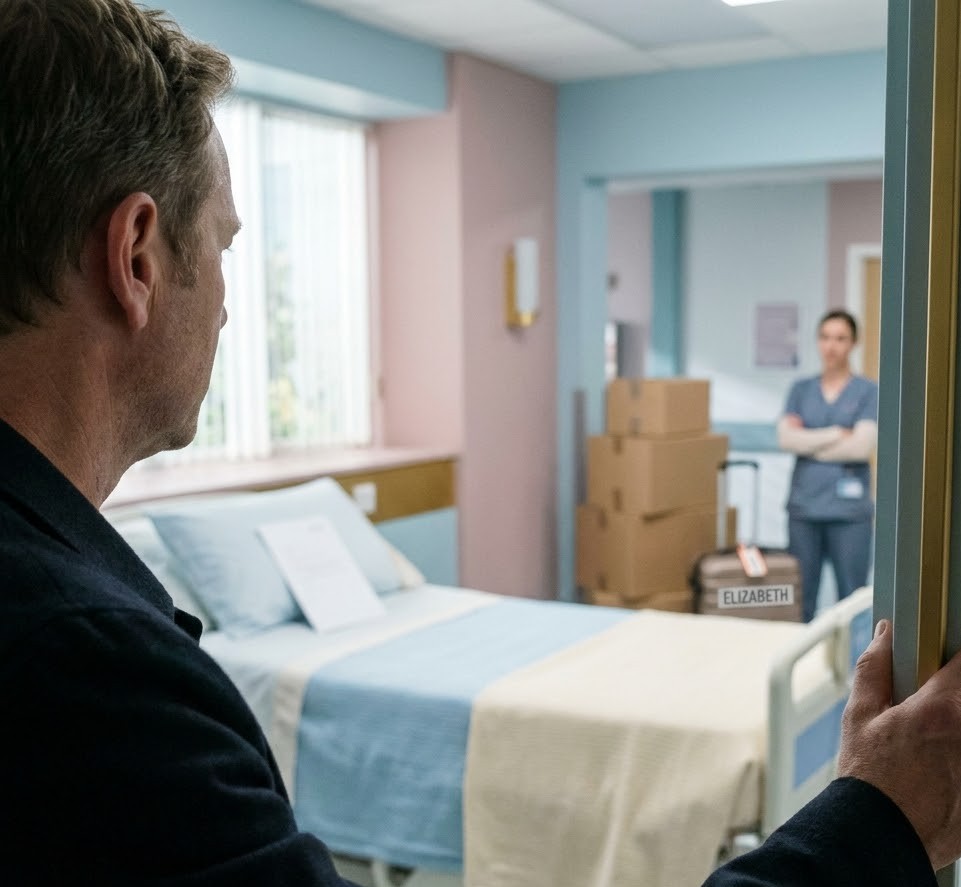
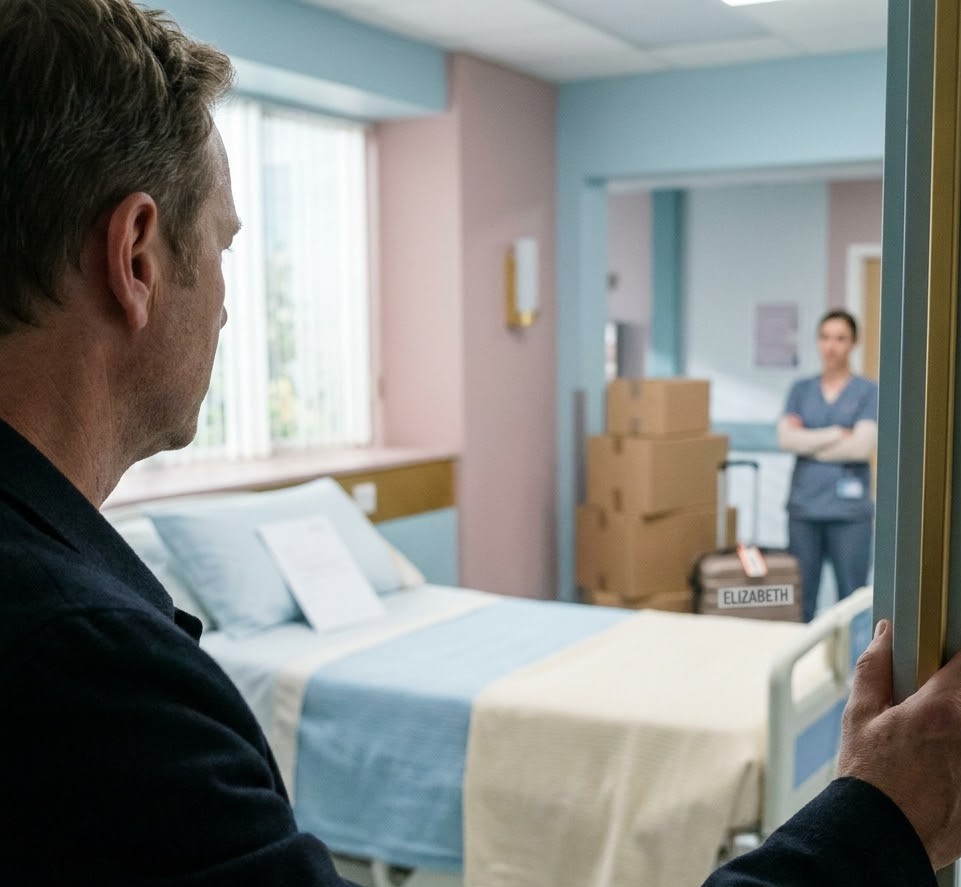
Part 1
She told me my father, Colonel Arthur Dunbar, had died of a heart attack fourteen months ago and had left every single acre and pension dollar to her.
She claimed my father died hating me because of $42,000 in missing military payroll funds she accused me of stealing during the 2001 deployment.
She warned me that if I ever stepped foot on the property again, she would call my parole officer and have me sent right back to prison.
I walked three miles in the pouring rain to the rural veterans’ cemetery just to find my father’s headstone, with nowhere else left to go.
That was when the elderly cemetery caretaker stepped out of the shed with a rusted iron key and whispered that my father never believed I was guilty.
The gravel crunch under my worn boots felt like a foreign language on the familiar driveway. Three years at Fort Leavenworth had taken away my home, my name, and almost my sanity. Now, as I pushed open the creaking iron gate of the Dunbar family farm, the Georgia sun felt too bright, too indifferent.
Hope, a fragile, stubborn thing, flickered in my chest. Maybe, just maybe, things wouldn’t be as bad as I feared.
Then I saw her.
Evelyn, my stepmother, stood on the wrap-around porch, her silhouette stark against the white columns. She wasn’t just standing there; she was holding a shotgun. A heavy, double-barreled shotgun, casually cradled in her arms like a familiar pet.
Her face, usually etched with a permanent, brittle smile, was a mask of cold resolve. Not a flicker of recognition, no hint of welcome.
My steps faltered. The air chilled around me despite the humid afternoon.
“Silas,” she said, her voice cutting through the quiet. There was no warmth in it, just a flat, dismissive tone.
I stopped at the edge of the property line, unsure if I should even take another step. The “no trespassing” sign, a new addition since I left, seemed to glow menacingly.
“Evelyn,” I replied, my own voice rough from disuse, from years of shouting orders and then taking them.
She didn’t move. Her gaze was like steel, sweeping over my faded prison-issued clothes, the small duffel bag at my feet.
“You have no business here,” she stated, her words dripping with finality.
My heart clenched. “This is my home. It’s my father’s farm.”
A harsh laugh escaped her lips, devoid of humor. She shifted her weight, and the shotgun glinted in the sunlight.
“Your father,” she began, the name a venomous hiss, “died fourteen months ago.”
The words hit me like a physical blow. The world tilted. My father. Dead? No one had told me. No one had even sent a letter.
My voice came out as a strangled whisper. “What are you talking about? Colonel Arthur Dunbar?”
“The one and only,” Evelyn said, her eyes narrowed. “He died of a massive heart attack. Alone, in his bed.”
A wave of nausea washed over me. Colonel Arthur Dunbar. My father. The man who taught me how to shoot straight, how to be honest. The man who believed in duty above all else.
“He died hating you, Silas,” she continued, twisting the knife. “He died believing you were a thief. A disgrace to the uniform.”
My fists clenched. “That’s a lie. I never stole those funds.”
“The military court disagreed, didn’t they?” she retorted, a cruel smirk playing on her lips. “Three years in the stockade, remember? For stealing $42,000 in unit payroll funds from the 2001 deployment.”
Her words were a torrent, each one designed to inflict maximum pain.
“He rewrote his will,” she declared, her chest puffing out slightly. “Every single acre of this 240-acre farm. Every last dollar of his $180,000 army pension. It all belongs to me now.”
She paused, letting the information sink in. The silence was deafening, broken only by the chirping of crickets in the overgrown grass.
“He left you nothing,” she added, her voice a low, chilling whisper. “Not a penny. Not a memory worth keeping.”
My legs felt suddenly weak. The farm, the land, the pension – everything gone. My entire inheritance, my legacy, wiped away by a stroke of a pen and a lie.
She took a step down from the porch, raising the shotgun slightly. Its cold, metallic gleam was unmistakable.
“This is my property now, Silas,” she warned. “And you are trespassing. Your parole conditions are very clear about associating with known criminals, aren’t they?”
Her meaning hung in the air, a threat more potent than the gun itself. One call, and I’d be back in a cell, serving who knows how long for a parole violation.
“Get off my land,” she commanded, her voice rising, “or I swear to God, I will call your parole officer. And you won’t last an hour before they come for you.”
I looked at her, then at the familiar fields stretching out behind her, fields I’d worked since I was a boy. They were no longer mine. Nothing was.
The sky, which had been bright moments ago, darkened suddenly. A rumble of thunder echoed in the distance. Large, heavy drops of rain began to fall.
With a profound weariness that settled deep into my bones, I turned away from the home I no longer had. I had nowhere to go, no one to turn to.
The rain began to pour in earnest, cold and relentless, mirroring the emptiness inside me. My clothes were soaked through within minutes. My boots squelched in the mud of the county road.
I walked for what felt like an eternity, the rhythmic patter of the rain on my head a dull counterpoint to the storm raging in my heart. Three miles, they said. Three miles to the edge of town, to the old veterans’ cemetery. It was the only place I could think to go. The only place where a piece of my father might still exist for me.
When I finally reached the wrought-iron gates, my teeth were chattering, and my muscles ached. The cemetery was quiet, the rows of white headstones standing solemn in the downpour. Water streamed down my face, mixing with the tears I hadn’t realized I was crying.
I searched through the names, my vision blurred by rain and grief, until I found it. Colonel Arthur Dunbar. Died: February 12, 2003.
I knelt in the soaking wet grass, oblivious to the cold, tracing the carved letters with a trembling finger. “I’m sorry, Dad,” I whispered, the words choked with emotion. “I’m so sorry.”
A sudden creak from a small, weather-beaten shed near the back of the cemetery made me flinch. An elderly man, bent with age, emerged. He wore a patched-up rain slicker and a worn baseball cap that barely shielded his grizzled face. Thomas Hallowell, the old caretaker. “Grizz,” as my father used to call him.
He shuffled slowly towards me, his eyes, surprisingly sharp, taking in my disheveled state. He stopped beside me, his gaze fixed on my father’s headstone.
Then, without a word, he reached into his pocket. His hand, gnarled with age, produced a heavy, rusted iron key. It was old, clearly well-used, and distinctly out of place.
He pressed it into my palm. It felt cold and metallic against my skin.
“Your father,” Grizz whispered, his voice raspy but clear, “he never believed you were guilty, Silas.”
Part 2
“Come with me, son.” Grizz turned, his frame silhouetted against the chapel’s stone archway. He led me inside the cool, quiet building, past rows of plaques, to a dark wooden wall locker.
He pointed to a small, brass box, secured with a sturdy lock. My hand trembled as I inserted the rusted iron key. It clicked open.
Inside, nestled amongst faded military service ribbons, was my father’s old 2003 Nokia phone, wrapped tightly in oilcloth. A small charger lay beside it.
My fingers fumbled, connecting the phone. The screen flickered to life. I navigated to a saved thread: 14 messages, August 2001.
Evelyn’s name. Then her cousin’s. The texts detailed how she’d hidden $42,000 cash in my footlocker, setting me up, so Julian would inherit the farm.
I looked up, stunned.
“Your father found that phone,” Grizz said, his eyes solemn, “48 hours before he died.”
More Stories



+ There are no comments
Add yours