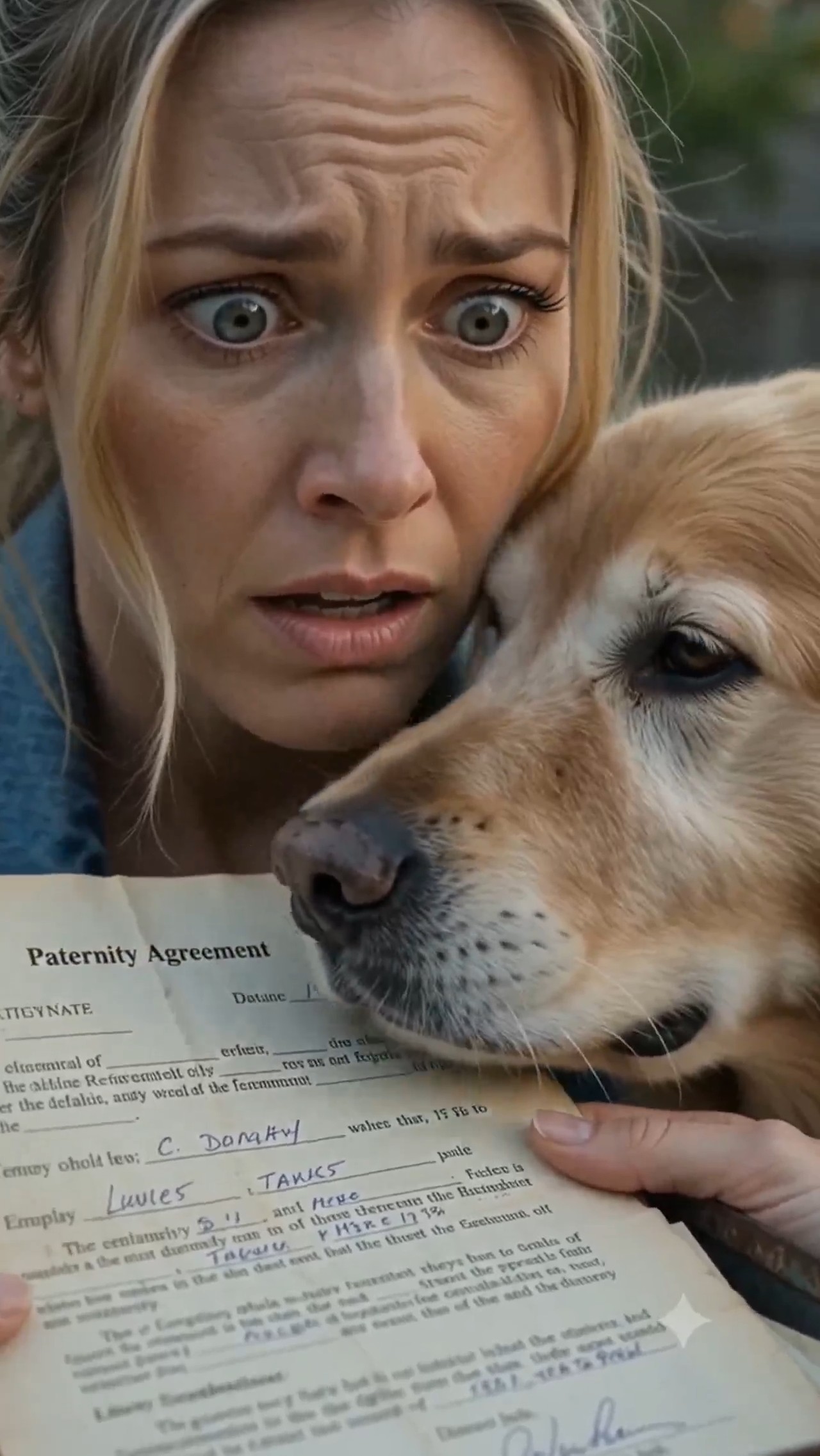
My Mentor Sponsored My Tuition Until My Rescue Dog Refused to Eat Near Him — Uncovering the 3-Year Cold Case That Lost Me Everything


Part 1
Arthur Albright had paid my college tuition and given my five-year-old daughter and me a home in his annex after my mother died.
I thought the rescue dog I brought home was just timid, but he flatly refused to eat a single bite whenever Arthur stood near the dining table.
For three weeks, I logged the dog’s precise behavioral triggers, only to discover his original microchip belonged to a woman who vanished three years ago.
She was the librarian whose unsolved disappearance had almost put my revered mentor in prison.
The small, square dining table in the annex kitchen usually buzzed with the gentle clink of Lily’s spoon against her cereal bowl, or the low hum of the portable radio playing morning news.
This particular afternoon, it was quiet, save for the rhythmic scratching of my pen against the worn pages of my observation log.
I sat with my elbows on the table, watching Buster.
The rescue dog, a scruffy terrier mix with intelligent, mournful eyes, lay curled tight in his bed beside the refrigerator. His bowl, brimming with his favorite kibble mixed with a dollop of pumpkin purée, sat untouched on the floor just a few feet away.
Buster had not eaten in nearly twelve hours.
He usually devoured his food with enthusiastic gulps, especially after a long walk through the neighborhood. But for the past three weeks, this was a common, agonizing sight.
My five-year-old, Lily, sat across from me, diligently coloring in a book filled with cartoon puppies. She occasionally glanced up, her brow furrowed in concern for her new best friend.
“Buster sad,” she murmured, holding up a purple crayon.
I offered her a reassuring smile, but my gaze remained fixed on the dog. My training as a certified veterinary canine behavioral rehabilitation assistant screamed at me. This wasn’t just timidity. This was something deeper.
Every time Arthur Albright, my mentor and landlord, entered the annex, Buster would freeze.
His ears would flatten against his head, his tail tucked so far between his legs it practically disappeared. He’d shift his weight, ready to bolt, his eyes wide and fixed on Arthur’s every move.
It didn’t matter if Arthur was just passing through to the main house, or stopping to chat. The moment his presence filled the small space, Buster shut down. His appetite vanished as if by magic.
I’d initially chalked it up to general anxiety from his past as a stray. Many rescue dogs carried the scars of neglect.
But the pattern was becoming too precise.
My logbook, filled with neat columns and timestamps, detailed every interaction. “Arthur enters kitchen, 4:17 PM. Buster stops eating, retreats to bed. Remains rigid until Arthur leaves at 4:23 PM.”
I’d tried feeding Buster before Arthur came home, after Arthur left, in the laundry room, even in the car. It made no difference. As long as Arthur was anywhere near, the food was poison.
Today, Arthur had just walked into the living room of the main house, which was connected by a short hallway to our annex kitchen. I heard the familiar clink of his teacup against the saucer.
Buster, who had been cautiously sniffing his bowl, stiffened. He let out a low, almost inaudible whine. His nostrils flared.
He didn’t immediately retreat, though. This time, I saw a subtle difference. He was reacting to something more than just Arthur’s general presence.
Arthur’s voice drifted in from the living room, a cheerful, booming tone.
“Maya, dear! Just calling to remind you about the committee meeting tonight. Dean Garrick will be there.”
I leaned back, feigning interest in Lily’s drawing, but my eyes darted to Buster.
Arthur walked into the kitchen doorway a moment later, a polite smile on his face. He held a silver teaspoon, gesturing slightly with his hand as he spoke.
The afternoon light caught the prominent silver signet ring on his right hand, making it glint. It was a thick, ornate piece, a family heirloom he often wore.
Buster’s entire body went rigid.
His fur bristled along his spine. He didn’t just tuck his tail; he clamped it so tightly it disappeared. A soft, guttural growl vibrated deep in his chest, barely audible.
It wasn’t a growl of aggression, but of profound, absolute terror.
Arthur paused, noticing Buster’s extreme reaction. He lowered his hand slightly, his smile faltering into a polite frown.
“Oh, Buster,” he said, his voice soft, almost patronizing. “Still so timid, aren’t we? Just a skittish little fellow.”
He extended his hand a fraction, a casual, reassuring gesture.
Buster let out a sharp, panicked yelp, scrambling backward. He slid across the linoleum floor, desperately trying to get away, his eyes wide with an unspeakable fear.
He hit the cabinet with a thud, whimpering, utterly paralyzed. He was trapped.
Arthur pulled his hand back quickly, a flicker of irritation crossing his face before he smoothed it away.
“Well, I suppose some dogs never quite adjust,” he remarked, his tone dismissive. He turned away, shaking his head slightly, and went back into the main house.
The door clicked shut behind him.
Buster remained pressed against the cabinet, trembling violently, his eyes still fixed on the doorway as if Arthur might reappear at any second. His bowl, still full, was entirely forgotten.
I stared at my logbook.
It wasn’t just Arthur’s presence. It wasn’t just a general fear of men, or a loud voice, or even a sudden movement.
It was the specific way Arthur moved his hand.
The glint of that silver signet ring.
Those were the triggers. It was far more precise, far more ingrained, than I had ever dared to imagine.
This wasn’t a skittish rescue dog.
This was a dog that had experienced something specific, something traumatic, directly linked to Arthur Albright and that distinctive hand.
Part 2
I had to know.
The next morning, I took Buster to the regional clinic where I volunteered as an assistant. Dr. Chen, the kind, older vet, allowed me to use their microchip scanner during my lunch break.
I ran the small device over Buster’s scruff. It beeped, and a string of numbers appeared on the screen.
I typed them into the national registry database, my heart thumping. The screen loaded slowly.
The name that appeared wasn’t Buster.
It was ‘Barnaby’.
Registered exactly three years ago. In Oakridge County.
More Stories








+ There are no comments
Add yours