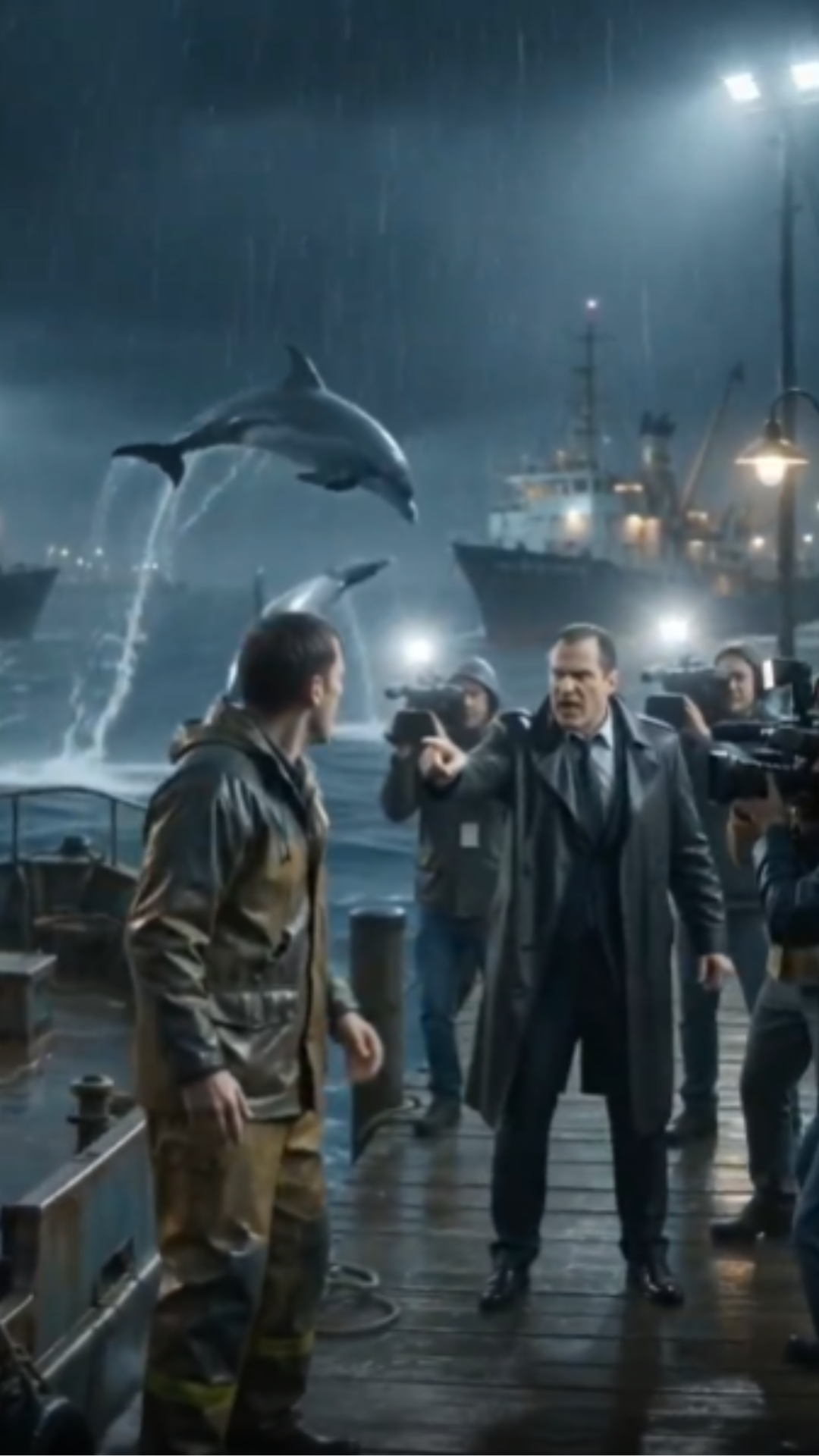
When I dragged my waterlogged boots onto the docks of Baltimore after a Category 2 gale on October 14th, my landlord and port developer Harrison Gable was already standing under the harbor lights w...


The black Escalade, the same one that had taken Gable, pulled up silently beside my truck. The passenger window hummed down.
Frank Costello stared at me, his eyes unreadable in the dim light. “O’Malley wants to see you, Ross. Pier 14. Now.”
There was no question in his voice, no room for refusal. This wasn’t an invitation. It was a command.
I followed the Escalade’s taillights through the winding dockside roads. Pier 14. The irony was a bitter taste in my mouth. The very pier Gable had used to dump Eli’s body, the very pier at the center of his fraudulent expansion plans.
We pulled up to an old, cavernous warehouse. Its corrugated steel walls were rusted, its windows long shattered. The air was cold, damp, and smelled of brine and decay.
Costello led me inside. The heavy door groaned shut behind us, plunging the vast space into near darkness. A single bare bulb hung from the ceiling, casting a weak, flickering light that barely pierced the gloom.
My eyes adjusted, and the scene before me sent a chill down my spine.
Harrison Gable was there. He was tied to a chair, his face bruised and swollen, a strip of duct tape across his mouth. His tailored suit was now ripped, his once-pristine hair disheveled. He slumped, breathing heavily, his eyes darting frantically.
Beside him, also bound, was Raymond Koster. The corrupt insurance adjuster was a picture of abject terror. His jowly face was ashen, his body trembling violently, tears streaking his cheeks. He whimpered, a muffled sound.
Surrounding them, arranged in a semicircle that faded into the shadows of heavy shipping containers, were twelve men. Each one was hard-faced, silent, and imposing. Michael “The Hammer” O’Malley’s senior lieutenants. The council of the dockside syndicate.
And in the center of them all, a squat, powerful figure with eyes like chips of granite, sat Michael O’Malley himself. He rested his hands on a heavy wooden table, his gaze fixed on Gable and Koster.
He looked up as I entered, his eyes briefly meeting mine. There was no warmth, no judgment, just a cold, calculating assessment.
This wasn’t a courtroom. This was a tribunal. And O’Malley was the judge, jury, and executioner. The air vibrated with unspoken power, with the certainty of an inevitable reckoning.
More Stories






+ There are no comments
Add yours