
In June 1875, Clara O'Shea stepped off the dusty stagecoach in Gulch City, Colorado Territory, posing as a mail-order bride to escape an illegal debt-indenture in Boston.


The next morning, Gulch City woke to a strange quiet. The raucous celebration of the previous night had faded, replaced by a lingering sense of disbelief. Territorial marshals led Silas Pendelton out of his demolished office. His wrists were bound, but not with manacles. He wore no pristine coat, only the dust-stained clothes he’d slept in.
He was ushered into a plain wooden wagon, not a fancy carriage. The wheels groaned as it pulled away, escorted by two silent marshals. There were no cheers, no jeers, only a handful of watchful citizens lining the street, their faces grim. Silas Pendelton, the once-unassailable silver baron, was gone from Gulch City, driven off to face bankruptcy proceedings in Denver.
I stood with Gideon Hawley, watching the wagon disappear around the bend. A sense of emptiness settled over me, a strange anticlimax after all the fury.
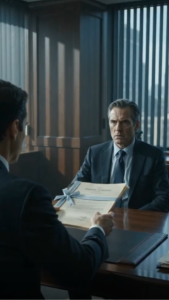
Later that day, the circuit prosecutor, a stern man named Harding, met me in the General Mercantile, surrounded by barrels of salted pork and stacks of flour.
“Ms. O’Shea,” he began, adjusting his spectacles. “The evidence you provided, with Mr. Hawley and Mr. Finch, is overwhelming. The fraudulent land claims, the embezzlement… Mr. Pendelton will face ruin. His assets will be seized, his name disgraced.”
I nodded, my gaze fixed on a distant point. “And for Arthur?”
Harding sighed, his expression softening, then hardening again with professional resolve. “For the blast at Deadman’s Pass… without a direct, living witness to Silas Pendelton specifically ordering the dynamite, or a signed document linking him directly to it, a conviction for murder is… impossible.”
My breath caught. “Impossible? He sent those men. He wanted Arthur stopped.”
“Yes,” Harding conceded, “but intent and direct command are different things in a court of law. His guards, if found, would claim they were merely clearing a path, or protecting company property. They won’t testify against him. And without that, Clara… he will not hang. He will not be imprisoned for Arthur’s death.”
The words hit me like another rockslide. All the struggle, all the pain, the public exposure, the collapse of his empire… it was a victory, yes. But it was incomplete. Silas would be a ruined man, an outcast. But he would walk free, financially broken, but physically unharmed. Arthur remained in his mountain grave, and no amount of justice could bring him back.
More Stories






+ There are no comments
Add yours