
Dispossessed Ukrainian Widow Fights Brother-in-Law for Farm in Cultural Land Dispute


Baba Yuliya’s note, tucked safely into my worn coat pocket, was both a beacon and a torment. It promised truth but offered no clear path, no easy answers. The knowledge that Bohdan’s actions were rooted in an older, deeper greed made his casual cruelty even more horrifying. I was no longer fighting for a misunderstanding, but against a calculated, generational plot.
“We have to go to the law,” I told Kateryna, the morning after she delivered the note. My voice held a new edge of determination. The warmth of the cave fire, small as it was, felt like a defiance against the freezing world outside.
Kateryna agreed, her face grim. She understood the weight of Baba Yuliya’s words better than most, having grown up hearing whispers of old family disputes. We made a plan. Kateryna, with her job at the library, had access to resources and a better understanding of American systems. She would start researching local lawyers, focusing on those with experience in property disputes or, ideally, those familiar with the local Ukrainian-American community.
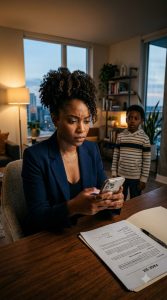
Our first attempt was with a small firm in the county seat, recommended for their affordability. The lawyer, a young man fresh out of law school, listened patiently as I recounted my story, Kateryna occasionally interjecting to clarify details. He nodded, took notes, and then leaned back, his expression regretful.
“Mrs. Petrenko,” he began, “this is a very… nuanced situation. The issue of customary inheritance, especially within a close-knit community like yours, presents significant challenges.”
“But Mykhailo had a will drafted,” I insisted, my voice tight. “It’s just… missing.”
He shook his head.
“Without that physical document, proving its existence and your husband’s intent against a claimant with a strong narrative of traditional succession, especially one supported by elders, is incredibly difficult. And expensive. Litigation could drag on for years, costing tens of thousands of dollars, with no guarantee of success.”
He looked genuinely sympathetic, but his words were a cold shower. He was essentially telling me the American legal system, designed for clear cut property lines and documented wills, had no framework for the messy, culturally entrenched conflict I was facing. He didn’t quite say “old world problems,” but the implication hung heavy in the air.
“I understand,” I said, though I didn’t. I understood only that another door was closing.
Kateryna tried to reassure me as we left his office. “He’s just being realistic, Olena. We’ll find someone else.”
But the next few phone calls yielded similar results. Lawyers were polite, but hesitant. They cited the difficulty of challenging community norms, the lack of a tangible, signed will, the sheer financial burden of a prolonged battle. It felt like walking into a maze blindfolded. Each rejection chipped away at my resolve, leaving behind a raw, aching sense of futility. Bohdan’s words from the rada, about my “Americanized disrespect” and how the formal law wouldn’t help me, seemed to be echoing from every legal office.
Then Kateryna found a name: Petro Voloshyn. He was a highly respected lawyer in the next county over, known for his deep ties to the Ukrainian-American community and a reputation for being shrewd and effective. My spirits lifted slightly. Surely, he would understand. He would see the truth.
We drove to his office, a modern building that felt alien after the rustic charm of Mykhailo’s farm. Mr. Voloshyn was a tall, imposing man with kind, but serious eyes, framed by spectacles perched on his nose. His office was filled with framed degrees and photos of his family, hinting at his own traditional roots.
I recounted my story again, pouring out all the details: Mykhailo’s original intent, Bohdan’s sudden dispossession, the cold cave, the rada, and finally, Baba Yuliya’s cryptic note. I even pulled out the note itself, showing him the faded script, explaining the “avarice before.”
Mr. Voloshyn listened, his expression unreadable. He paused for a long moment after I finished, adjusting his glasses.
“Olena,” he began, his voice deep and measured, “I know your family. I know Bohdan. And I know the Petrenko farm. It’s a beautiful piece of land, steeped in history.”
My heart swelled with a flicker of hope. He understood.
“This is a painful situation,” he continued, “and I believe you, that Mykhailo wished for you to have the farm. However, proving that in court, against Bohdan’s claims of established tradition and the support of some community elders… that is a different matter entirely.”
He leaned forward, his voice dropping slightly.
“Bohdan is deeply entrenched in the older ways. He will fight this with every fiber of his being, not just in court, but within the community. He’s already started his campaign, hasn’t he?”
I nodded, feeling a chill.
“To challenge him directly, to force this through the American legal system… it would be financial ruin for you, Olena,” he stated, his words blunt. “You’d be bankrupt before a decision was even made. And even if you win, what will you have left?”
He paused, letting his words sink in.
“Bohdan, I hear, has offered you a small compensation for your trouble, a gesture of ‘family goodwill’ to help you start anew. While it’s insulting, and not nearly what you deserve, perhaps it is something to consider.”
My jaw tightened. “Accept his charity? For the land Mykhailo and I built? For his betrayal?” My voice rose, a sharp tremor of disbelief and fury.
“Some battles, Olena, are not worth fighting,” Mr. Voloshyn said softly, his eyes filled with a weary wisdom. “Especially when the cost destroys you in the process. You may win the legal argument, but lose everything else. Your place in the community, your peace of mind, your very financial future. Bohdan wants that land. He will drain you dry to get it, one way or another.”
The words hung in the air, cold and definitive. It wasn’t a legal dismissal this time; it was a culturally informed warning, a counsel from someone who knew both worlds and saw the futility of bridging them with legal papers alone. He wasn’t just saying the law was expensive; he was saying the community would break me, and the legal battle would be the instrument.
As we walked out, the vibrant sounds of the town seemed to dim. The respected lawyer, the one who should have understood, had just told me to give up, to accept the crumbs from my betrayer’s table. The legal system, I realized with a crushing certainty, wasn’t a sword for justice; it was a bottomless pit for funds, and a stage for Bohdan to further his narrative of my disrespect. Mykhailo’s legacy, Baba Yuliya’s hint, my own hope—they all seemed to shrink and fade, dwarfed by the immense, immovable wall of cultural tradition and financial impossibility.
More Stories






+ There are no comments
Add yours