
A city girl's arranged mountain marriage turns into a battle for land and loyalty against her powerful mother-in-law.


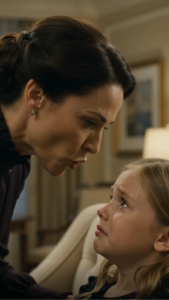
Life in the homestead settled into a grim routine, each passing day a new skirmish in a silent, psychological war. Maestra Elara’s passive-aggressive sabotages were relentless, insidious, designed to chip away at my resolve and confidence.
My morning chores would mysteriously double, or the pantry shelves, which I had just organized, would be rearranged so that essential ingredients were hidden from plain sight. One morning, I spent nearly an hour searching for the yeast to bake bread, only to find it tucked behind a sack of dried beans where it would never normally be kept.
“You must learn the ways of the mountain household, Elara,” she would say, her voice dripping with false concern, her eyes sharp. “It is not like your city life, where everything is provided, where maids fetch and carry. Here, you must anticipate. You must know.”
Another day, I discovered a rip in my only sturdy work apron, clearly cut with a sharp knife, not torn by wear. When I mentioned it, Maestra Elara simply shrugged. “Mountain life is harsh. Things tear. Perhaps you were not careful enough.”
I never complained aloud, not once. I simply watched, observed, and adapted. I learned the rhythm of her sabotage, anticipating her moves, finding new ways to complete my tasks despite her silent interference. My outward demeanor remained calm, but inside, a quiet fury simmered.
Kael remained largely silent, a conflicted figure caught between his mother’s relentless machinations and my quiet, unyielding endurance. He rarely spoke up, but his small gestures offered tiny, fleeting flickers of connection. Sometimes, I would find a fresh-baked biscuit by my plate when I sat down for a solitary supper, or a stack of kindling neatly chopped and left by the hearth when I was tasked with building the morning fire. He never acknowledged these acts, nor did I, but they were there.
One crisp autumn afternoon, seeking refuge from the oppressive, heavy atmosphere that permeated the kitchen and communal areas, I found myself drawn to Kael’s late father’s study. Maestra Elara rarely ventured there, deeming it a “gentleman’s sanctuary” and far too dusty for her meticulous standards. For me, it was a haven. A place untouched by her influence.
The air inside was thick with the rich scent of old paper, aged leather, and the faint ghost of pipe tobacco. Bookshelves lined the walls, crammed with countless volumes on local history, geology, agriculture, and even some on celestial navigation – a world away from Maestra Elara’s practical, utilitarian disdain for anything she considered frivolous. I ran my fingers over the spines of the books, a sense of quiet reverence washing over me. It felt like touching a piece of the past, a connection to the man whose legacy I was unwittingly fighting for.
Dust motes danced like tiny galaxies in the shafts of golden sunlight that pierced the grimy windowpanes. I decided to bring some order to the room, a small act of reclamation and respect. As I carefully moved a heavy, carved oak desk to sweep beneath it, one of its ornate legs snagged unexpectedly on a loose floorboard near the far wall. The old wood groaned under the pressure, shifting ever so slightly.
Curiosity, a stronger instinct than my exhaustion, immediately piqued. I knelt down, running my fingers along the warped, dark wood. The board seemed to lift slightly, responding to my touch. With a grunt of effort, I managed to pry it up, revealing a shallow, narrow compartment beneath.
My heart gave a sudden, hard lurch. It wasn’t empty. Tucked inside, carefully wrapped in a brittle piece of oilcloth, were two items: a small, leather-bound journal, its cover worn smooth, and a rolled-up piece of aged parchment.
My hands trembled slightly as I unwrapped the parchment. It was a map. A magnificent, hand-drawn map, faded with age, and partially burned along one ragged edge, as if someone had tried to destroy it in haste, only to be interrupted.
My eyes, trained by years of study and practice, immediately scanned the intricate lines and unfamiliar symbols. A powerful thrill shot through me, overriding the day’s fatigue. This was no ordinary, standard land survey map. The symbols were esoteric, almost hieroglyphic in their complexity, unlike anything I’d seen in common use. But I recognized them.
During my advanced cartography studies at the prestigious city institute, I had immersed myself in archaic surveying techniques, in the rich, forgotten language of older mapmakers. These were Celestial Meridian markers, triangulations based on star positions, and specific geological identifiers used by pioneering surveyors long before modern instrumentation became common. This was a map drawn by someone deeply knowledgeable, someone who understood the land not just by its visible features, but by its hidden, astronomical connections and deep geological history.
I carefully spread the fragile map flat on the dusty desk, my movements slow and deliberate to avoid tearing it further. My gaze immediately went to the familiar landmarks. There was the homestead, crudely sketched but unmistakable in its outline. And there, prominently marked, was the towering granite fist, the very monolith Maestra Elara had so meticulously avoided just days ago. On this ancient map, it was clearly designated as “Boundary Marker One,” with precise coordinates.
But the property lines drawn on this ancient parchment were vastly different from the ones Maestra Elara claimed were the Beaumont family’s. They extended significantly further, encompassing territory she had consistently dismissed as untamed wilderness, particularly towards the east and south.
And then I saw it. At the very eastern edge of the hand-drawn boundary, precisely where I had seen the unmapped cairn on the distant ridge from the homestead, there was another distinct symbol. It was a small, stylized star, with a series of intersecting lines radiating from it, labeled simply: “Celestial North Point.”
This wasn’t just a haphazard pile of stones. It was a precisely constructed marker, used for accurate surveying, for aligning with the true north, essential for mapping. And according to this map, it lay squarely within the rightful Beaumont property. It was the precise anchor point for the original, far larger estate.
A cold dread mixed with a surging wave of exhilaration. Maestra Elara had not merely been avoiding “spirits” or “treacherous roots” during our arduous journey. She had been deliberately, cunningly obfuscating the true boundaries of the land, trying to prevent me from seeing these markers. She wanted me to believe the property was smaller, less valuable, less important. And she wanted me to believe that cairn held no significance, that it was just random rocks.
But this map, this brittle, half-burned secret, told a profoundly different story. It was concrete, irrefutable evidence that Kael’s father had a very specific, and now dangerously relevant, understanding of his land’s true extent and value. It was a map that defied Maestra Elara’s narrative.
I carefully rolled the map back into its oilcloth, placing it back in the hidden compartment with the leather journal, which I noted was tightly secured with a small brass clasp. My hands lingered on the loose floorboard, covering the secret once more. This dusty study, meant to be ignored, was not just a sanctuary; it was a repository of vital secrets. And I, the city girl deemed frail and ignorant, had just found the first, most critical key.
My mind raced, spinning with possibilities and dangers. This changed everything. This wasn’t just about my personal survival in a hostile home anymore; it was about the very foundation of this land, and Kael’s rightful inheritance, stolen and hidden. The faint scent of old paper and pipe tobacco now felt less like a comforting memory and more like a warning, a whisper from the past urging me forward.
I needed to understand what this map truly meant, to decipher every symbol, and to find out what other secrets Kael’s father might have hidden. The game had just changed dramatically. And I now held a powerful, incredibly dangerous piece of it.
More Stories






+ There are no comments
Add yours