
The Parents Who Abandoned Their 8-Year-Old for Complaining About Boots Face Reckoning Decades Later After Old Letter Found


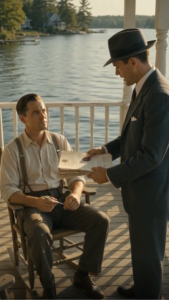
Dr. Vance found Officer Harding retired and living a quiet life in a small, unassuming house on the outskirts of town. His front lawn was meticulously kept, a testament to a man who now found peace in order. It took three attempts to catch him at home, each visit marked by a growing sense of urgency for Dr. Vance.
On his fourth try, Harding answered the door, a faint frown on his weathered face. He recognized Dr. Vance, a flicker of something unreadable in his eyes.
“Elias,” Harding said, his voice gruff, “it’s been a long time. What brings a retired social worker to my doorstep?”
Dr. Vance got straight to the point, holding up a faded copy of the archive notation. “I’m looking into an old case, Officer Harding. A child, found in the mountains, over two decades ago. The name ‘Elara C.’ and a note about you being advised to close due to ‘external pressures.’”
Harding’s face stiffened. He ran a hand over his close-cropped gray hair. “That was a long time ago, Elias. Best left buried.”
He started to close the door, but Dr. Vance pressed on. “A child was abandoned, Officer Harding. Her biological parents dismissed her trauma as ‘unfounded paranoia’ just last week. Someone needs to speak for her.”
Harding paused, his hand still on the doorknob. He looked out at his pristine lawn, then back at Dr. Vance, a deep crease forming between his brows. “Come in,” he finally conceded, his voice barely above a whisper.
They sat in Harding’s living room, sunlight streaming through the windows, illuminating dust motes dancing in the air. The room was neat, almost sterile, filled with framed photos of fishing trips and grandkids. Harding offered him a glass of water, his movements slow and deliberate.
“It was a mess, Elias,” Harding began, his gaze fixed on a distant point on the wall. “The call came in, a young girl, eight years old, found freezing in a shed. Malnourished, scared out of her mind. We were building a case, a clear case of child endangerment and abandonment.”
He paused, taking a long sip of water. “Then the calls started. First from the mayor’s office, then directly from the police chief. Orders came down, clear as day. ‘De-escalate.’ ‘Handle quietly.’ ‘No formal charges.’”
“Who was applying the pressure, Officer?” Dr. Vance asked, his voice low, intense.
Harding shook his head, his lips pressed into a thin line. “I can’t. I really can’t. Even after all these years, some things you just don’t cross. These were powerful people, Elias. Too powerful. They had reach.”
“Arthur Carson,” Dr. Vance stated, not asking.
Harding flinched, a subtle tightening around his eyes. He didn’t confirm it directly, but his silence was a clear admission. He avoided Dr. Vance’s gaze, looking down at his clasped hands. The way his shoulders subtly hunched spoke volumes, confirming the lingering fear.
“They made it clear,” Harding continued, his voice softer now. “If I pushed, my career would be over. Not just mine. Anyone involved would find themselves sidelined, their pensions at risk. They had ways of making things disappear, files, reputations, everything.”
It was a specific, insidious form of cruelty. The threat wasn’t physical, but it targeted a man’s life’s work, his financial security, his entire sense of purpose. It left a lasting scar of fear, a wound that clearly hadn’t healed even in retirement.
Dr. Vance leaned forward. “But you kept a note. You put ‘external pressures’ in the file. Why?”
Harding finally met his eyes, a flicker of defiance in his tired gaze. “Because it was the truth. And I needed *something* in the record, however small, however coded. A whisper for anyone who ever looked hard enough. I couldn’t let it be completely erased. It was my way of pushing back, even if it was just a tiny pinprick.”
He stood up, signaling the end of the conversation. “I’ve told you what I can, Elias. Don’t ask for names. Don’t ask for more. My conscience is clear enough now, knowing someone else is finally looking.”
Dr. Vance knew he wouldn’t get more from Harding. The fear was too ingrained, too potent, even after retirement. The chilling memory of that power, the way it had silenced justice, was a palpable presence in the room. He thanked Harding and left, the image of the stoic officer, still burdened by fear, burned into his mind. Harding’s reluctance, the way he clammed up when pressed for names, was a testament to the specific power Arthur wielded, a power that could still threaten careers and lives decades later.
The path forward was still murky, but Dr. Vance now had confirmation: Elara’s abandonment was not an accident, not a simple lost child. It was a case of deliberate suppression, orchestrated by Arthur Carson and enabled by a corrupt system. The “external pressures” were Arthur’s reach, his influence, his insidious manipulation, and it was a profound, systemic cruelty that had robbed Elara of her childhood and justice.
More Stories









+ There are no comments
Add yours