
Disgraced Surgeon Exposed at Sea: The Ex-Wife He Abandoned Reveals Their Secret Son During a Live Medical Conference Q&A
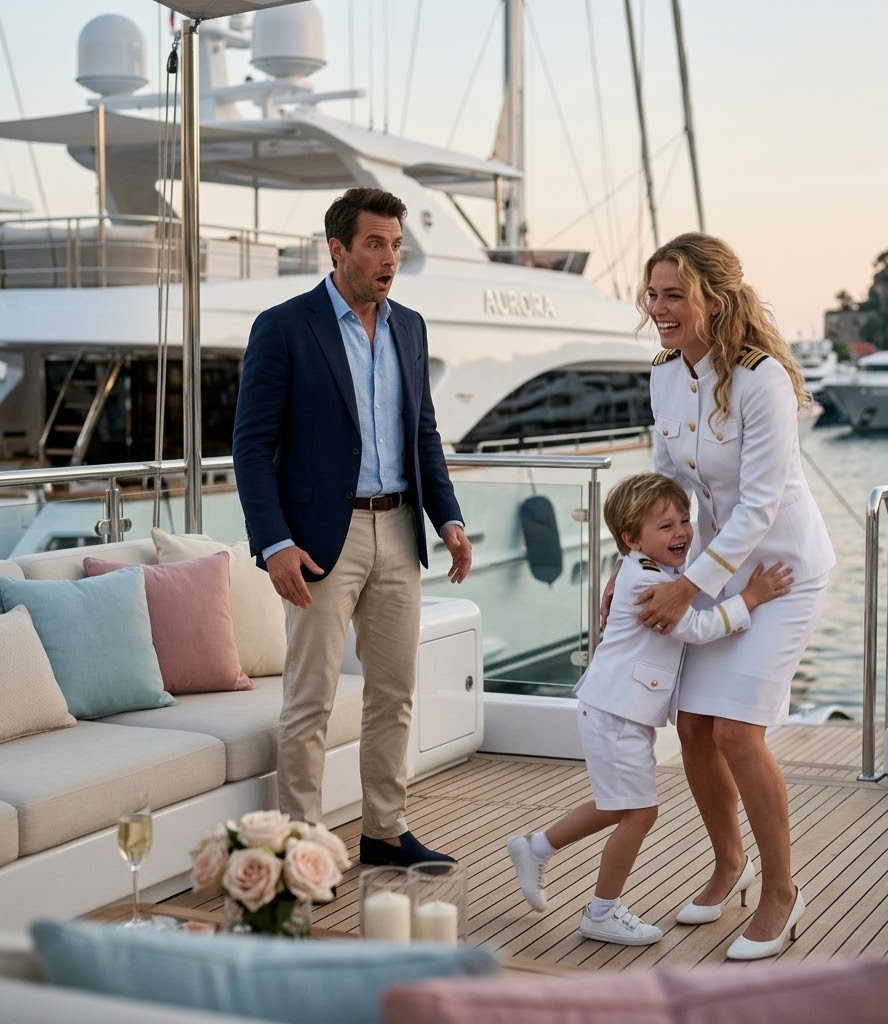


Arthur Albright moved through the conference like a shark, sleek and predatory. He had identified his target: my professional standing. His earlier public dismissal of me, and his private threats, were merely opening moves. Now, he was tightening the net.
I felt the shift in atmosphere immediately. Colleagues who had offered friendly greetings just days before now averted their eyes as I passed. A prominent cardiologist I’d had a pleasant conversation with at the welcome reception suddenly became engrossed in his phone when I approached his table for lunch. The subtle freeze was unmistakable.
Later that afternoon, I observed Arthur in the main networking lounge. He was holding court with Dr. Eleanor Vance, a formidable figure in pediatric surgery, and Dr. Robert Sterling, a leading medical researcher. Arthur’s posture was relaxed, a practiced charm radiating from him. He gestured subtly in my direction, his voice too low to discern, but the fleeting, dismissive glance Dr. Vance shot my way was loud and clear.
My skin prickled with unease. This was Arthur’s signature move: the whisper campaign, the subtle poisoning of the well. He wasn’t overtly attacking me; he was simply sowing seeds of doubt, leveraging his formidable reputation to undermine mine. The professional isolation was a cold, calculated cruelty, designed to make me feel invisible and powerless.
Later that day, Dr. Petrova approached me, her expression carefully neutral. “Clara,” she began, “I need to discuss something. There have been… murmurs. Concerns about potential distractions from the conference’s core focus.”
My jaw tightened. I knew exactly what she was referring to. Arthur. His influence, his whispers.
“Distractions, Dr. Petrova?” I asked, keeping my voice even. “Could you elaborate?”
She shifted, glancing around the now emptier lounge. “Well, there’s been some talk about… personal grievances. Dr. Albright, for instance, mentioned to me in passing that he was surprised to see you here, given your… history. He expressed concern that it might create an uncomfortable atmosphere, perhaps even disrupt the flow of the sessions.”
The words were carefully chosen, designed to sound like genuine concern, but the underlying message was clear. Arthur was framing me as the problem, the emotionally unstable ex who couldn’t keep her personal life separate from her professional duties. This was a direct, personal attack, delivered through a trusted intermediary, a maneuver designed to delegitimize my presence entirely. It was a classic Arthur tactic, deflecting his own bad behavior by fabricating my supposed instability.
“Dr. Petrova,” I said, my gaze steady, “my history with Dr. Albright is personal, and it has no bearing on my professional conduct or my commitment to this conference. I am here in my capacity as Patient Advocacy Specialist, a role I take very seriously.”
She nodded slowly, her expression unreadable. “Of course, Clara. I’ve always held your work in high regard. Your record speaks for itself.”
Her words offered a sliver of reassurance, but the damage had been done. The seeds of doubt had been planted. Arthur was using his considerable social and professional capital to turn others against me, to paint me as an unprofessional distraction. It was a chilling display of his power and his ruthlessness. The deliberate way he had framed it, as a “concern” for the conference, was a masterstroke of manipulation. He wasn’t just attacking me; he was using my supposed instability to undermine the integrity of the entire event, knowing Dr. Petrova would prioritize the conference’s smooth running above all else.
The cruel irony was not lost on me. Here was a man who preached ethical surgical innovation, yet his personal ethics were a gaping void. He was using professional channels to wage a deeply personal war, all to avoid accountability for his own son. This particular brand of social isolation, cloaked in professional concern, was far more insidious than a direct confrontation. It chipped away at my reputation, one whisper at a time.
I thought of Leo, innocent and unaware, sleeping peacefully in our cabin. This campaign was not just against me; it was against the very idea of his existence in Arthur’s carefully curated world. Arthur wanted to erase us both. The casual way he had manipulated his colleagues, implying I was a loose cannon, was a profound personal affront, designed to make me question my own sanity in the face of his powerful influence.
I had to counteract this. I couldn’t let Arthur dictate the narrative. His professional charm was a facade, and I needed to find a way to crack it, to reveal the true character beneath. The chill I felt wasn’t from fear, but from the cold calculation of his moves. I would not be sidelined.
I left Dr. Petrova, the conversation leaving a bitter residue. The subtle glances, the averted eyes, the polite but firm distancing from my colleagues—it was a concerted effort to make me an outcast. Arthur was trying to isolate me, to cut me off from any potential allies, making me an easy target. But his actions only hardened my resolve. He was underestimating my quiet strength, and he was gravely underestimating the power of truth. This wasn’t just a conference anymore; it was a battleground, and I was ready to fight.
More Stories









+ There are no comments
Add yours