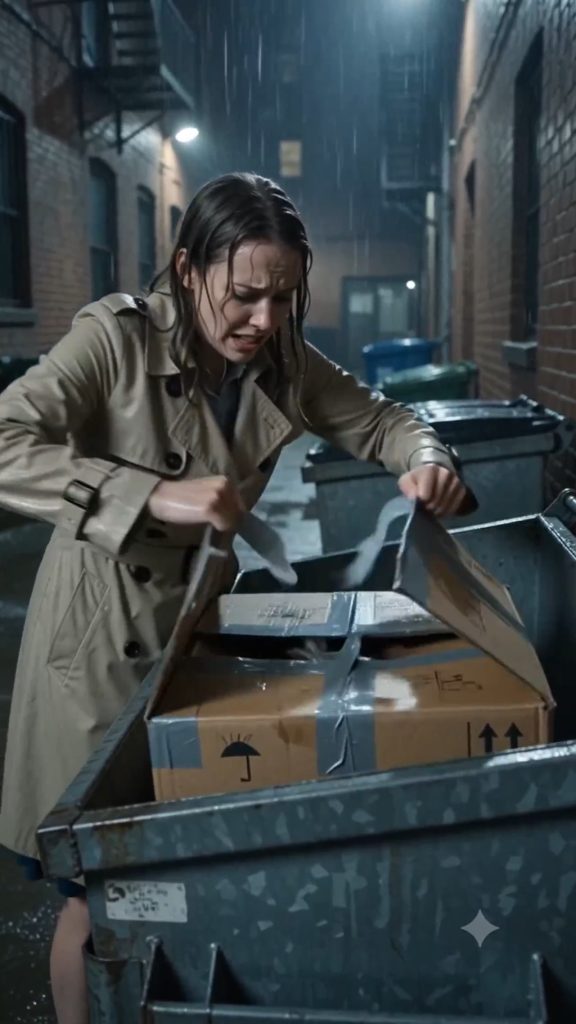
At 2:14 AM, I was taking out the trash behind the Philadelphia Municipal Annex when I heard a faint whimpering inside a sealed steel dumpster.







Part 1
I cut open a taped plastic crate and pulled out a trembling, starving beagle puppy with a fluorescent yellow ear tag.
When I took the puppy to an all-night clinic, the scanner picked up an internal tracking microchip carrying code #982-00041189—a proprietary tag owned by City Council President Richard Hallowell, my political mentor of eight years.
He had spent a decade secretly running an illegal bio-hazardous animal disposal ring out of municipal facilities, skimming $3.8 million in city grants while posing as a champion of public health.
By noon the next day, my mentor didn’t just deny it—he launched a systematic campaign to destroy my life before I could expose him.
The night air was a sharp blade against my cheeks, biting through my thin jacket as I wheeled the oversized municipal bin across the slick concrete lot. It was always my job, the last one left on the list after everyone else had clocked out. Constituent Services Director for City Council President Hallowell, even at 2:00 AM, meant making sure the annex was spotless.
The rhythmic squeal of the wheels echoed in the stillness. A low, desperate sound cut through it – a whimper.
It was too faint to be a stray cat, too small for a raccoon. I stopped, tilting my head, listening.
It came from the massive steel dumpster, half-obscured by the dim glow of a broken security light. The kind of dumpster usually reserved for shredded documents and old office furniture, not living things.
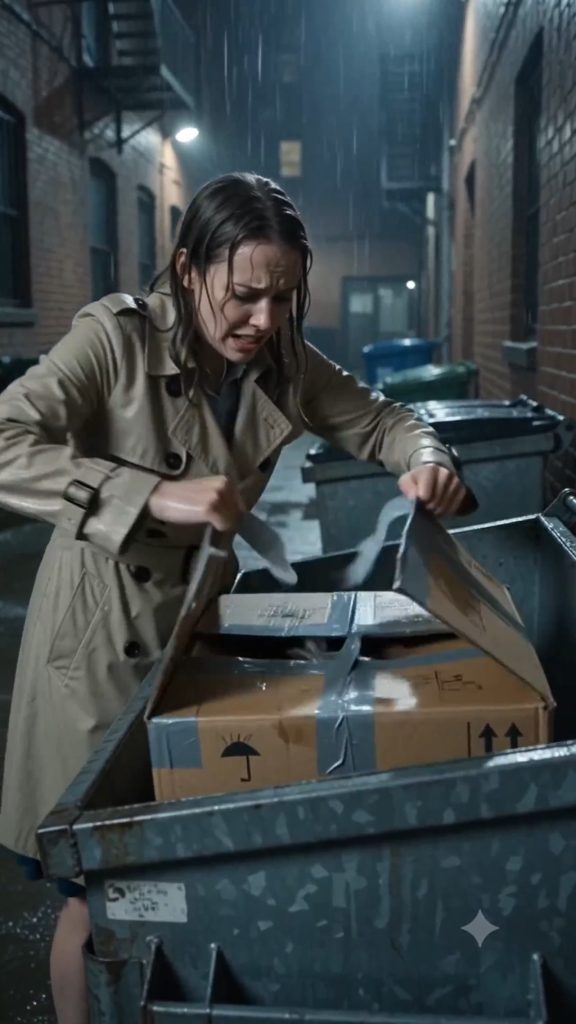
I pushed the heavy lid open. Inside, a stack of black industrial garbage bags leaned precariously, and tucked among them, a plastic storage crate. It was taped shut, the kind you’d use for moving books.
Another tiny whimper, stronger this time.
My heart seized. No, it couldn’t be.
My hands trembled as I tore at the thick tape, ripping skin from my fingertips. The plastic lid groaned as I finally pried it open.
A wave of sour, damp air hit me. Inside, curled in a tight ball on a shredded newspaper, was a beagle puppy.
Its ribs showed starkly beneath matted, dirty fur. Its eyes were wide, terrified saucers, darting around in the dim light. A fluorescent yellow tag was clipped to its ear.
It was barely a few months old, shivering uncontrollably.
I reached in, carefully lifting the tiny bundle. It weighed next to nothing. The puppy didn’t resist, just pressed itself into my chest, shaking.
The first thing I did was check the ear tag. It had a number printed on it: YL-003.
I couldn’t leave it. Not in this condition, not out here.
I drove straight to the all-night veterinary clinic on South Street, the puppy tucked into a shoebox on the passenger seat, letting out tiny whimpers every few minutes. The clinic was quiet, save for a single vet tech scrolling on her phone behind the counter.
She looked up, startled, as I burst in.
“I found him,” I panted, holding up the shoebox. “Behind the Municipal Annex. He’s freezing and starving.”
The vet tech, a young woman with a kind face and a name tag that read ‘Sarah,’ took the box. She gently lifted the puppy out and placed him on the exam table.
“Oh, you poor thing,” she murmured, her voice soft. “Looks like he hasn’t eaten in days.”
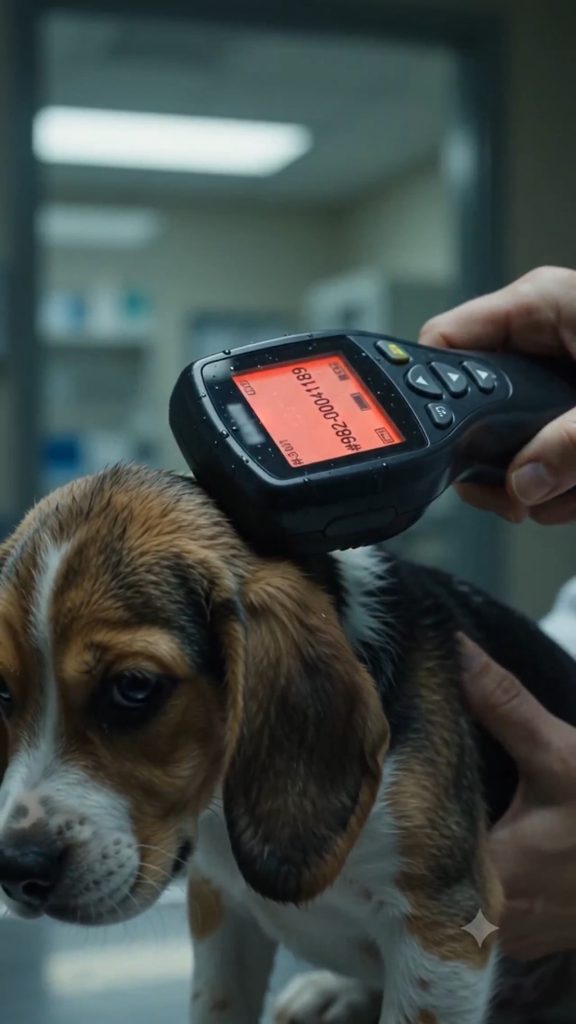
She examined the ear tag first, noting the YL-003 number. Then, she pulled out a handheld microchip scanner.
“Most strays around here aren’t chipped, but it’s worth a try,” she said, running the device over the puppy’s scruff.
The scanner beeped, a sharp, clear sound in the silent room. A string of numbers flashed across the screen: #982-00041189.
“Well, look at that,” Sarah said, surprised. “He’s chipped.”
She typed the number into the clinic’s computer system. The screen loaded for a moment, then displayed a name.
‘Willow Creek Holdings, LLC.’
I frowned. “Willow Creek Holdings? That doesn’t sound like a regular owner.”
Sarah clicked another link, pulling up more details. “It’s a corporate entity. And it looks like the registration for this chip series, #982-000, is pretty specific.”
She scrolled down, her finger tracing the words on the screen.
“It says here… these chips are proprietary, exclusively registered to City Council President Richard Hallowell’s private holding company.”
My stomach dropped. Richard Hallowell. My boss. My mentor for the past eight years. The man who’d promised to put me on his mayoral campaign team.
He was the last person I expected to see associated with an abandoned, microchipped puppy in a dumpster. It felt like a punch to the gut, swift and unexpected.
I stared at the screen, the numbers blurring. #982-00041189.
“Are you sure?” I asked, my voice barely a whisper.
Sarah nodded, pointing at the screen. “See? ‘Registered owner: Willow Creek Holdings, LLC. Primary contact: Richard Hallowell.’ It’s pretty clear.”
I left the clinic an hour later, the puppy safely admitted for care, his tiny belly full for the first time in days. The information from Sarah burned in my mind.
Hallowell.
The man who gave impassioned speeches about public health and animal welfare. The man I had idolized, worked tirelessly for.
By 8:00 AM, I was in my office on the fifth floor of City Hall, the city bustling outside my window, oblivious. I had a small, printed copy of the chip registration in my hand. My usual morning coffee tasted like ash.
My stomach churned with a mixture of disbelief and growing dread. This had to be a mistake. A clerical error. Hallowell would explain it away, laugh it off.
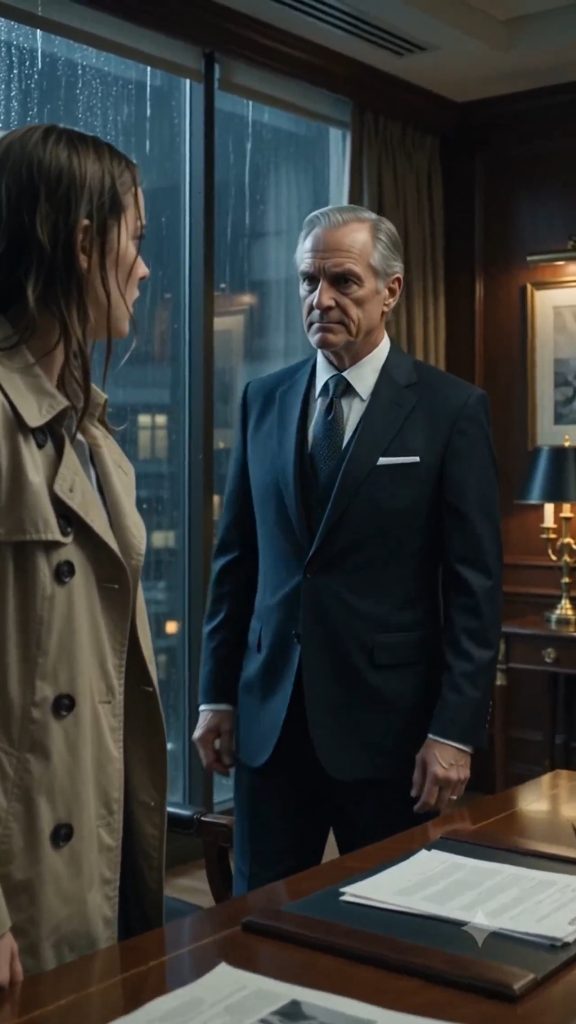
At 9:00 AM, I walked into his spacious corner office, the one with the panoramic views of the Schuylkill River. His assistant, Margaret, gave me a tired smile. “He’s expecting you, Elena.”
Hallowell sat behind his polished mahogany desk, impeccably dressed as always, a silver pen balanced between his fingers. He looked up, his smile warm and reassuring.
“Elena, good morning. Something important, I assume? You’re never here this early unless it’s an emergency.”
I took a deep breath, trying to steady my racing pulse. “Good morning, Council President. Yes, actually, something quite urgent.”
I laid the printout on his desk, sliding it across the smooth wood until it rested directly in front of him. His eyes scanned the document.
The smile didn’t falter, not for a second. His gaze met mine, calm and unblinking.
“This is fascinating, Elena,” he said, his voice even. No surprise, no alarm, just a detached curiosity. “And where did you acquire this rather specific piece of information?”
I told him about the dumpster, the puppy, the clinic, the microchip. I kept my voice neutral, trying to sound factual, not accusatory.
When I finished, he picked up the paper. He didn’t crumple it, didn’t throw it, just folded it neatly in half.
“I see,” he said, his eyes still holding mine. There was a subtle shift in his expression, a hardening around the jaw. The warmth vanished, replaced by something cold and impenetrable.
“Elena, I appreciate your… thoroughness. You’ve always been so dedicated.” He leaned back in his chair, a slow, deliberate movement. “But this is highly confidential information. City property, actually.”
My eyebrows furrowed. “City property? What are you talking about? It’s a registration for a discarded animal.”
He chuckled, a low, dismissive sound. “Let’s not be naive, Elena. This is sensitive data. And frankly, your unauthorized access to it raises serious questions about your judgment.”
He pressed a button on his intercom. “Margaret, please send security to my office. We have a small matter to attend to.”
My throat tightened. “Council President, what are you doing?”
He stood up, walking around the desk. His gaze was dismissive now, as if I were a bothersome fly.
“Effective immediately, Elena, your security clearance for all municipal facilities is revoked. You are hereby suspended without pay, pending a full internal investigation into your conduct and your handling of confidential city assets.”
He paused, then added, “And I’ll be taking that chip registration. As I said, city property.” He gently plucked the paper from my grasp.
Before I could protest, the heavy oak door opened. Two burly security guards stood framed in the doorway, their faces impassive.
“Escort Ms. Ross off the premises,” Hallowell ordered, his voice echoing in the sudden silence. “And ensure all her personal effects are delivered to her home address by the end of the day.”
Part 2
The guards moved in, their presence a solid, unyielding wall between me and Hallowell. They didn’t speak, just took my arms, not roughly, but with an authority that left no room for argument.
My feet moved automatically, down the silent corridors, past the empty cubicles of Constituent Services, past the reception desk where Margaret avoided my gaze. She wouldn’t even meet my eyes.
The air outside was crisp, but it did nothing to clear the fog in my head. I walked aimlessly for a few blocks, the weight of Hallowell’s words pressing down on me. Suspended without pay. Internal investigation. Confidential city assets.
He had taken the chip registration. My only piece of physical evidence.
My phone vibrated in my pocket. It was Chloe. A pang of relief, then confusion. She was my closest friend at City Hall. She had to know what was happening.
I answered. “Chloe, thank god. You won’t believe what just happened—”
“Elena, I… I can’t talk right now,” her voice was tight, strained. “Look, just… take care of yourself, okay? I gotta go.”
The line went dead.
I stared at my phone, perplexed. Chloe had never hung up on me before. My best friend, sounding like a stranger.
Minutes later, another notification flashed across the screen. This one was a breaking news alert from a local channel.
My own name scrolled across the bottom banner: “City Council President Hallowell Issues Statement: Constituent Services Director Elena Ross Placed on Emergency Psychiatric Leave.”
The headline screamed, “Sources close to Councilman Hallowell confirm Ms. Ross is suffering from severe mental instability, requiring immediate medical intervention.”
My blood ran cold. Mental instability? This was Hallowell’s systematic campaign. He wasn’t just firing me; he was trying to erase my credibility before I even spoke a word.
I dropped my phone on the sofa, my hands clammy. This couldn’t be happening.
Before I could even process the extent of the lie, a loud, insistent knocking echoed through my small apartment.
One knock, then another, harder this time.
I walked to the door, peering through the peephole. Two uniformed officers stood on my porch, their faces grim under the brim of their caps.
One of them held up a folded piece of paper. A warrant.
More Stories




+ There are no comments
Add yours