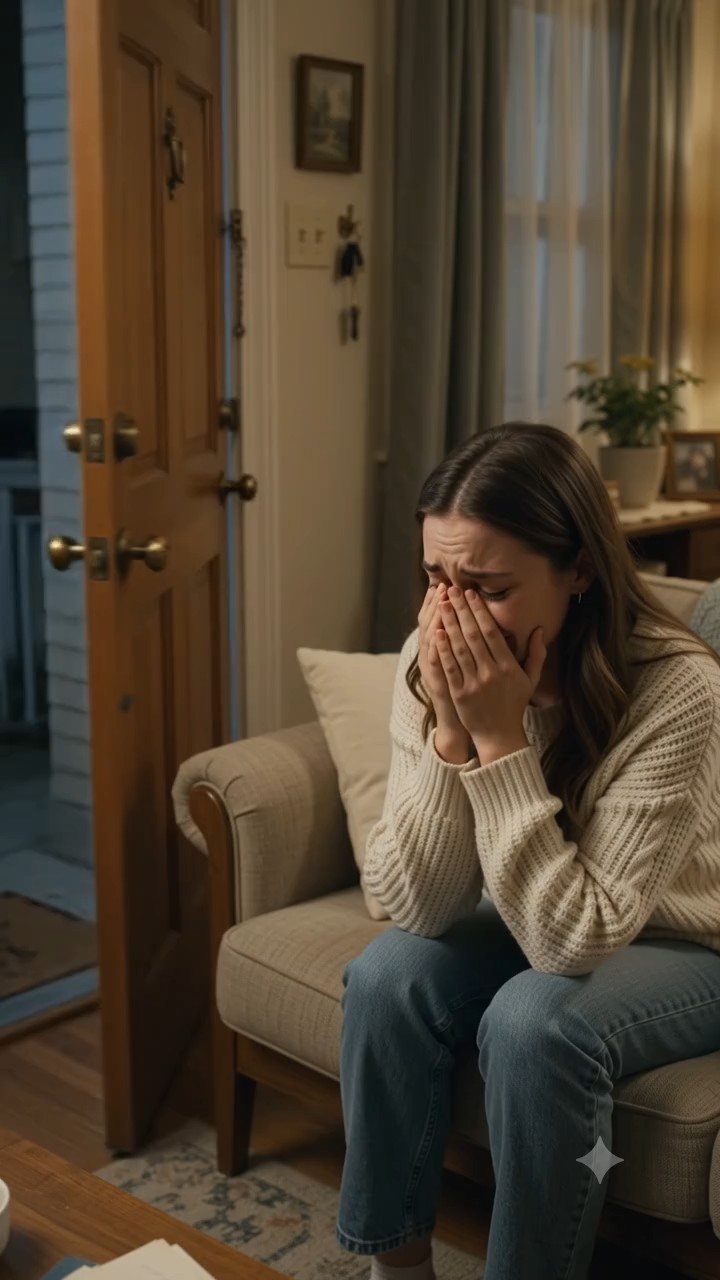
You wasted three months wiping the chin of a dying old woman who isn't even your blood, my boyfriend Julian said, tossing his lanyard onto my desk before walking out of my life.


Part 1
Less than six hours after Eleanor Hallowell took her last breath in room 402, a senior estate attorney knocked on my apartment door holding a wax-sealed manila envelope.
“She wasn’t just your patient, Maya,” the attorney told me, placing a yellowed 1998 intake record on my coffee table. “She was the founder of the St. Jude Children’s Home where you grew up, and she watched over you from the day you were abandoned on her doorstep.”
She never formally adopted anyone, until she met me one last time—too late for legal paperwork, but not too late to leave me the keys to a $14 million city trust fund that half of City Hall was trying to steal.
The click of Julian’s front door echoed in the sudden silence of my small apartment. It was a sharp, final sound. I stared at the empty doorway, then at the bright red lanyard lying haphazardly on my desk, a stark contrast to the faded fabric of Eleanor’s favorite shawl draped over my worn office chair.
His words still stung, a raw wound on top of an already festering grief. Eleanor was gone. Julian, the man who’d promised forever, was gone too.
I wrapped Eleanor’s shawl tighter around myself, a poor substitute for the comforting weight of her hand. The silence was heavy, suffocating. I tried to focus on the soft hum of the city outside, the distant sirens that were always just a part of the urban symphony, but they only underscored my sudden, profound solitude.
Two hours crawled by. Each tick of the kitchen clock felt like a hammer blow. I’d picked up a half-read paperback from my nightstand, but the words blurred into meaningless shapes. My mind kept replaying Eleanor’s last smile, the way she squeezed my hand, the knowing look in her eyes. And then, Julian’s dismissive sneer.
A sharp, insistent knock startled me, pulling me back from the edge of tears. I wasn’t expecting anyone. Julian had the only spare key, and he wouldn’t be coming back. Not after that.
I hesitated, then slowly rose from the chair. The floorboards creaked beneath my feet, protesting the shift in weight. Peeking through the peephole, I saw a tall, impeccably dressed man in a dark suit, his silver hair neatly combed. He held a large leather briefcase in one hand and a thick, wax-sealed manila envelope in the other.
An estate attorney. My stomach clenched.
I unlatched the deadbolt, the metal groaning softly. The man offered a small, somber smile.
“Ms. Lin?” he asked, his voice low and formal. “Maya Lin?”
I nodded, clutching the shawl around me. “Yes?”
“My name is Samuel Brent,” he introduced himself, extending a gloved hand. “I represent the estate of Eleanor Hallowell.”
I swallowed hard. “Please, come in.”
He stepped inside, filling the small space with the scent of expensive cologne and an air of solemn purpose. I led him to my minuscule living area, dominated by a worn-out sofa and the small coffee table Julian had mocked for being “vintage, not antique.”
Mr. Brent carefully placed his briefcase on the floor. He then laid the wax-sealed manila envelope onto the coffee table. It was thick, substantial, and faintly yellowed with age.
“I’m so sorry for your loss, Ms. Lin,” he began, his eyes scanning my face with a practiced sympathy. “Eleanor spoke of you often in her final months. You brought her great comfort.”
I felt a small, unexpected warmth in my chest. “She was… she was a wonderful person.”
“Indeed,” Mr. Brent said, opening his briefcase. He extracted a stack of neatly bound documents. “Eleanor Hallowell was a woman of immense vision and quiet generosity.”
He pushed a yellowed, fragile 1998 intake record across the coffee table towards me. The paper was thin, the ink faded, but the handwritten entries were still legible.
“She wasn’t just your patient, Maya,” Mr. Brent reiterated, his voice softening slightly as he looked at the document. “She was the founder of the St. Jude Children’s Home where you grew up, and she watched over you from the day you were abandoned on her doorstep.”
A wave of dizzying disbelief washed over me. I traced the faded words on the intake record, the date, my name. Eleanor. All those years, she was there?
“She never formally adopted anyone,” he continued, as if sensing my unspoken question, “until she met you one last time. Too late for legal paperwork, perhaps, but not too late to ensure your future, and the future of her legacy.”
He picked up a heavy, gold-embossed document. “Eleanor Hallowell named you, Maya Lin, as the sole trustee of the Hallowell Foundation.”
My breath hitched. My gaze darted from the intake record to the official-looking trust document in his hand. Sole trustee. Me? The idea felt outlandish, impossible.
“The Hallowell Foundation,” Mr. Brent stated, his voice now crisp and businesslike, “holds assets valued at approximately $14 million, primarily in city land and investments dedicated to the welfare of children.”
He paused, letting the enormity of the sum hang in the air between us. My mind reeled. Fourteen million dollars. Eleanor’s legacy. And it was all to be entrusted to me, a junior policy assistant whose boyfriend had just called her a dead-end distraction.
“This is… I don’t understand,” I stammered, my voice barely a whisper. “I’m just…”
Mr. Brent gently placed the official trust document next to the 1998 intake record. “Eleanor always believed in you, Ms. Lin. She saw in you the same dedication she devoted to St. Jude’s.”
He began explaining the intricacies of the trust, the responsibilities, the legal framework. His words were a blur of legalese and numbers. I tried to focus, to grasp the details, but my head spun.
The doorbell rang again, a loud, jarring chime that cut through the sudden silence.
I flinched. “Excuse me.”
Mr. Brent looked up, his brows furrowed in mild annoyance at the interruption. I pushed myself up, feeling strangely disconnected from my own body. Who could it be now?
I peered through the peephole once more. This time, two uniformed men stood on my stoop, their faces grim, their dark blue uniforms adorned with municipal badges. City marshals.
My heart began to pound a frantic rhythm against my ribs. I slowly unlocked the door, a knot of dread tightening in my stomach.
“Maya Lin?” one of the marshals asked, his voice clipped and authoritative.
“Yes,” I managed, my voice suddenly dry.
He held out a thick, official-looking document with a large red stamp. “We’re here to serve you with this.”
I took the paper, my fingers trembling slightly. It was a Cease-and-Desist Order. My eyes scanned the bold lettering, the formal legal language, until they landed on the signature line at the bottom.
Council President David Aris.
Part 2
The marshals shifted, their broad shoulders momentarily blocking my view. Behind them, a familiar, commanding voice cut through the small apartment hallway.
“Well, well, Ms. Lin,” Council President David Aris said, stepping forward.
He was impeccably dressed, his dark suit sharply tailored. His presence felt like a physical weight, pressing in on the already cramped space.
Beside him stood a woman I recognized from old photos Eleanor kept. Clara Garthe, Eleanor’s estranged niece, her expression a mix of smug satisfaction and cold disdain. She clutched a designer handbag, her gaze dismissive.
“I trust you’ve had a chance to review the cease-and-desist?” Aris continued, his voice smooth but with an edge of steel. He didn’t wait for my answer.
He looked past me, directly at Mr. Brent, who now stood frozen by the coffee table. “Mr. Brent, I believe you are operating under a grave misunderstanding regarding my late aunt’s mental state.”
Clara Garthe gave a small, humorless laugh. “Aunt Eleanor was hardly ‘of sound mind’ in her final weeks, Mr. Brent. Everyone knew it.”
Aris pulled a thick, official-looking document from inside his jacket. It was bound in a stiff blue cover, clearly an amended legal text.
“We have here,” he announced, holding it up for us to see, “a revised trust charter, signed by Ms. Garthe, legally liquidating the Hallowell Foundation’s real estate assets into city hands.”
My eyes widened. Liquidating? Everything Eleanor had built?
“This entire charade,” Aris swept his hand towards the 1998 intake record and Eleanor’s will on my coffee table, “is based on the fantasy of a dying old woman who was clearly non-compos mentis.”
A familiar figure then stepped out from behind Aris, into the dim light of the hallway. Julian.
He avoided my gaze, his face pale. He was wearing a fresh suit, one I hadn’t seen before, and he held a new, pristine lanyard. His own, without the wear and tear of daily use.
“Julian?” I whispered, the name catching in my throat.
He cleared his throat, his eyes fixed on the floor. “Aris offered me a promotion, Maya. Deputy Chief of Staff. I just… I needed to make a move.”
“A move that included providing Mr. Aris with your private schedules during Eleanor’s final days, Ms. Lin,” Aris interjected, his voice laced with thinly veiled amusement. “Very convenient information, indeed.”
Julian flinched, but said nothing.
Aris stepped closer, his shadow falling over me. “Consider this your final warning, Ms. Lin. You have exactly twenty-four hours to sign over any claim to that trust fund, or you will face a full criminal investigation for elder exploitation.”
More Stories





+ There are no comments
Add yours