
My Husband Accused Me of Neglecting My Dying Grandmother — But Her Hidden Note Exposed His Treacherous Plot


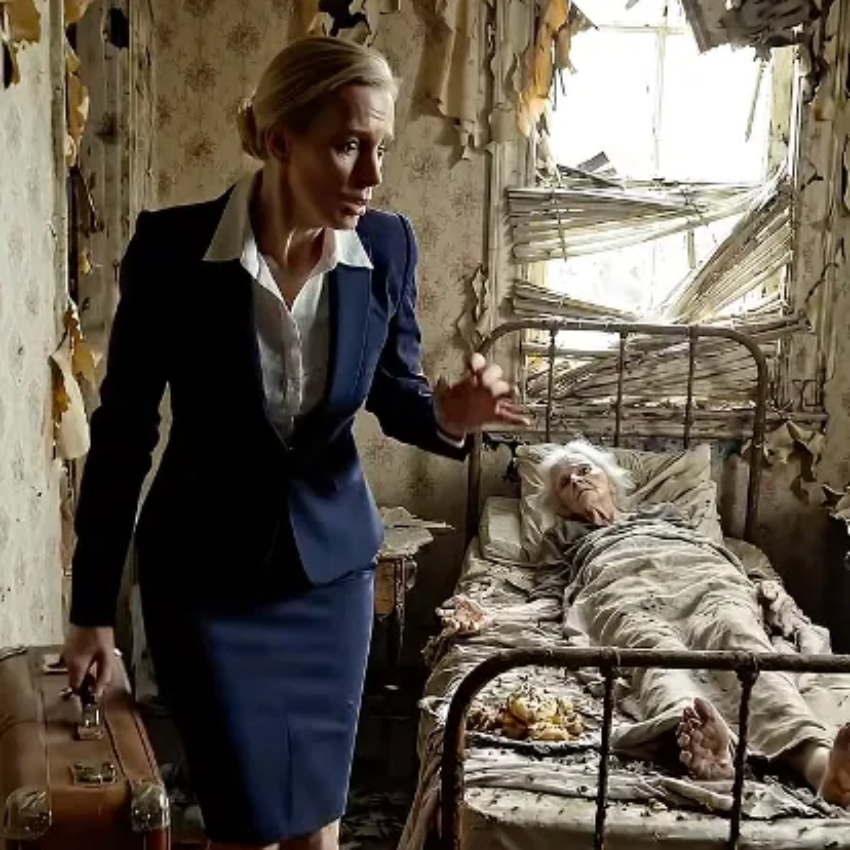


The chilling recording of Robert and Patricia, discussing Eleanor’s assets and their desire to “quicken the process,” had left me utterly sickened. Dr. Reed and I knew we had to act, and fast. The recording was undeniable proof of their intent, but Nurse Kelly’s firsthand testimony was still crucial to link their words directly to the excessive drug administration.
Dr. Reed, her resolve hardened by the recording, knew she had to protect Kelly and formalize her confession. She couldn’t allow Kelly to remain a victim, nor could she risk the junior nurse crumbling under further pressure from Robert and Patricia. We scheduled a private meeting with Kelly, away from the facility, at a neutral coffee shop known for its quiet corners.
Kelly arrived looking even more disheveled and terrified than before. Her eyes darted around the room nervously, as if expecting Robert or Patricia to suddenly appear. She clutched a crumpled tissue in her hand.
“Thank you for coming, Kelly,” Dr. Reed began, her voice gentle and reassuring.
“Mara and I just need to ask you a few more questions. And we want to assure you, you are safe with us.”
Kelly nodded, her lips pressed into a thin line. She took a shaky breath, then exhaled slowly.
“I… I’m so scared,” she whispered, her voice barely audible.
“They know I’ve been talking. Mr. Jenkins saw me looking at Mrs. Albright’s chart yesterday, and he gave me such a look.”
The personal cruelty of their intimidation continued. They were actively terrifying Kelly, pushing her to the brink.
“We understand that, Kelly,” I said, leaning forward.
“But you’re not alone. Dr. Reed and I are here to protect you. And more importantly, to protect Eleanor.”
Dr. Reed placed a comforting hand on Kelly’s arm. “Kelly, we have reason to believe that the notes you were shown, the ones authorizing the increased sedative doses, were forged.”
Kelly’s eyes widened, a fresh wave of tears welling up. She nodded, unable to speak, her face contorted in anguish.
“Did Robert or Patricia explicitly tell you that Dr. Reed had issued these orders, or did they simply present the note?” Dr. Reed asked, probing for details.
“Both,” Kelly choked out, the words finally tumbling from her lips.
“Mr. Jenkins said Dr. Reed was too busy, that she’d signed off on it. And Mrs. Jenkins was there, telling me how important it was for Mrs. Albright’s comfort.”
“They both stood over me while I administered the first few increases, watching me,” she confessed, her voice thick with renewed guilt.
“They made me feel like I had no choice.”
She crumpled forward, burying her face in her hands, her shoulders shaking with silent sobs. The dam had broken.
“They said if I didn’t give her the medication, Mrs. Albright would be in pain, and it would be my fault,” she sobbed.
“And then they said they’d make sure I lost my job, that I’d never work in a facility again if I disobeyed.”
Her raw, desperate admission was heartbreaking. They had exploited her compassion and her professional insecurity with ruthless efficiency.
“Can you tell us the specific dates they pressured you to increase the doses?” I asked, needing to cross-reference with Eleanor’s hidden list and Dr. Reed’s findings.
Kelly wiped her face, struggling to regain her composure. She pulled a small, folded piece of paper from her pocket. It was a crude, handwritten log, marked with dates and dosages.
“I started keeping my own notes,” she admitted, her voice trembling.
“I knew something was wrong, even if I didn’t understand what.”
The small, handwritten log was a testament to her troubled conscience, a quiet act of resistance even when she was under duress. This was a crucial piece of evidence, providing concrete, specific details.
Dr. Reed took the paper, her eyes scanning the entries. Her expression grew grim with each passing date.
“These dosages far exceed standard protocols, Kelly,” Dr. Reed said softly.
“Especially for a patient with Mrs. Albright’s rare genetic marker for paradoxical reactions to benzodiazepines.”
Kelly looked up, confusion etched on her face. “Paradoxical reactions? What does that mean?”
Dr. Reed gently explained Eleanor’s condition, how the high-dose tranquilizers were acting as neurotoxins for her, causing brain damage rather than just sedation.
Kelly listened, her face draining of color with every word. When Dr. Reed finished, Kelly gasped, a horrified realization dawning on her.
“I… I was poisoning her?” she whispered, her voice thick with anguish.
“I thought I was helping. Oh my God, I was killing her.”
Her face crumpled again, the full weight of her unwitting complicity crashing down on her. It was a profound moment of shock and self-recrimination.
“You were manipulated, Kelly,” I reassured her, my voice firm.
“You were a victim of their deception, just like Eleanor. You did not know.”
“But I should have known!” she cried, her voice rising.
“I’m a nurse! I swore to do no harm.”
Dr. Reed held Kelly’s hand firmly. “Your honesty now, your detailed testimony, can prevent further harm. It can save Eleanor. And it can protect other patients from these individuals.”
“We need you to give a formal, signed statement,” I urged her.
“Everything you’ve told us, with dates and details. It will be protected, and it will be crucial in bringing Robert and Patricia to justice.”
Kelly looked from Dr. Reed to me, her fear warring with her overwhelming guilt. The silence in the coffee shop felt immense. Finally, she nodded, a slow, determined movement.
“I’ll do it,” she said, her voice small but firm.
“For Mrs. Albright.”
A wave of relief washed over me. Kelly’s confession was no longer just a suspicion. It was a detailed, specific account of Robert and Patricia’s coercive instructions, explicitly linking them to the excessive drug administration. Her bravery, born of guilt and a renewed sense of ethical duty, was a crucial turning point. We now had a witness, a victim, and a pathway to justice.
More Stories














+ There are no comments
Add yours