
My Husband Accused Me of Neglecting My Dying Grandmother — But Her Hidden Note Exposed His Treacherous Plot


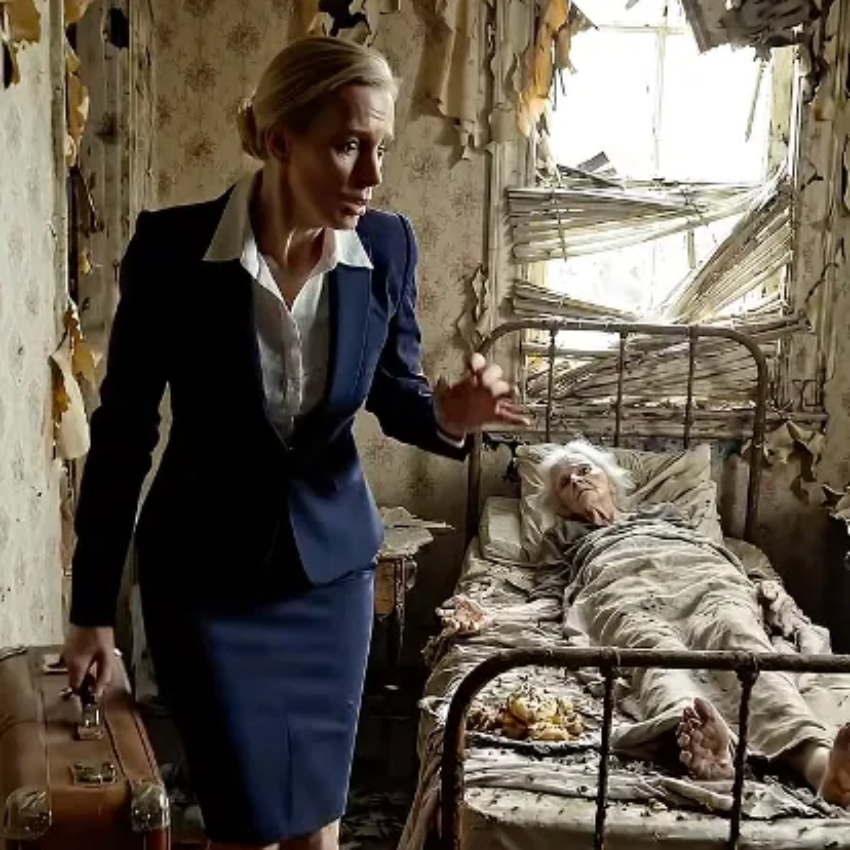


In the immediate aftermath of Robert and Patricia’s arrest, a profound sense of peace finally settled over Eleanor’s room. Dr. Reed and her dedicated team immediately began the delicate process of withdrawing the excessive benzodiazepines. It was a slow, challenging journey, but Eleanor was no longer being poisoned. Her body, though frail, fought to reclaim itself.
I spent every moment I could by her side, holding her hand, whispering words of love and reassurance. Over the next few days, as the sedative fog began to lift, I saw glimpses of my grandmother returning. Her eyes, though still distant, would sometimes focus on me. A faint smile, a squeeze of my hand—small, precious moments of connection.
The personal cruelty here was Eleanor’s final weakness, her body too damaged to fully recover, but her last days were spent in true comfort, not chemical sedation. Her dignity, so cruelly stripped away, was partially restored.
One quiet afternoon, surrounded by the gentle hum of medical equipment and the soft glow of the late sun, Eleanor Albright passed away peacefully. She was free. Free from pain, free from sedation, and finally free from the insidious greed that had sought to hasten her end. Her final moments were spent with me, and a genuinely compassionate care team, ensuring she felt nothing but love.
The ensuing legal proceedings were swift and decisive. The sheer volume of evidence—Dr. Reed’s comprehensive medical report, Kelly’s detailed testimony, my own documentation of Eleanor’s original POA, and the damning audio recording—left Robert and Patricia with no viable defense. They were charged with elder abuse, medical fraud, and attempted murder.
Their financial assets, which they had planned to seize from Eleanor, were frozen immediately and ultimately forfeited to Eleanor’s estate, earmarked for charitable foundations in her name, a final act of justice. Both Robert and Patricia faced lengthy prison sentences and public disgrace. Their lives, once defined by ambition and avarice, were now synonymous with betrayal.
But justice, as I learned, often comes with its own profound cost. The scandal surrounding Eleanor’s case, and my direct involvement in exposing my husband, cast a long, unyielding shadow over my professional reputation. The initial whispers Robert had sown had now blossomed into a full-blown public narrative.
My prestigious research grant, which had been the culmination of years of tireless work, was frozen indefinitely. The funding agency cited “unacceptable distractions” and “potential reputational damage to the institution” as their reasons. My attempts to explain the circumstances, the ethical imperative that drove my actions, were met with polite but firm resistance. They understood, they said, but the optics were simply too damaging.
My position at the research institution became untenable. Colleagues, though some were supportive, others kept a careful distance, wary of being associated with such a high-profile scandal. The very community I had dedicated my life to now viewed me through the lens of my personal tragedy and my unconventional role in exposing it. I was no longer just a researcher; I was “the woman who arrested her husband.”
After careful deliberation, and with a heavy heart, I was ultimately forced to resign from my position. There was no compensation for the lost grant funding, no severance package. It was a direct, uncompensated sacrifice for justice, a profound personal cost that left me adrift in a professional wilderness. The career I had meticulously built, the future I had envisioned for myself, was gone.
I had saved Eleanor, secured justice, and exposed the truth. But in doing so, I had lost my marriage, my professional standing, and a significant part of the future I had believed was mine. The quiet satisfaction of justice served was tempered by the stark reality of my sacrifice.
More Stories
















+ There are no comments
Add yours