
My Husband Accused Me of Neglecting My Dying Grandmother — But Her Hidden Note Exposed His Treacherous Plot


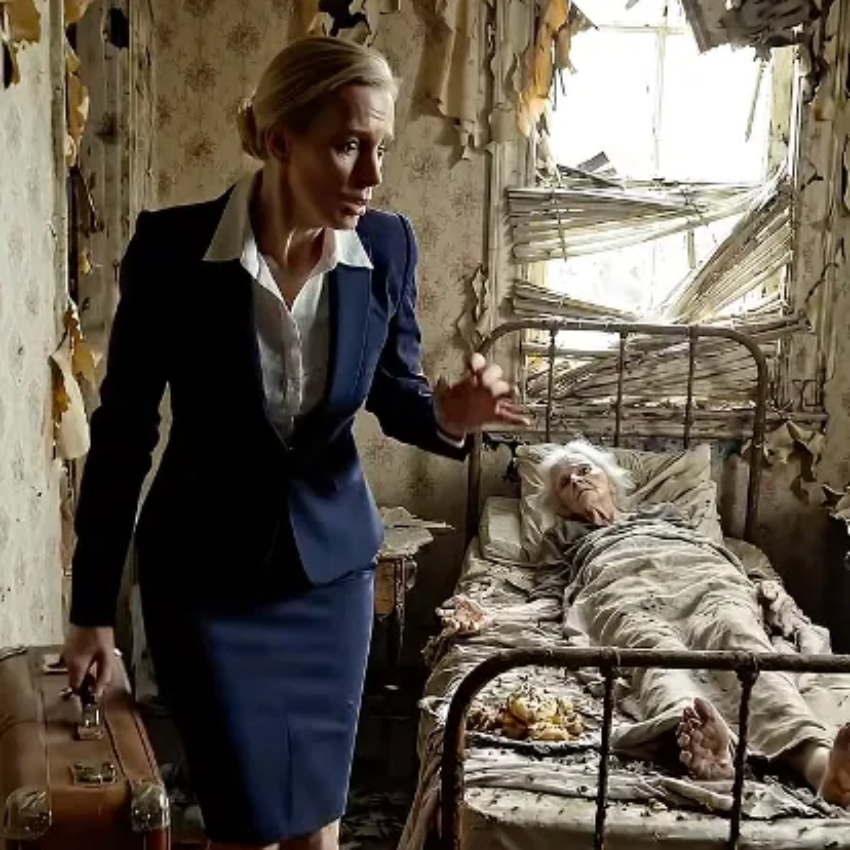


Robert’s desperate clinging to his fraudulent Medical Power of Attorney was their final, fragile defense. He believed his legal document was impenetrable, a shield against all the medical evidence Dr. Reed had presented. But he had fundamentally underestimated Eleanor’s foresight and my determination.
The Ethics Committee meeting, already thick with tension from the brain scan reveals, intensified as Robert, bolstered by his attorney’s nervous nods, continued to assert his legal control.
“Dr. Reed’s medical findings, while concerning, do not invalidate my legal authority as Mrs. Albright’s Medical Power of Attorney,” Robert stated, his voice regaining a touch of its former arrogance.
“I am legally empowered to make decisions regarding her care, and I maintain that these decisions have always been in her best interest, focusing on her comfort.”
Mr. Hayes, the Ethics Committee Chair, leaned forward. “Mr. Jenkins, the committee understands your position. However, the medical evidence presented by Dr. Reed suggests that the care decisions made under your authority have led to significant, documented patient harm.”
“This raises serious questions about the validity of those decisions, regardless of legal standing,” he continued.
“And about the manner in which your Medical Power of Attorney was obtained.”
Patricia, seeing an opening, jumped in. “This is a baseless attack. Robert obtained the POA legally, with Eleanor’s full consent.”
“She was lucid and understood perfectly when she signed it.”
Her lie was transparent, given Eleanor’s heavily sedated state at the time. The personal cruelty was their audacity, their willingness to publicly fabricate Eleanor’s consent, trampling over her autonomy one last time.
“On the contrary, Mr. Hayes,” I interjected, my voice clear and steady.
“My grandmother, Eleanor Albright, was a meticulous woman. She planned for every contingency, including the protection of her medical autonomy.”
Robert scoffed, a dismissive wave of his hand. “Oh, Mara and her grandmother’s ‘meticulous’ habits. This is hardly relevant to legal documents.”
“It is entirely relevant, Robert,” I countered, meeting his gaze with a cold, unwavering intensity.
“Because Eleanor’s original Medical Power of Attorney document, dated fifteen years ago, contains a very specific and critical clause.”
I calmly produced the cream-colored document, the one I had retrieved from Eleanor’s home office. I had made several notarized copies, one of which I now handed to Mr. Hayes. He took it, his brow furrowed with curiosity.
“This document,” I explained, “was designed to protect Eleanor from precisely this kind of exploitation.”
I pointed directly to the overlooked clause near the bottom of the second page. “It states that any subsequent alteration, amendment, or revocation of this Medical Power of Attorney agreement would require the explicit, documented consent of two independent medical specialists, attesting to her full cognitive capacity.”
Mr. Hayes’s eyes widened as he read the clause. He glanced at Robert, then back at the document.
“Furthermore,” I continued, “the clause also mandates a formally recorded family consensus meeting, involving all designated beneficiaries and immediate family members, with minutes formally lodged and witnessed, all documented *prior* to the patient’s condition becoming critical or any loss of full cognitive function.”
The air in the room suddenly grew heavy. Mr. Hayes’s face, usually impassive, showed a clear flicker of shock. He meticulously reread the clause, his finger tracing each word.
Robert, who had been confidently smirking, went utterly still. His face drained of color, turning a sickly pale gray. The young lawyer beside him suddenly looked even more nervous, flipping frantically through his own notes.
“Mr. Jenkins,” Mr. Hayes said, his voice slow and deliberate, “can you confirm that these conditions were met when you obtained your Medical Power of Attorney?”
Robert stammered, his usual smooth delivery completely gone. “I… I don’t… Eleanor was… she seemed perfectly lucid at the time.”
“There were no two independent medical specialists formally attesting to her full cognitive capacity, were there, Robert?” I pressed, my voice unwavering.
“No family consensus meeting, no recorded minutes, no documentation *before* her condition became critical, was there?”
Robert’s jaw worked silently. He looked at Patricia, a desperate, panicked plea in his eyes. Patricia, for her part, looked utterly aghast, her face a mask of dawning horror. They had been so confident in their scheme, so arrogant in their belief that they could simply bypass Eleanor’s existing protections.
“This clause,” Mr. Hayes stated, his voice resonating with authority, “if confirmed as valid, would render any subsequent Medical Power of Attorney null and void if these conditions were not met.”
He looked directly at Robert. “And it is clear, based on Mrs. Albright’s documented medical state at the time your POA was obtained, that these conditions could not possibly have been met.”
The silence in the room was deafening. Robert’s face was a picture of utter defeat. The realization that his “ironclad” legal document was, in fact, a sham, bought and executed under fraudulent pretenses, was finally hitting him. The hidden clause wasn’t just a procedural detail; it was the complete dismantling of his power, a legal landmine he had never anticipated. It was Eleanor’s last, brilliant defense.
More Stories

















+ There are no comments
Add yours