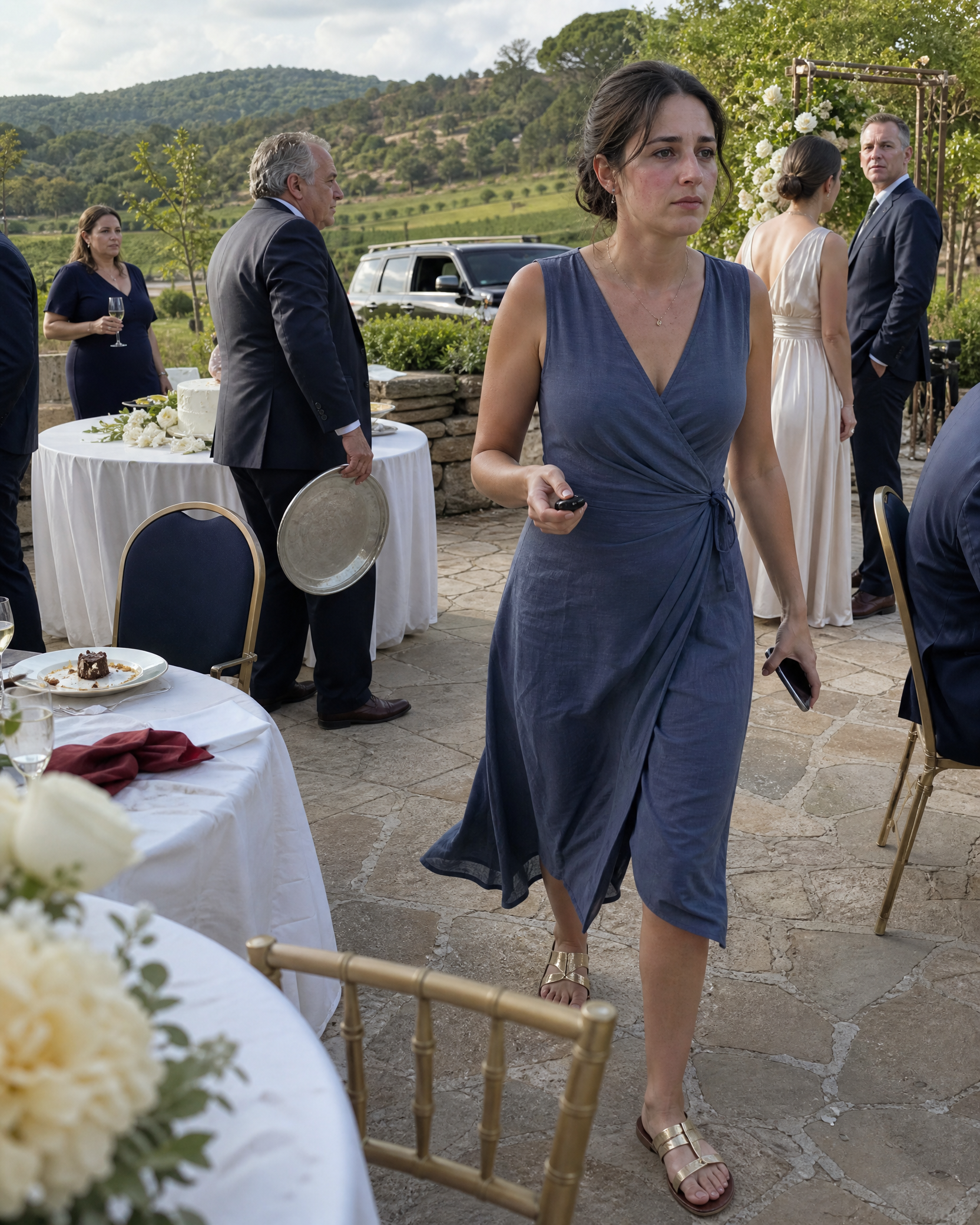
At a 200-Guest Engagement Party, My Father Attacked Me for My Car, Unaware I Knew His Seven-Year Secret


Nine days after the quiet reckoning, the air was crisp and cool. I found myself at the modest community center in my old neighborhood, a place that held complex memories. I used to volunteer here during my struggling student days, a period when I felt invisible to my family, my efforts unacknowledged. Today, the center was buzzing with activity, preparing for a small local fundraiser I’d helped organize for underprivileged youth.
I moved around, arranging folding chairs in neat rows, feeling a quiet satisfaction in contributing without seeking external validation. The worn wooden floor beneath my feet, the smell of freshly brewed coffee, the cheerful chatter of other volunteers – it was a world away from the gilded cages of my family home. This felt honest.
A shadow fell across the doorway. I looked up, and my breath hitched. Robert stood there, dressed casually in a plain shirt and slacks, looking strangely out of place amidst the bustling activity. He didn’t announce his presence or make eye contact immediately. He simply stood there for a moment, observing.
He walked slowly towards me, his hands in his pockets. His face was still etched with a quiet solemnity, but the deep lines of defeat had softened slightly. He wasn’t there to interfere, to criticize, or to take over. He was simply there.
“Need a hand with those, Leo?” he asked, his voice low, almost hesitant. “They look heavy.”
It was a simple offer, mundane and practical, devoid of any emotional theatrics. It was the kind of offer a stranger might make, or a colleague. It wasn’t an apology, not in words, but it was a gesture, a physical manifestation of support where there had once been only judgment and absence. The specific cruelty here was the lingering absence of a direct apology, but this small, mundane act spoke volumes of a shift.
I paused, holding a stack of chairs. For a moment, I considered refusing, letting the bitter taste of past betrayals linger. But something in his quiet demeanor, in the genuine, unforced offer, made me relent.
“They are,” I replied, a small, almost imperceptible nod of acknowledgment. “Grab that stack over there.”
He didn’t hesitate. He walked over, picked up a stack of chairs, and began to carry them, placing them beside mine. We worked side-by-side for a few minutes, the only sounds the scrape of chair legs on the floor and the distant chatter of the other volunteers. We didn’t talk about the past, about the trust, about Chloe, or about his broken promises. We spoke only of the task at hand.
“Looks like a good turnout,” he commented, gesturing to the entrance where more people were arriving.
“I hope so,” I responded. “It’s for a good cause.”
His presence felt like a silent acknowledgment of my own worth, my own efforts, separate from his control or approval. He was participating in my world, a world he had once dismissed and undermined. It was a profound shift, subtle but undeniable.
Standing amidst the purposeful chaos of the community center, surrounded by the simple, honest work, I felt a quiet sense of independence. The old resentment, while not entirely gone, had softened. Robert’s transformation wasn’t complete, and our relationship would likely always carry the scars of his betrayal. But this quiet morning, working side-by-side, a nascent hope for a different kind of family bond began to stir within me. It wouldn’t be the perfect, idealized family I once yearned for, but perhaps, finally, it could be a real one.
Sometimes, the heaviest burdens we carry are not the truths we reveal, but the lies we’ve allowed to define us.
More Stories









+ There are no comments
Add yours