
Teenage daughter reveals ownership of family manor amidst Civil War, shocking grandmother and absent father.


The whispers from the drawing-room chilled me more deeply than the winter air outside. “Confiscated Property.” The phrase echoed in my mind, a death knell for any hope of a future at Oakhaven. Eleanor wasn’t just trying to make my life miserable; she was trying to steal my home, using the Union Army as her unwitting accomplice.
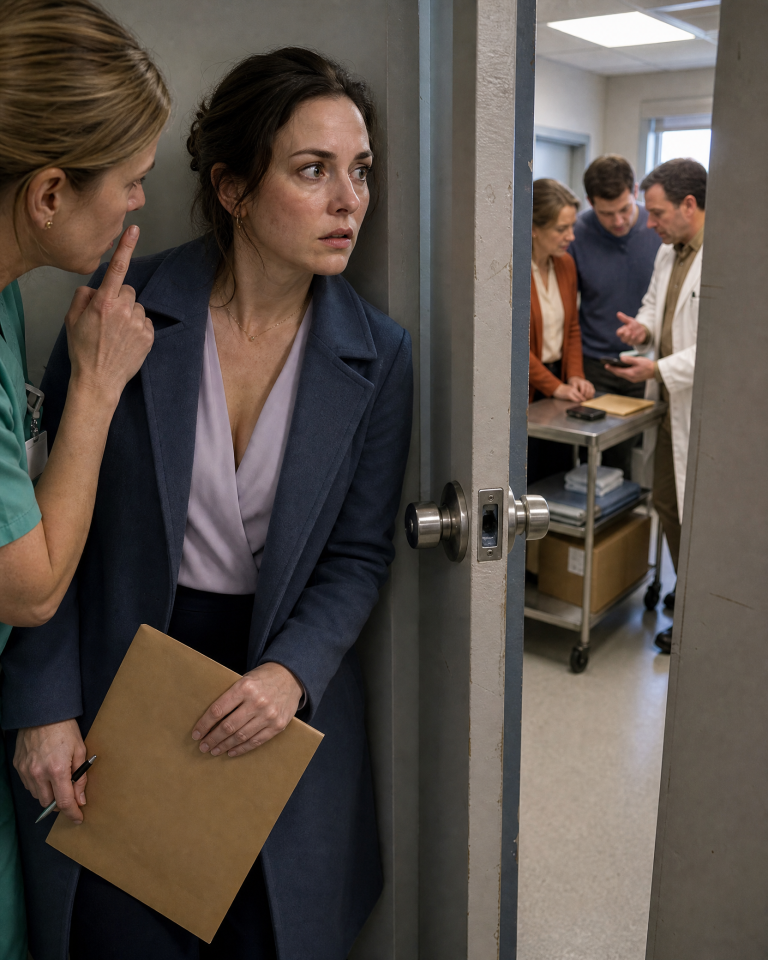
I leaned against the cold wall, listening for more, my heart pounding a frantic rhythm against my ribs. Mrs. Finch was still there, her voice a low drone of agreement.
“A truly brilliant strategy, Matriarch,” Mrs. Finch said. “Gideon always remarks on your foresight. To secure Oakhaven under such a protective declaration… it’s what any prudent family would do. And the tobacco, such a rare treat. He’ll be delighted.”
Eleanor’s laugh was thin and sharp. “One must always consider the long game, my dear. Especially with certain… unfortunate complications. These declarations, you see, often contain clauses that clarify management in times of conflict. Clauses that, for instance, might overrule prior arrangements, especially those involving… less experienced individuals.”
My breath hitched. “Less experienced individuals.” She meant me. She was aiming to nullify any claim I might have, even if she didn’t know its precise nature. The cunning was breathtaking. She was building an insurmountable legal wall around Oakhaven, not just for the duration of the war, but permanently, ensuring that when the conflict ended, the manor would be firmly in her grasp, with me utterly disinherited.
The implications flooded over me: my mother’s trust, the funds I had secretly diverted to keep Oakhaven running, my years of backbreaking labor—all of it would be rendered meaningless. I would be left with nothing, cast out into a war-torn world with no home, no family, and no recourse.
I had to move. I couldn’t stay and listen to her weave her web of lies and manipulation. I had to find a way to counter this. But how? What legal argument could stand against a Union declaration, especially one orchestrated by someone with Eleanor’s connections and willingness to bribe?
I slipped away from the shadows, making my way silently out of the manor. The cold air outside felt invigorating, a sharp contrast to the suffocating plotting within. The snow, which had been falling steadily for days, now lay in thick, untouched drifts, making travel difficult. But I had no choice.
Aunt Bethany. She was my only hope. She had always been the quiet observer, the keeper of family secrets, the one person who saw through Eleanor’s polished façade. If anyone knew of a way to counter this move, it would be her.
I pulled my heavy wool cloak tighter around me, its fabric stiff with frost, and started walking. The wind bit at my exposed cheeks, but I barely noticed. My mind raced, replaying Eleanor’s words, each phrase a poisoned dart aimed at my future.
Oakhaven wasn’t just a house; it was a symbol, a legacy, and for me, it was survival. To lose it would be to lose everything my mother had tried to protect. And to lose it to Eleanor’s callous machinations was unthinkable.
The journey to Aunt Bethany’s small, secluded cottage took longer than usual. The snow lay deep, unbroken except for the faint tracks of deer. My boots sank with every step, the cold seeping into my bones despite my frantic pace. My breath plumed in front of me, each exhalation a cloud of desperation.
I pictured Provost Marshal Gideon Finch, a man I knew by reputation. He was a Union officer, stationed in our area to maintain order and ensure loyalty. But everyone knew he was susceptible to influence, especially if it came wrapped in material benefit. Rare Southern tobacco, in these times, was a fortune. It was a currency that could buy his loyalty, or at least his compliant silence.
Eleanor understood power. She understood how to leverage social standing and strategic advantage. She knew that Oakhaven, perched on a hill overlooking the river and the main road, was of immense value to the Union. A perfect headquarters, a defensible position, a supply depot. And she was offering it up, not out of patriotism, but out of pure, unadulterated greed and a desire to consolidate her control.
My anger burned, a small, fierce flame in the pit of my stomach. My father, Captain Elias Reed, was away fighting a war. He would not, could not, intervene. He was trapped in his own distant battles, unable or unwilling to see the war raging within his own home. And Eleanor had seen to that, with her insidious letters, painting me as unstable, a liability.
The injustice of it all fueled my steps. I pushed through a particularly deep drift, stumbling, but regaining my footing. I couldn’t afford to fall. I couldn’t afford to give up.
Finally, after what felt like an eternity, the faint glow of a lamp appeared through the trees. Aunt Bethany’s cottage. A haven of warmth and wisdom.
I stumbled to her door, my knuckles raw from the cold as I rapped sharply. The door creaked open, revealing Aunt Bethany, her small, frail frame silhouetted against the warm lamplight. Her eyes, usually sparkling with gentle humor, widened in alarm when she saw me, my face flushed crimson from the cold, my hair dusted with snow.
“Eliza, child! What on earth…?” she began, her voice filled with concern.
I pushed past her, shivering, my teeth chattering. “Aunt Bethany,” I gasped, the words tumbling out, “Eleanor… she’s bribing Provost Marshal Finch. She wants to declare Oakhaven ‘Confiscated Property.’ She wants to take everything.”
Aunt Bethany’s gaze sharpened instantly. She led me to a worn armchair by the hearth, pushing a cup of steaming herbal tea into my hands. She sat opposite me, her expression grim.
“Tell me everything, child,” she said, her voice steady, despite the tremor in her hands. “Every word you heard. Every detail.”
I recounted Eleanor’s plan, the specific phrase “Confiscated Property,” the hint of clauses nullifying claims by “less experienced individuals,” the bribe of Southern tobacco. Aunt Bethany listened, her eyes never leaving my face, her mind working furiously behind their gentle facade.
When I finished, the small cottage was silent save for the crackling fire. The tea warmed my hands, but the fear in my heart remained.
Aunt Bethany sighed, a deep, weary sound. “Eleanor. Always scheming. She believes she can outmaneuver anyone. But she forgets, Eliza, that some contracts are written not just in ink, but in foresight. And your mother, bless her soul, was a woman of remarkable foresight.”
My gaze locked onto hers. “What do you mean?”
“Your mother, Eliza, was never one to be underestimated,” Aunt Bethany said, a faint smile playing on her lips. “She understood the Reeds better than anyone. She knew their pride, their hunger for control. And she knew what lengths Eleanor would go to, to ensure Oakhaven remained in her perceived dominion. But your mother had other ideas for your inheritance. Ideas designed to protect you, specifically.”
A tiny spark of hope flickered within me, fighting against the overwhelming despair. “My mother… she knew?”
Aunt Bethany nodded, her eyes distant, as if recalling events from long ago. “She knew, child. And she acted. She ensured that Oakhaven would be more than just a home for you. She ensured it would be a sanctuary. But a sanctuary with a very specific, and now, very dangerous clause attached.”
More Stories







+ There are no comments
Add yours