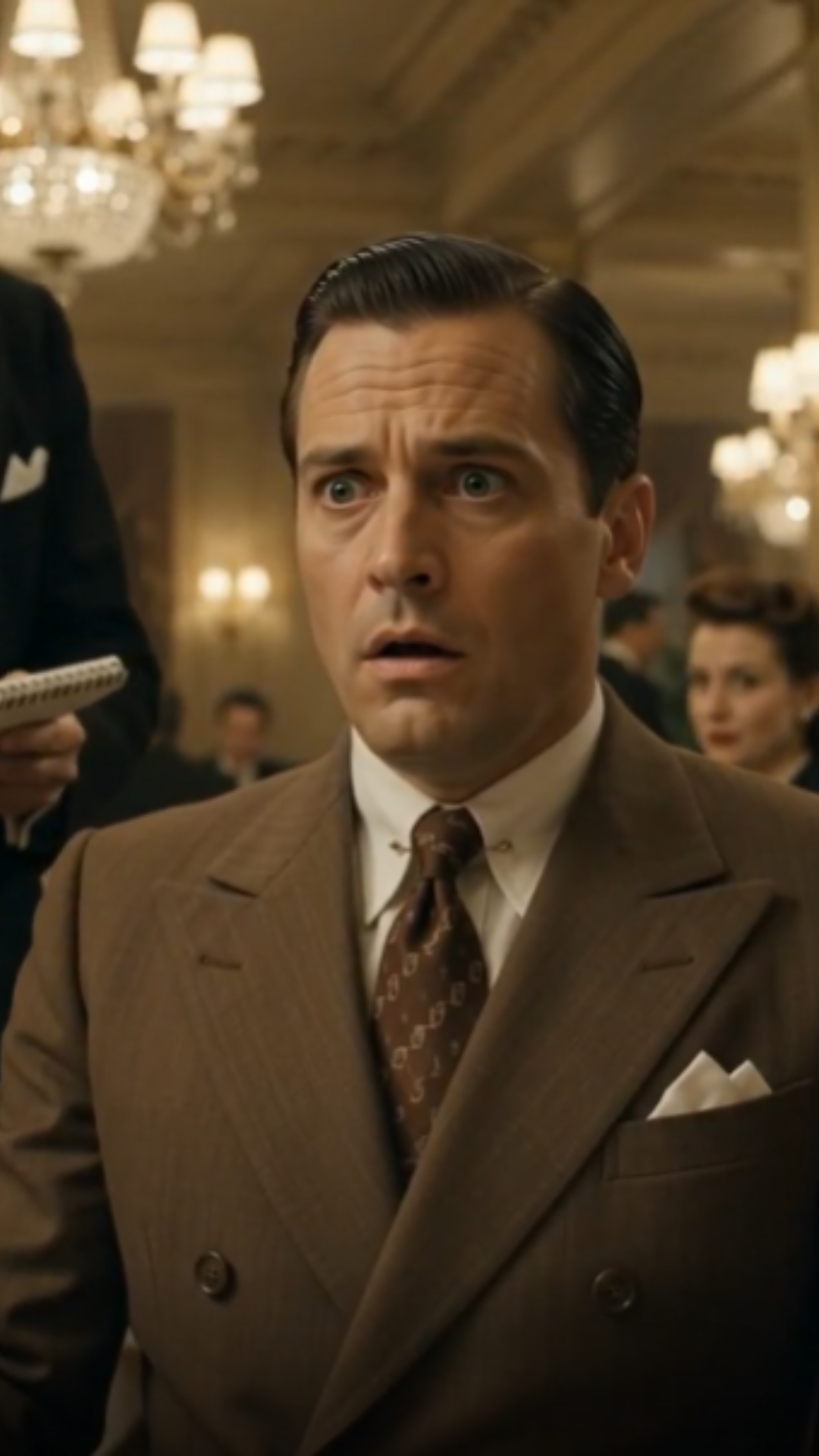
You're late, Martha, my husband Julian said, dabbing his mouth with a linen napkin without even looking up from his lobster shell. "Pay the bill, would you? We're done."


The memory of the forged deed folder in my pocket was a cool weight, a physical anchor in the swirling chaos of the Carlton dining room. My son, Thomas, had put it there.
The previous afternoon, the house had been quiet, Julian at work, Clara out playing bridge. I had been in the kitchen, kneading dough for bread, the rhythmic motion a small comfort.
Thomas, then fourteen, was usually buried in his schoolbooks. But that day, he came into the kitchen, his face pale, his eyes wide. He wasn’t a child given to dramatics.
He held something small and metallic in his hand: a tiny silver key.
“Mother,” he whispered, his voice barely audible above the faint sizzle of bacon fat on the stove. “I found this.”
My hands paused in the dough. “What is it, dear?”
He held up the key. “It’s Father’s. For his leather pouch. The one he keeps locked in his study.”
I had only ever seen that pouch on Julian’s person, or locked away in his desk. He was fiercely protective of it.
“And how did you come across it?” I asked, my voice steady, though my heart had begun to pick up its pace.
Thomas shifted his weight from one foot to the other. “I was looking for my algebra textbook. I thought it might have fallen behind Father’s old console radio in the study.”
Julian’s vintage radio was a hulking, dark wood cabinet, a centerpiece of his study. He kept it pristine, rarely letting anyone touch it.
“I pulled it out to look,” Thomas continued, his gaze fixed on my face, “and the back panel was loose. I saw a hollow space inside.”
My eyes widened. A hollowed-out radio? Julian had always been so particular about that antique.
“He uses it to hide things,” Thomas explained, his voice still low, like he was afraid the walls had ears. “Secret things.”
Inside, Thomas had found a small, locked leather pouch. He remembered seeing his father use the small silver key he now held to open it before.
He had unlocked it.
“There were papers, Mother,” he said, his voice trembling slightly. “Lots of papers. And this.”
He pulled out a folded document from his trouser pocket, its edges creased. It was a deed transfer for my father’s farm, bearing my father’s forge-stamped signature, along with a stolen war bond voucher. The document was clearly signed by Arthur Pendelton, the notary.
My breath hitched. The very papers Julian now celebrated.
“He forged your signature, too, Mother,” Thomas said, his small hands shaking as he held up another document, an affidavit of sale I had never seen before. “It says you agreed to sell the farm for wartime emergency.”
He had known Julian was emotionally abusive, demanding, and often cold. But Thomas had never, until that moment, seen his father as a criminal.
The betrayal must have hit him with the force of a physical blow.
He didn’t scream. He didn’t confront Julian. My quiet, observant son had simply put the key and the documents back, waited for Julian to leave for work, then retrieved the key again.
He then came to me.
“I don’t know what it all means, Mother,” Thomas had confessed, his voice heavy with fear and confusion. “But I think you need to know. And I think you need to keep these safe.”
He pressed the folder, bulky with the forged deeds and war bond voucher, into my hand. Then, he slipped the tiny silver key into my coat pocket.
My son, just fourteen, had delivered the weapon I now held, the one that could finally cut through Julian’s carefully woven web of deceit. His silent duty had become my arsenal.
More Stories






+ There are no comments
Add yours