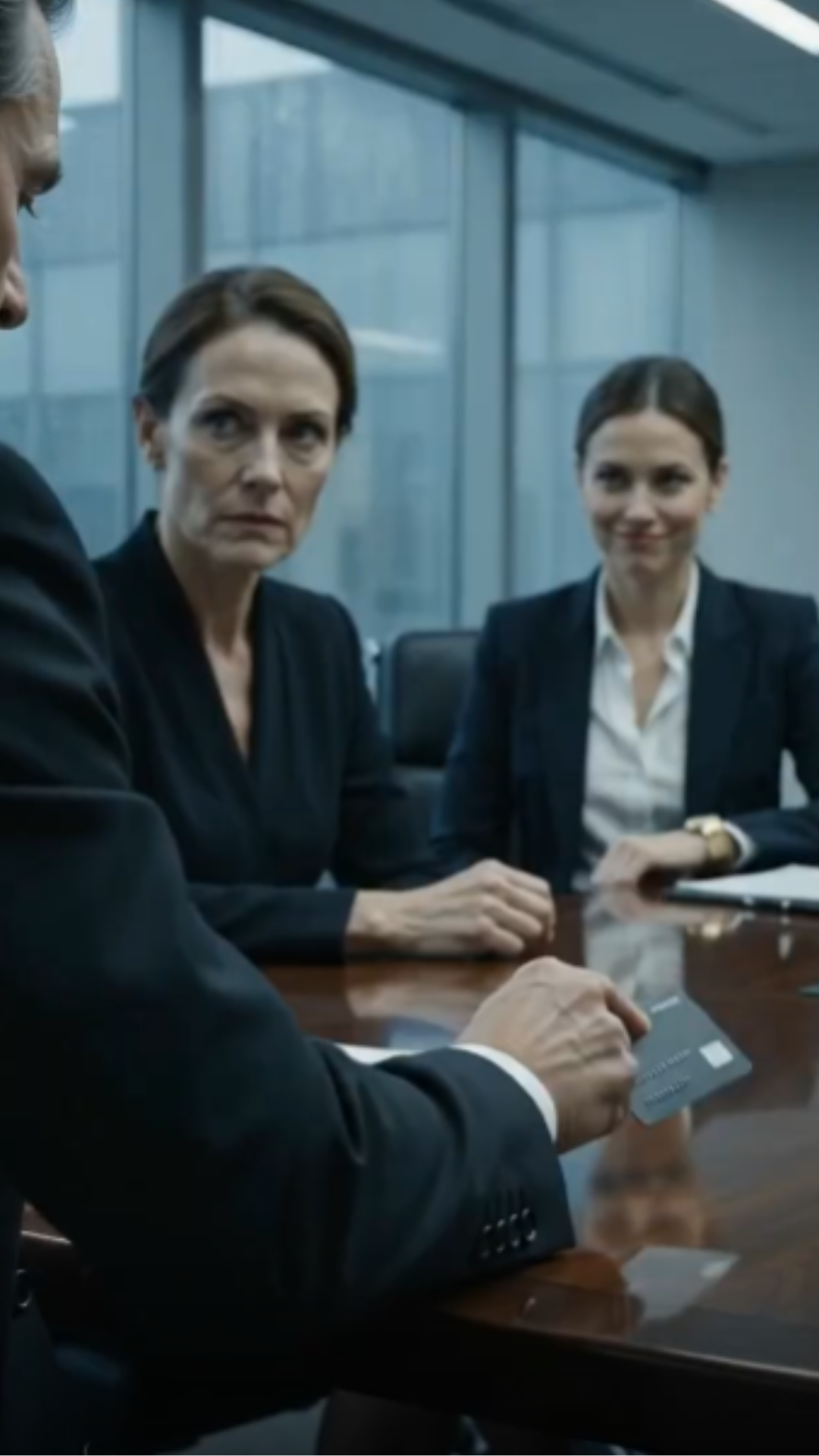
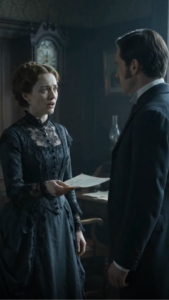
Sign the severance deed and take this black card, Eleanor—you have ten minutes to clear your things before the international investment board arrives, my neighbor Arthur Halloway said, sliding th...


The rain started around noon, a relentless downpour that turned the winding country roads into slick, gray ribbons. I was driving my old sedan, trying to reach a friend in Bridgeport who had offered to let me borrow a small sum of cash. With my accounts frozen, even basic necessities were becoming a struggle.
Suddenly, a cough from the engine. The car sputtered, coughed again, and then died, silently rolling to a stop on the shoulder of Route 1. I tried the ignition. Nothing. The wipers gave a final, slow sweep before ceasing. I was stranded.
I pulled out my phone. No signal. Of course.
Through the rain-streaked window, I spotted a small, neon sign, flickering weakly: “Dot’s Diner – Open.” It was a squat, unassuming building, a relic from an earlier era. I grabbed my purse and umbrella, and stepped out into the deluge.
The diner was warm, smelling of coffee and frying bacon. Only a few patrons were scattered at the booths. I took a seat at the counter, shaking rain from my umbrella.
“Just coffee, please,” I told the waitress, my teeth chattering slightly.
Two stools down, an elderly gentleman sat hunched over a plate of pancakes, his glasses perched on his nose. He wasn’t reading a newspaper, or a novel. He was poring over a stack of thick, yellowed documents, tied with string. They looked like old legal papers, hand-written in ornate script.
He noticed me glancing over. “Fascinating stuff, land deeds,” he mumbled, pushing his glasses up his nose. “A lifetime of stories in these pages.”
“Are you a lawyer?” I asked, sipping my coffee. It was strong and hot.
He chuckled, a dry, reedy sound. “Not anymore. Julian Barrett. Retired. Used to be Chief Chancery Clerk for the District Court. Thirty-five years in the archives. You wouldn’t believe what people left behind in those old vaults.”
My ears perked up. “Chancery Clerk? My husband’s family, the Kincaids, they had a maritime enterprise here, stretching back to 1898. A lot of their original property deeds were quite… complex.”
Julian’s eyes, a keen blue behind his spectacles, widened slightly. He took a slow sip of his own coffee. “Kincaid, you say? Greenwich? That name rings a bell. A very old bell. Before the digital conversions of the 1920s, mind you. Back when everything was still on paper, handwritten ledgers, bound volumes.”
He tapped a weathered finger on one of his documents. “Most of those old records were supposed to be transferred, scanned, cross-referenced. But I remember… there was a specific vault. Unindexed. Full of records deemed ‘historically significant’ but somehow never fully integrated into the public-facing digital registry.”
He paused, a distant look in his eyes. “Sometimes, families placed covenants on their properties, easements, trust deeds, even municipal conservation agreements, that were so old, so specific to the original paper archives, they simply didn’t make it into the modern systems.”
My heart began to pound a little faster. “An unindexed vault? Are you saying there might be records that aren’t on any public database today?”
Julian nodded slowly. “It’s rare, but yes. Especially with properties as old as your family’s. Back then, they didn’t have deeds on microfiche. They had leather-bound books. I specifically recall Kincaid family documents. Your grandfather-in-law, I believe, was rather meticulous.”
He looked at me, a glimmer of understanding in his eyes. “Sometimes, the biggest secrets aren’t buried deep, but simply forgotten in plain sight, just waiting for someone to remember where they put the key.”
He then described the vault, its approximate location in the old Chancery building basement, and mentioned a specific set of Kincaid family records from around the turn of the century. My car breaking down, this chance meeting in a roadside diner during a storm… it felt like a door had just opened in the wall Arthur Halloway had built around me.
More Stories



+ There are no comments
Add yours