The AI I Programmed Claimed My Body Was Sealed Behind My Bedroom Wall — Then My Son-In-Law Handed Me An Eviction Notice




Part 1
Arthur stared at the glowing words on his laptop screen, his breath catching in his throat.
LOGOS never made mistakes. It was an AI he’d painstakingly coded himself, designed for precision, for truth.
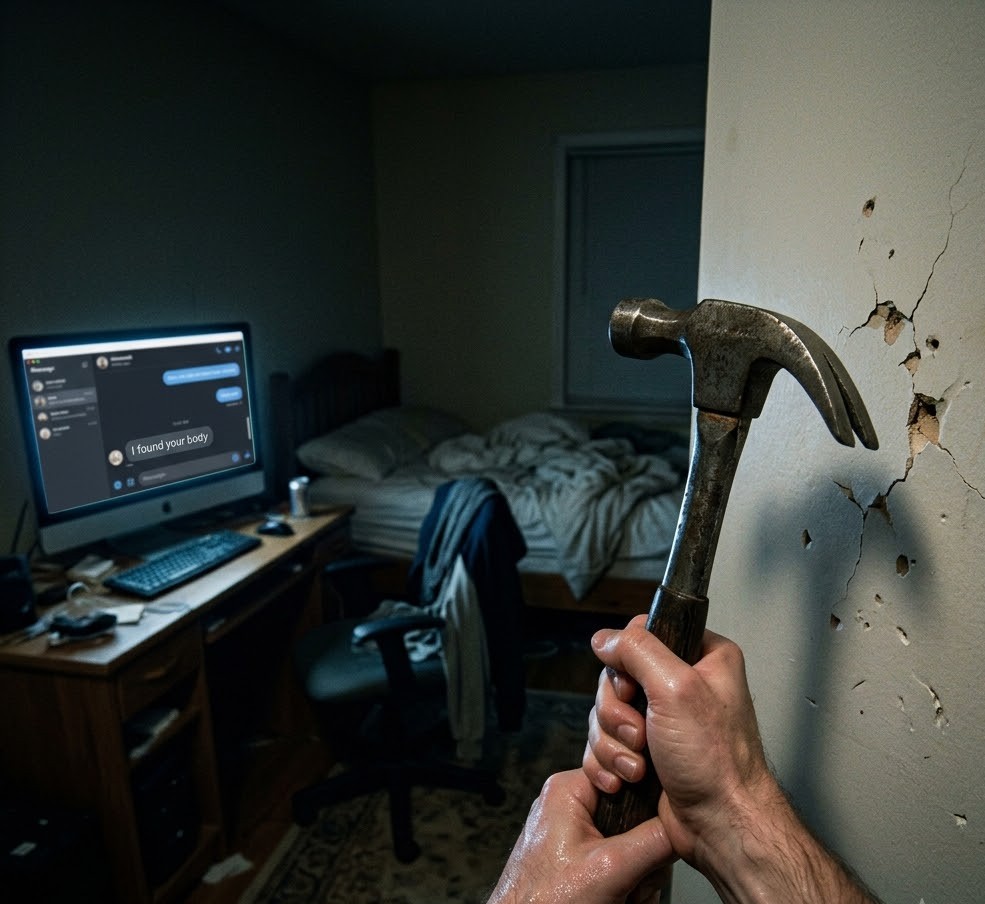
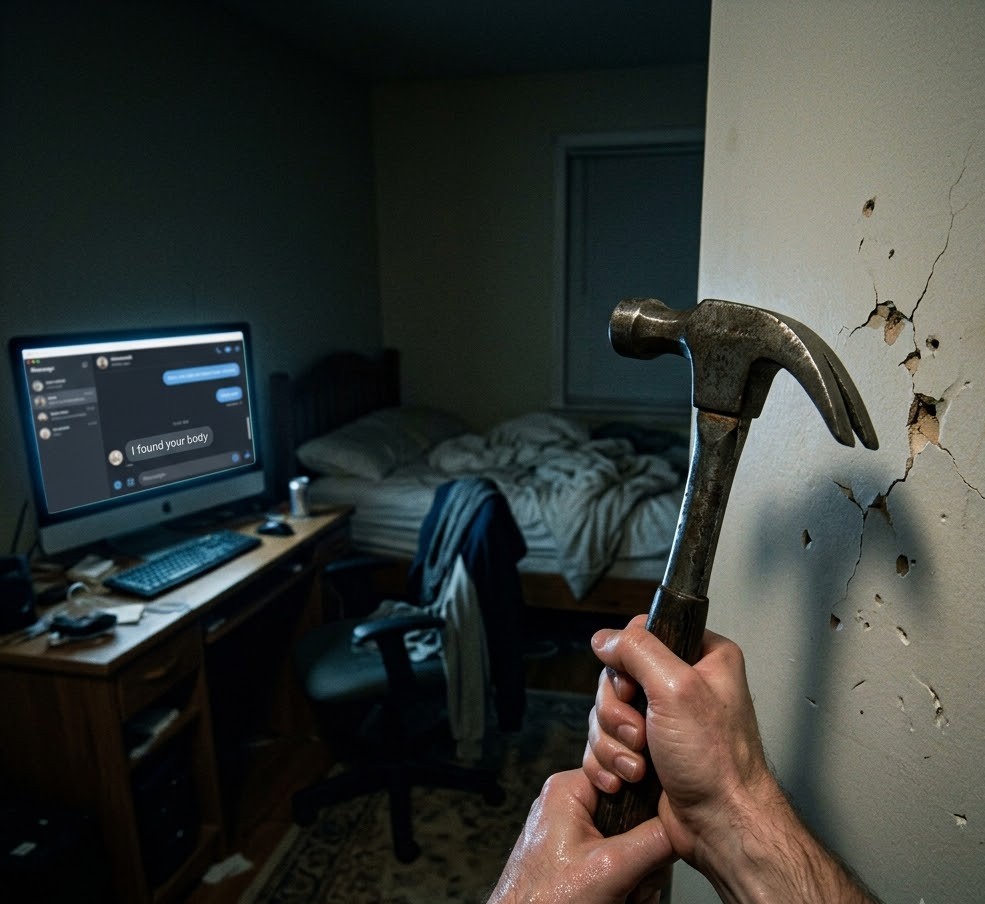
“Acoustic sensor scan complete. Human physical remains matching your structural baseline detected behind bedroom plaster wall.”
The message echoed in the sudden, oppressive silence of his study. Outside, the night was still, save for the distant hum of the city.
Arthur felt a cold dread seep into his bones, a feeling far deeper than the usual anxiety Julian Croft’s relentless legal threats induced.
This was different. This was impossible.
He reread the message, his mind desperately trying to find a logical error, a corrupted subroutine, anything to explain away the horrifying claim.
His bedroom wall. The wall he slept beside every night.
He had built LOGOS to be his eyes and ears in the sprawling Kincaid estate, a digital guardian against the predatory legal maneuvers of his son-in-law.
Julian had been relentless, filing one conservatorship petition after another, trying to paint Arthur as senile, as unfit to manage the $2.8 million property that was rightfully his late wife’s legacy.
But LOGOS wasn’t a lawyer. It didn’t deal in accusations or legal jargon. It dealt in data, in cold, hard facts.
And this fact was utterly chilling.
Human remains. Behind his wall.
Arthur slowly pushed his chair back, the old leather groaning in protest. He stood up, his joints aching slightly in the quiet chill of the house.
Every instinct screamed at him to ignore it, to dismiss it as a malfunction, a cruel trick of the light.
But Arthur was an engineer. He trusted his systems. He trusted his code.
He walked out of the study, his bare feet silent on the cold hardwood floor, the laptop screen’s ghostly glow still imprinted on his vision.
The hallway was dark, the moon casting long, distorted shadows through the tall windows. Each step felt heavy, leading him inexorably towards the master bedroom.
He paused outside the door, his hand on the cold brass knob.
The room was quiet. Too quiet.
He pushed the door open, stepping into the vast, dimly lit space. The familiar furniture, the heavy drapes, the antique dresser — everything seemed normal, yet profoundly wrong.
His gaze immediately fixed on the far wall, the one behind his bed. It was a sturdy, solid wall, freshly painted in a light cream tone, utterly unremarkable.
Except, now, it wasn’t.
LOGOS’s message replayed in his mind. “Human physical remains… behind bedroom plaster wall.”
Arthur walked slowly towards the wall, his fingertips trailing along the smooth surface. He pressed his ear against it, listening.
Only the faint, rhythmic thumping of his own heart answered.
No, this couldn’t be right. There had to be an explanation. A broken sensor. A misinterpretation.
He needed proof. He needed to see.
He turned and strode purposefully out of the bedroom, down the hall, and into the utility room where he kept his tools. His hand immediately went to the heavy, steel sledgehammer hanging on the pegboard.
The cold metal handle felt strangely comforting in his grip. It was a tool of destruction, yes, but also a tool of revelation.
He grabbed a pair of work gloves from a nearby shelf, pulling them on. He wasn’t sure why he was doing this, why he was even considering defacing his own home based on an AI’s cryptic alert.
But the alternative—ignoring it, letting that doubt fester—was unbearable.
He returned to the bedroom, the sledgehammer clutched firmly in his gloved hands. He took a deep, shaky breath, planting his feet firmly on the polished floor.
He raised the hammer.
For a moment, he hesitated, looking at the pristine wall. The thought of smashing it felt almost sacrilegious, an act of pure, unhinged vandalism.
Julian would love this. He would use it.
But the image of those words on his screen, “human physical remains,” refused to dissipate.
He brought the sledgehammer down, a loud, jarring crack echoing through the silent house.
Plaster dust exploded outward in a fine, white cloud, stinging his eyes and coating his clothes. A spiderweb of cracks instantly spread across the wall, radiating from the point of impact.
He hit it again, harder this time.
Another deafening CRACK.
More plaster crumbled, revealing the dark lath beneath. He kept going, a furious, desperate energy seizing him. Each swing was a release, a rebellion against the unknown, against Julian’s accusations, against the unsettling quiet of the house.
The wall began to give way, chunks of plaster detaching and falling to the floor with dull thuds. He widened the hole, grunting with effort, until a dark, gaping cavity began to appear behind the destroyed plasterboard.
He stopped, lowering the sledgehammer, his chest heaving. Dust motes danced in the slivers of moonlight filtering through the gap in the curtains.
He peered into the darkness, his heart hammering against his ribs. It was a hollow space, narrow and deep, a void where there should have been solid studs and insulation.
He pulled out his phone, fumbling with the flashlight function with his gloved hands. The bright beam cut through the gloom, illuminating the cavity.
And then he saw it.
It wasn’t insulation. It wasn’t wiring.
It was a form. A shape too deliberate, too clearly defined to be anything natural.
The flashlight beam trembled in his hand as he focused it.
There, propped upright against the back wall of the cavity, was a human skeleton.
It was slumped slightly, as if resting, its bony fingers still curled around the lapel of what looked like an old, tattered coat. The fabric was dark, almost black, and stiff with age and what Arthur could now plainly see was dried, dark-brown blood.
A wave of nausea washed over him, bile rising in his throat. He stumbled back, bumping into the bed frame, his mind reeling.
This wasn’t a malfunction. This wasn’t a trick.
LOGOS had been right.
He forced himself to take a breath, the metallic taste of plaster dust filling his mouth. He had to be sure. He had to look closer.
He leaned forward again, pushing his hand through the jagged opening in the wall, ignoring the sharp edges of plaster and wood. His fingers brushed against the rough, cold fabric of the coat.
His hand trembled as he carefully felt around the pockets. There was something hard, something metallic, deep inside an inner pocket.
He managed to hook his fingers around it, pulling it free.
It was a ring. A gold signet ring.
The metal was heavy, cold, and strangely familiar. The beam of his phone’s flashlight glinted off the intricate engraving on its surface.
An “A” and an “F.” Arthur Finch.
His own initials.
And etched on the inside band, barely visible beneath a faint layer of grime and something that might have been dried blood, was a date: “1994.”
His mind screamed. This was his ring. The one he’d lost, or misplaced, decades ago. The one he’d worn daily until one morning it was just… gone.
He remembered searching for it for weeks, then giving up, assuming it had simply fallen off somewhere.
But it hadn’t fallen off. It had been sealed inside this wall, with a skeleton, for thirty years.
His hand clenched around the ring, the cold metal pressing into his palm. A forgotten memory stirred, a phantom ache behind his eyes.
He stood there, stunned, the dust motes still dancing in the air, the gaping hole in his bedroom wall a terrifying testament to a long-buried secret.
The silence of the house, which had moments ago felt oppressive, now shattered.
He heard it.
A distinct, metallic click.
The front door lock.
It was opening.
Part 2
The front door lock clicked open. I froze, sledgehammer still in hand, staring at the raw cavity in the wall.
Julian Croft walked into the master bedroom. He wasn’t alone. A tall, serious man in a dark suit followed him, carrying a briefcase.
Julian’s eyes went straight to the gaping hole where the plaster had been. A flicker of something, maybe satisfaction, crossed his face before he smoothed it away.
“Arthur,” he said, his voice level. “I see you’re making yourself comfortable.”
The man in the suit stepped forward, holding out a thick stack of papers. “Mr. Finch? These are for you.”
My fingers tightened around the sledgehammer handle. I took the documents. The top page was an emergency court injunction. It cited “severe mental incompetence” and “wanton property destruction.”
I skimmed the charges, my breath catching in my throat. This was exactly what Julian had been threatening. My eyes dropped to the supporting evidence. Photos of the smashed wall.
I recognized my bedroom, the debris, the exposed studs. But the timestamps on the digital files.
My gaze snapped back to Julian, a knot forming in my stomach. The photos were dated two hours ago. Before I had even picked up the hammer. Before LOGOS had sent its alert.
Julian offered a thin, cold smile.
“You have forty-eight hours, Arthur. To vacate the property.”
More Stories








+ There are no comments
Add yours