
Her CEO Stepfather's Dark Past Was Exposed When My Ten-Year-Old Daughter Became Pregnant


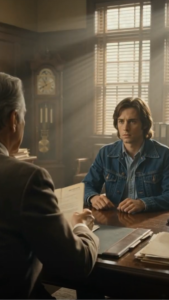
The following morning, armed with the “Morality & Public Trust” clause and a desperate plea, I sat across from a corporate lawyer. His office, decorated with awards and framed degrees, felt intimidating. He listened politely, occasionally adjusting his glasses.
When I finished, a long silence hung in the air. “Mrs. Finch,” he began, his voice measured, “this clause is… an artifact. Legally speaking, its enforceability in a modern employment context is highly dubious.”
He tapped a pen against his desk. “FinchTech’s legal team is formidable. They would argue it’s expired, superseded by new agreements, or simply irrelevant.”
He gave me a sympathetic, but firm, look. “Trying to use this as a direct legal weapon, to terminate Arthur’s employment or secure a settlement, would be an uphill battle, expensive and likely futile.” His words felt like a cold shower, extinguishing the small flame of hope that had ignited the night before. This, I realized, was exactly why Arthur felt so safe.
His casual dismissal of the clause now felt like a specific, calculated insult. He knew perfectly well how toothless it appeared to the average legal professional. He understood that its power lay not in direct litigation, but in its potential to reveal, to embarrass, to chip away at the very thing he cherished most: his carefully constructed public image.
The lawyer’s reluctance wasn’t malice; it was pragmatism. He couldn’t see a clear path to victory, and he wasn’t about to risk his firm’s reputation fighting a losing battle against Arthur Finch. My initial misunderstanding had been profound. I had expected a legal silver bullet, something that would cut through Arthur’s power with the clean force of the law. Instead, I held a delicate, historical instrument that required a different kind of leverage.
I pushed back from the table. “It’s not about termination. It’s about his nomination for the National Tech Innovator award. It’s about public disclosure.”
The lawyer raised an eyebrow, a flicker of something new in his eyes. “Ah. Reputational damage. That’s a different approach.” He paused, considering. “Still, to make that stick, you’d need concrete evidence of the ‘personal misconduct’ this clause refers to. Beyond your ex-husband’s word, I mean.” His gaze softened slightly. “Something tangible, something verifiable, that links Arthur to these past issues.”
He was right. Leo’s accusations, while gut-wrenching, were largely anecdotal. He had fragmented memories, whisperings from the past, but nothing that would hold up under scrutiny in the court of public opinion. Arthur’s PR machinery would shred it in an instant. This wasn’t just about the clause; it was about the stories hidden beneath its forgotten words.
I felt a surge of frustration, hot and bitter. The legal system, designed to protect the vulnerable, felt like a labyrinth designed by and for the powerful. Arthur had mastered its intricacies, weaving a web of NDAs and legal ambiguities to shield himself. He had learned that if you could control the narrative, you controlled everything.
I thanked the lawyer, my voice tight. Walking out of his office, the bustling city outside felt indifferent to my struggle. The towering glass buildings of FinchTech gleamed in the distance, a monument to Arthur’s ambition and, I now realized, his carefully guarded secrets. I knew then that I couldn’t rely solely on lawyers to fight this battle. I needed to unearth the truth myself. I needed stories, victims, concrete details that would make the clause not just relevant, but explosive.
My mind went back to Leo. He had mentioned the “odd NDA” signed by an intern in 1998. That was a specific detail, a thread I could follow. It might not be enough to satisfy a court, but it might be enough to ignite a fire under an investigative journalist, or even a detective.
My phone vibrated with a text from Lily’s therapist, Dr. Chen. *Lily had a breakthrough today. She drew a bird.* The message was a fragile beacon of hope in the overwhelming darkness. My daughter, silent for so long, was slowly finding her voice. I had to ensure she could fly free, unburdened by Arthur’s shadow.
I knew Arthur would be watching. He would have people monitoring my movements, listening for any whisper of dissent. His empire was built on control, and I was stepping onto his battlefield. The thought was terrifying, but Lily’s silent suffering had solidified my resolve. I wouldn’t stop. I couldn’t. This wasn’t just about justice; it was about reclaiming Lily’s future.
I decided my next step was not more legal advice, but investigation. I needed to visit the FinchTech archives myself, as Arthur’s wife, under the guise of gathering documents for my own academic research. It was a risky move, but one I felt compelled to make. I had to find the stories, the people, the hidden truths that Arthur had worked so hard to bury.
He always wins, he had whispered at the hospital. I would prove him wrong.
More Stories







+ There are no comments
Add yours