
Her CEO Stepfather's Dark Past Was Exposed When My Ten-Year-Old Daughter Became Pregnant


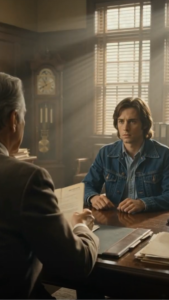
My frustration with the legal system pushed me to a different kind of authority. I made an appointment with Detective Isabella Cruz, hoping a fresh perspective, unburdened by corporate politics, might offer a path forward. Her office was starkly functional, a contrast to the polished corporate suites I’d grown accustomed to. She listened to me with an unreadable expression, her gaze steady.
I explained Lily’s situation, the initial accusation, Leo’s desperate warning about Arthur’s “pattern,” and the “Morality & Public Trust” clause. I handed her the faded printout, explaining its unusual history and Arthur’s current award nomination. She took it, turning it over in her hands.
“This is certainly… unusual, Mrs. Finch,” she said, her voice even.
“A clause from 1996 for a tech CEO in 2024.”
I braced myself for the familiar dismissal, the polite refusal to engage with something so seemingly irrelevant. But then, a subtle shift occurred in her demeanor. Her eyes, which had been wary, narrowed slightly. She read the clause again, her finger tracing the words.
“You mentioned a ‘pattern’?” she asked, looking up at me.
“That’s what Leo said,” I confirmed.
“He said Arthur had a history of abusing his power, silencing people with NDAs.”
Cruz nodded slowly, a thoughtful frown on her face. She leaned back in her chair, a pensive look in her eyes. “My cold case files contain several instances of young women who were former FinchTech interns or low-level employees from the late 90s and early 2000s.”
My heart leaped into my throat. This was it. This was the connection I had been desperately searching for.
“Their disappearances or alleged suicides were often linked to sealed corporate settlements,” she continued, her voice grim.
“We always hit a wall with FinchTech’s legal department. ‘Proprietary information,’ ‘settled matters,’ ’employee privacy.’ Nothing we could ever force open.”
She picked up the clause again, holding it up. “This… this is interesting.”
The gravity of her words hung in the air, a cold, hard confirmation of Leo’s terrified whispers. This was the specific, petty cruelty woven into Arthur’s corporate fabric. Not just one incident, but a pattern of vulnerable young women, easily dismissed, easily silenced. And Arthur’s method for their dismissal was always the same: a corporate settlement, shrouded in legal secrecy, designed to make them disappear from the public record.
The clause, once dismissed by lawyers as legally ambiguous, suddenly provided a potential common thread for Cruz’s long-dormant suspicions. It wasn’t about directly prosecuting Arthur for a specific past crime—yet. It was about recognizing a systemic issue, a dark undercurrent to FinchTech’s gleaming facade.
“Are you saying… Arthur was involved in these cases?” I asked, my voice barely a whisper.
Cruz held up a hand. “I’m saying the circumstances are… suggestive. A pattern emerged. Young women, all connected to FinchTech, all with sudden, unexplained departures or tragic ends, all followed by corporate silence and legal stonewalling.” She tapped the clause. “This adds a layer of motivation for that silence.”
She stood up and walked to a filing cabinet, pulling out a thick, worn folder labeled “FinchTech – Unresolved.” She brought it back to her desk, opening it to reveal a stack of yellowed documents and grainy photographs.
“One young woman,” she began, pointing to a photo of a smiling, dark-haired intern, “Maria Sanchez. Disappeared in November 1998. FinchTech settled with her family for ’emotional distress’ and ‘lost wages’ after she supposedly ran away.”
November 1998. The specific month Leo had mentioned for the “odd NDA” signed by an intern. My blood ran cold. The pieces of the puzzle were starting to click into place, forming a terrifying picture. This was the specific detail, the tangible thread that connected Arthur’s past to Lily’s present.
“The settlements,” Cruz said, her voice hardening, “they always included strict NDAs for the families. No public statements, no further inquiries. It was a tidy way to make inconvenient truths disappear.”
The revelation was a gut punch. Arthur hadn’t just abused his power; he had created a system to erase the consequences, to make the victims vanish, leaving only silence in their wake. And all of it, I now realized, was facilitated by the very clause he casually dismissed, the one that mandated disclosure but was instead used to mandate silence.
This was no longer just about Lily; it was about every young woman Arthur had silenced, every life he had derailed. And Detective Cruz, with her quiet persistence and her files full of forgotten faces, was the key to finally bringing those shadows into the light. The fight had just become much, much bigger.
More Stories










+ There are no comments
Add yours