
Quiet Airman Exposes Hidden Drone Flaw, Humiliated by Officer, Returns to Lead His Unit


The phone call came that afternoon, terse and official. “Airman Reed, Colonel Vance requests your presence in his office at 1400 hours.” No pleasantries, just a command.
My stomach did a nervous flip. I dressed in my cleanest civilian clothes, a simple blouse and slacks, feeling utterly out of place without my uniform. Maya hugged me tightly before I left. “Good luck, Mom,” she whispered.
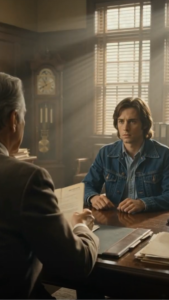
Colonel Vance’s office was sparsely decorated, functional. He sat behind a large, polished desk, his expression unreadable. I stood before him, feeling the weight of the last few weeks pressing down on me.
“Airman Reed,” he began, his voice flat, “take a seat.”
I sat on the edge of the chair, my hands clasped tightly in my lap.
Vance leaned back, his gaze steady. “Your report, with the recovered text messages, was… illuminating. It confirmed what we suspected, and unfortunately, what we saw with our own eyes during the test flight.”
I nodded, unsure if I should speak.
“However,” Vance continued, “there’s something you don’t know.” He paused, a flicker of something unidentifiable in his eyes. “During the Skywatcher flight test, we had a secondary, classified sensor array operational. It’s a prototype, unknown to most of the program staff, including Staff Sergeant Stone.”
My breath hitched. A classified sensor array?
“This array,” Vance explained, “was designed to detect micro-fractures and structural fatigue under specific stress loads, precisely the kind you identified. And during the solar flare incident, that array recorded precisely what your initial report stated. Structural fatigue in the forward strut, exacerbated by the electromagnetic interference, leading to critical destabilization. Your findings were independently corroborated, Airman Reed, even before the text messages came to light.”
A wave of profound relief washed over me, so potent it almost made me lightheaded. It wasn’t just Maya’s discovery or the drone’s near-crash that proved me right. There had been an unseen, independent witness. This meant my initial report, dismissed so contemptuously, had been accurate all along. It was a vindication so deep it almost brought tears to my eyes.
“Thank you, Colonel,” I managed, my voice thick with emotion.
Vance merely inclined his head. “That brings me to the next order of business. Your suspension is lifted, effective immediately. Your record will reflect full pay for the time you were out.”
A sigh of relief escaped me. This was it. My career was safe.
“And, Airman Reed,” Vance said, his voice now carrying a new, firm authority, “the Air Force does not tolerate negligence, nor does it allow true talent to go unrecognized. Effective tomorrow, you are promoted to Staff Sergeant.”
My jaw dropped. Staff Sergeant. It was a significant jump, bypassing several ranks.
“Furthermore,” Vance continued, his eyes piercing mine, “the Skywatcher drone program needs a new Project Lead. Someone with integrity. Someone with undeniable technical competence. Someone who won’t cut corners for personal ambition.”
He paused, letting the implication sink in. My mind raced. Project Lead? Me?
“Staff Sergeant Reed,” Vance concluded, “you are being designated as the new Project Lead for the Skywatcher drone program. You will oversee its redesign, ensuring all structural flaws are addressed and its integrity is beyond question. You will have a new team, and full authority.”
I stared at him, utterly shell-shocked. Project Lead. The very program I had been suspended for, the one Garrett had sabotaged, was now mine to command.
Then, Vance leaned forward, his voice dropping slightly, losing some of its official stiffness. This was the final, most astounding layer of the reveal. “There’s one more thing you should understand, Staff Sergeant Reed.”
He looked directly at me, his gaze intense. “The ‘whispers’ I mentioned in the meeting, about corner-cutting in new programs? They weren’t just general concerns. I initiated a quiet internal review. I needed someone unassuming, someone truly skilled, someone who wouldn’t be swayed by ambition or fear, to assess things from the ground up.”
My mind reeled. “An… undercover inspection?”
Vance gave a curt nod. “Precisely. Your initial assignment to the Skybound Innovations Program, your quiet nature, your reputation for meticulous detail… it was no accident. I had heard reports of ambitious, inexperienced officers putting schedules ahead of safety. I needed an individual who would identify issues, not ignore them. Someone who wouldn’t be seen as a threat until it was too late.”
He fixed me with a knowing look. “You were intentionally chosen, Staff Sergeant. Your quiet demeanor was your greatest asset. It allowed you to ferret out the truth where others, with more fanfare, would have been dismissed or compromised.”
The revelation hit me like a physical blow, stripping away every ounce of self-doubt I’d harbored. My entire agonizing journey, the humiliation, the suspension – it had all been part of a hidden test, an “undercover inspection” I hadn’t even known I was performing. Vance had been watching all along.
Later that afternoon, I walked into the main hangar, no longer an Airman First Class, no longer suspended. I was Staff Sergeant Reed, Project Lead.
The hangar was bustling. Technicians were already assessing the damaged Skywatcher, its buckled strut a stark reminder of Garrett’s deception. I scanned the faces, taking in my new team.
And then I saw him. Airman First Class Garrett Stone. He was standing near a supply cabinet, organizing tools, a task far beneath his former rank. His uniform, now stripped of its chevrons, hung loosely on him. He looked smaller, his shoulders slumped. He moved with a newfound, resentful meekness.
His eyes met mine across the expanse of the hangar floor. The arrogance was gone, replaced by a profound, terrifying understanding. He saw the new rank on my collar. He saw the authority in my stance. He saw that I was now in charge of the very program he had nearly destroyed. And he saw that he, the ambitious, entitled Staff Sergeant, was now just an Airman First Class, subordinate to the quiet woman he had publicly humiliated and tried to silence.
His face was a mask of shock and dawning horror. Our gazes locked for a long moment, a silent, profound understanding passing between us. He knew. And I knew he knew. The tables had turned, irrevocably. My command had begun.
More Stories




+ There are no comments
Add yours