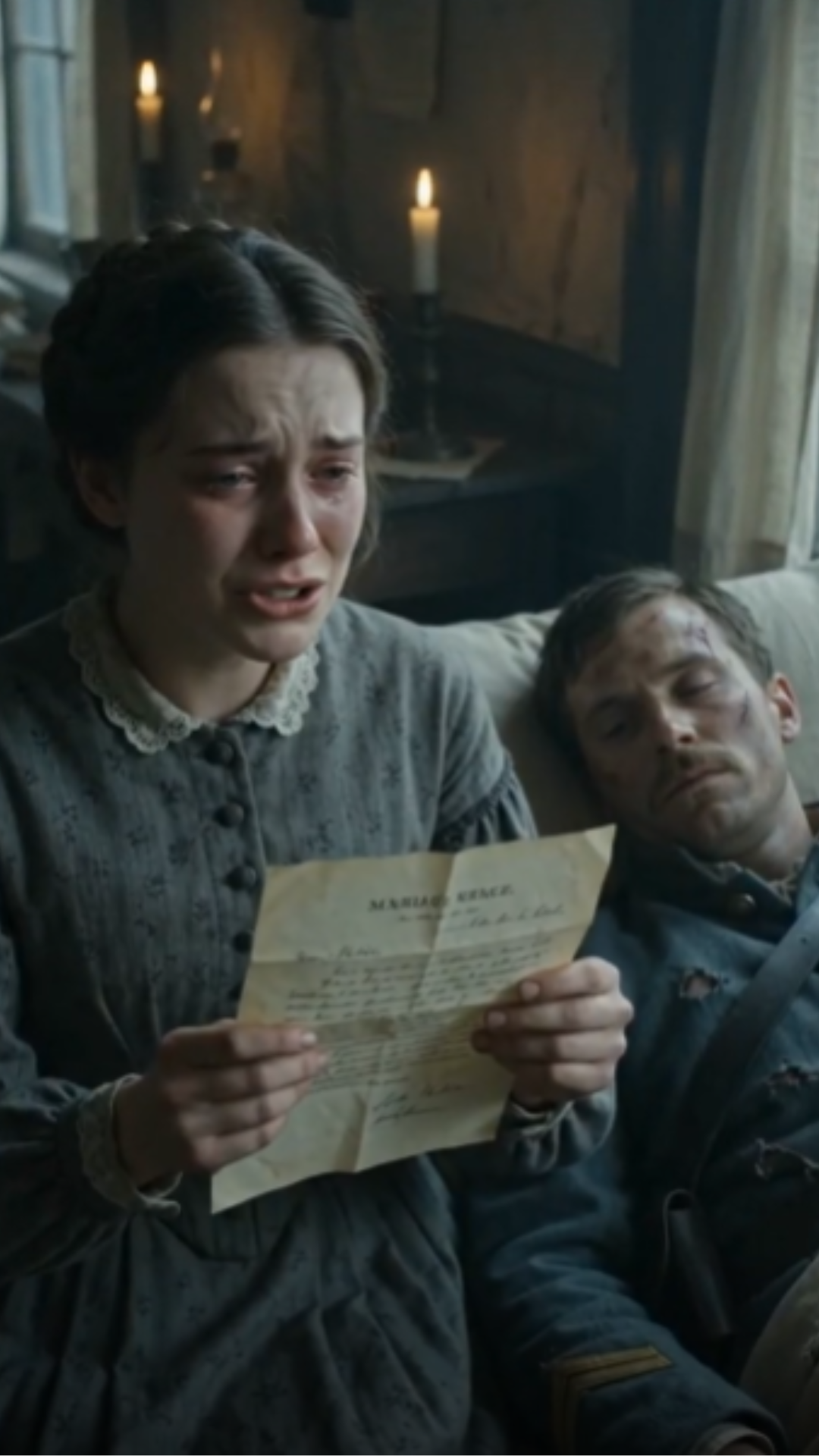
In October 1867, a young woman arrived at my Leavenworth infirmary holding a handwritten marriage proposal from a brain-injured Civil War veteran.
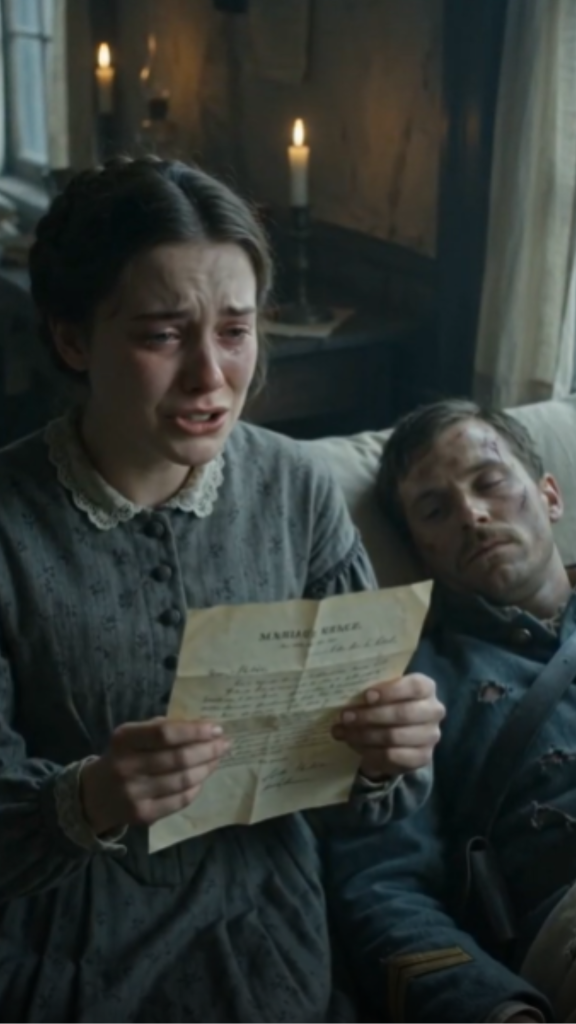


The atmosphere in the infirmary was suffocating. George and Eli maintained their vigil, eating loudly at odd hours and keeping Thomas locked in his room. Martha and I were virtually exiled to the back of the clinic, tending to other patients while Thomas languished, his condition visibly worsening from the stress.
I knew I couldn’t wait for a formal court date. Silas Crain was moving too fast.
The next morning, I made a desperate trip to the county clerk’s office, Jedidiah Ross’s surgical ledger tucked securely under my arm. The clerk, a portly man named Mr. Abernathy, looked up from his stacks of land deeds with a sigh.
“Good morning, Doctor. What can I do for you?”
“I have urgent evidence, Mr. Abernathy,” I began, placing the ledger on his counter. “Evidence that invalidates a claim Silas Crain has made against Thomas Finch. This ledger proves Thomas was medically incapacitated on the date of the alleged debt.”
Abernathy glanced at the book, his eyes barely registering the faded script. “Military records, you say? Very interesting, Doctor. But I’m afraid this falls outside the purview of my office for immediate action.”
“But this proves fraud!” I insisted, opening the ledger to the relevant page. “Thomas was in a coma, trepanned, in a Georgia field hospital in September 1863. He could not have signed any document in Nashville.”
Abernathy pushed the ledger back toward me. “Look, Doctor, I appreciate your zeal. But a military record, even a genuine one, needs to be authenticated in a proper circuit court. We can’t just take your word for it here. There’s a formal process.”
“And when is that formal process?” I asked, my voice tight.
“Docket’s full,” he replied, shaking his head. “Earliest we could schedule a hearing for something like this, with a military record requiring expert testimony, would be late next month. Maybe November.”
Late next month. That was weeks away. Weeks Thomas didn’t have.
Just as I was about to argue further, the door to the clerk’s office opened, and Silas Crain walked in, flanked by the county deputy. The deputy, a burly man named Jebediah, carried a thick, official-looking document.
Silas gave me a smirk, his eyes glinting with triumph. “Well, well, Doctor. Just the man I wanted to see.”
He turned to Mr. Abernathy. “Good timing, Sheriff. Here’s the finalized petition.”
The deputy handed the document to Abernathy. “This is an emergency guardianship petition for Sergeant Thomas Finch. Requesting immediate transfer to the territorial asylum in Osawatomie. For the safety of the public and himself.”
My blood ran cold. The territorial asylum. Thirty miles away, underfunded, and known for its brutal conditions. They intended to commit Thomas.
“On what grounds?” I demanded, stepping forward.
“On the grounds of severe mental instability and violent tendencies, as attested by his closest relatives,” Silas stated, gesturing toward the deputy. “His brothers have given sworn statements about his fits of rage, his inability to care for himself, his delusional episodes.”
“This is a lie!” I shouted, gripping the ledger. “Thomas is disoriented, yes, but not violent. His memory loss is due to a combat injury, not insanity. And his brothers are perjuring themselves for land!”
The deputy stepped between us, his hand resting on the butt of his pistol. “Easy, Doctor. These are sworn statements. We have a legal mandate.” He looked at Abernathy. “The judge signed off on the provisional order this morning.”
Abernathy nodded, his face impassive. “Yes, Sheriff. It’s all in order.”
Silas looked at me, his smile wide and malicious. “Looks like Thomas will be getting the ‘care’ he truly needs, Doctor. Far away from your meddling. And his land will finally be settled.”
He turned to the deputy. “We’ll be at the infirmary to collect Sergeant Finch at sundown. The carriage is waiting.”
The asylum. Thirty miles away. No one would hear Thomas there. No one would question Silas. Thomas would be lost forever, just as I had finally found the evidence to save him.
The surgical ledger felt like a lead weight in my hand, powerless against the cold machinery of Silas’s plan.
More Stories





+ There are no comments
Add yours