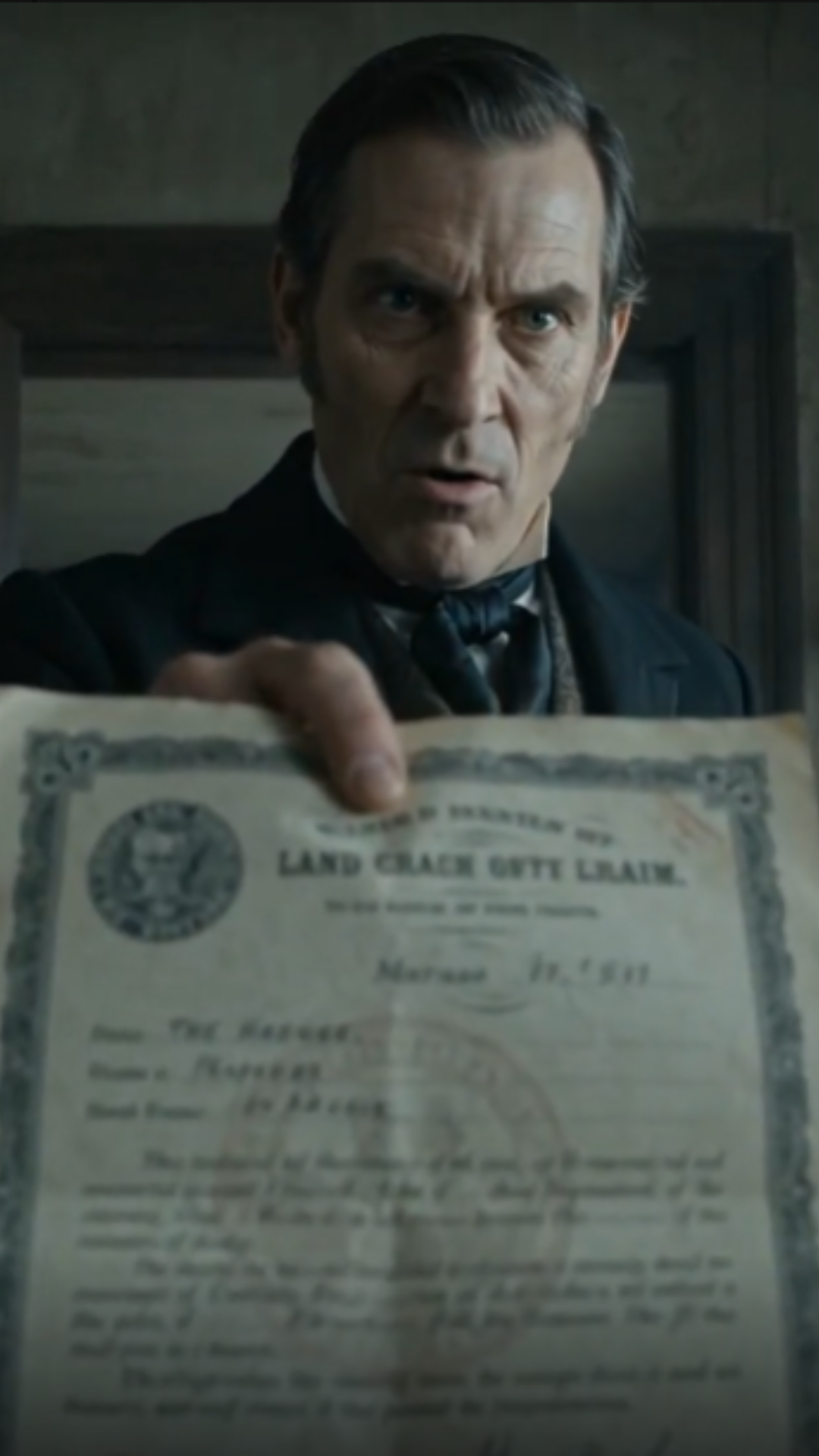
In October 1867, a young woman arrived at my Leavenworth infirmary holding a handwritten marriage proposal from a brain-injured Civil War veteran.
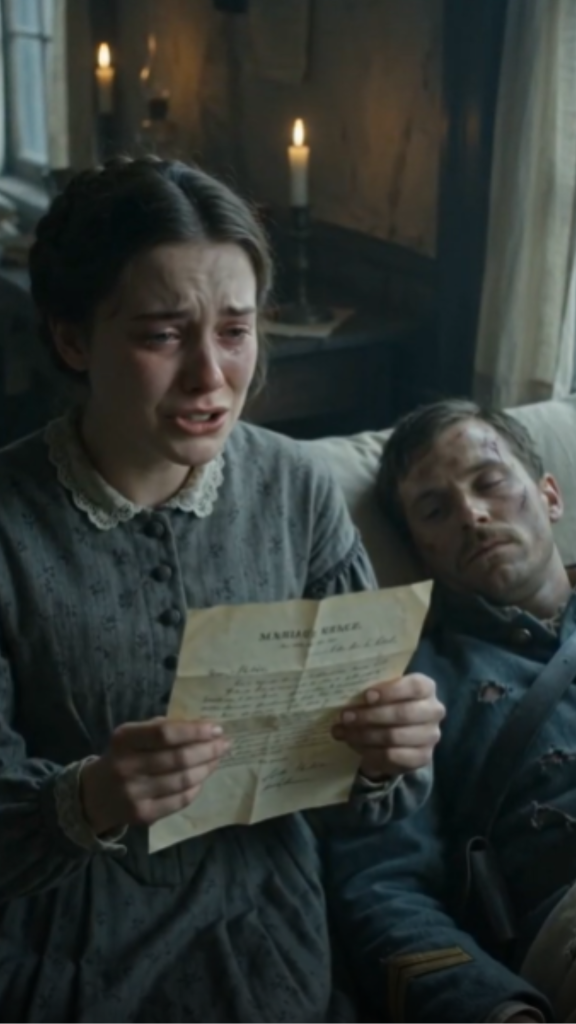


The brothers’ arrival had shattered the fragile peace of the infirmary. Thomas retreated further into himself, his eyes wide and unfocused whenever George and Eli were near. Martha spent her days fretting in the waiting area, darting glances at me, silently begging for a solution.
Later that afternoon, a smaller, more delicate knock sounded at the infirmary door. It was Great-Aunt Hester.
She stood bundled in a thick woolen shawl, her 71 years showing in the etched lines around her eyes, but her gaze was as sharp as ever.
“Josiah,” she said, her voice a low rustle. “I heard about the commotion. And about this letter.”
She held up Martha’s proposal, which I had shown her earlier that morning, hoping her wartime experience might shed some light. Hester had been a field nurse herself, ministering to the wounded at Shiloh and Vicksburg. She knew the grim realities of army life and the desperate messages soldiers often scribbled.
“This handwriting,” Hester said, her finger tracing the faded loops. “It’s not Thomas’s. Not entirely, anyway.”
I frowned. “But Martha insists it came from him. That it’s his proposal.”
Hester squinted at the paper, then peered at a tattered photograph of Martha’s brother, Caleb Gable, which Martha carried in her worn purse. “No, Josiah. This is Caleb’s hand. Mostly. Look here.”
She pointed to a distinctive curl on the capital ‘M’ in ‘Martha’ and a particular flourish on the ‘T’ in ‘Thomas’. Then she compared it to the inscription on the back of Caleb’s photograph. The similarity was undeniable.
“Caleb was a good scribe,” Hester explained, her voice softening. “He wrote letters for many of the boys. Especially those who couldn’t read or write well. Or those too weak to hold a pen.”
My breath hitched. “Are you saying Thomas didn’t write this at all?”
“I believe Thomas spoke these words,” Hester clarified, her eyes meeting mine. “He dictated them. Probably in a feverish state. When he was brought in after his injury in ’63. Caleb, bless him, wrote it down.”
This was a profound shift. Not a forgery, but a transcription. A promise made under duress, interpreted by a brother. It explained the military ink, too; Caleb would have used whatever was on hand in the field hospital.
“So the proposal is authentic in spirit, but not in Thomas’s direct hand,” I murmured. It was a crucial distinction. Not a direct lie from Martha, but a misunderstanding of authorship.
“There’s more, Josiah,” Hester said, her voice dropping to a conspiratorial whisper. “You mentioned Silas Crain, the quartermaster. The one claiming Thomas owes him money?”
I nodded, my attention fully captured.
“That man,” Hester continued, a flicker of old anger in her eyes. “He was known for skimming. Especially from mail bags. They called him ‘the tax collector’ in the 4th Kansas. Had a reputation for pilfering letters, looking for money or anything valuable, before they reached the soldiers or their families.”
A cold dread seeped into my bones. Silas wasn’t just claiming a debt; he was an opportunist. He would have seen Thomas’s desperate message to Martha, perhaps even twisted it. He would have known about Caleb, about the family.
“He targeted the Fourth Kansas Regiment specifically?” I asked, a bitter taste in my mouth.
“He did,” Hester confirmed, her gaze hardening. “He would intercept packages, redirect letters. Anything to get a few extra dollars or a piece of valuable information. He was court-martialed for it once, down in Tennessee, but they never made it stick completely. His superiors were too busy with the fighting.”
The pieces were beginning to connect in a way that chilled me. Silas Crain, the quartermaster who used a distinctive blue ink for his ledgers, who skimmed mail from the 4th Kansas Regiment, which included Caleb Gable and Thomas Finch. The man now claiming a debt and trying to seize Thomas’s land.
The proposal wasn’t just a testament to Thomas’s lost memory; it was a potential thread in a web of deceit spun by Silas Crain, dating back years.
More Stories







+ There are no comments
Add yours