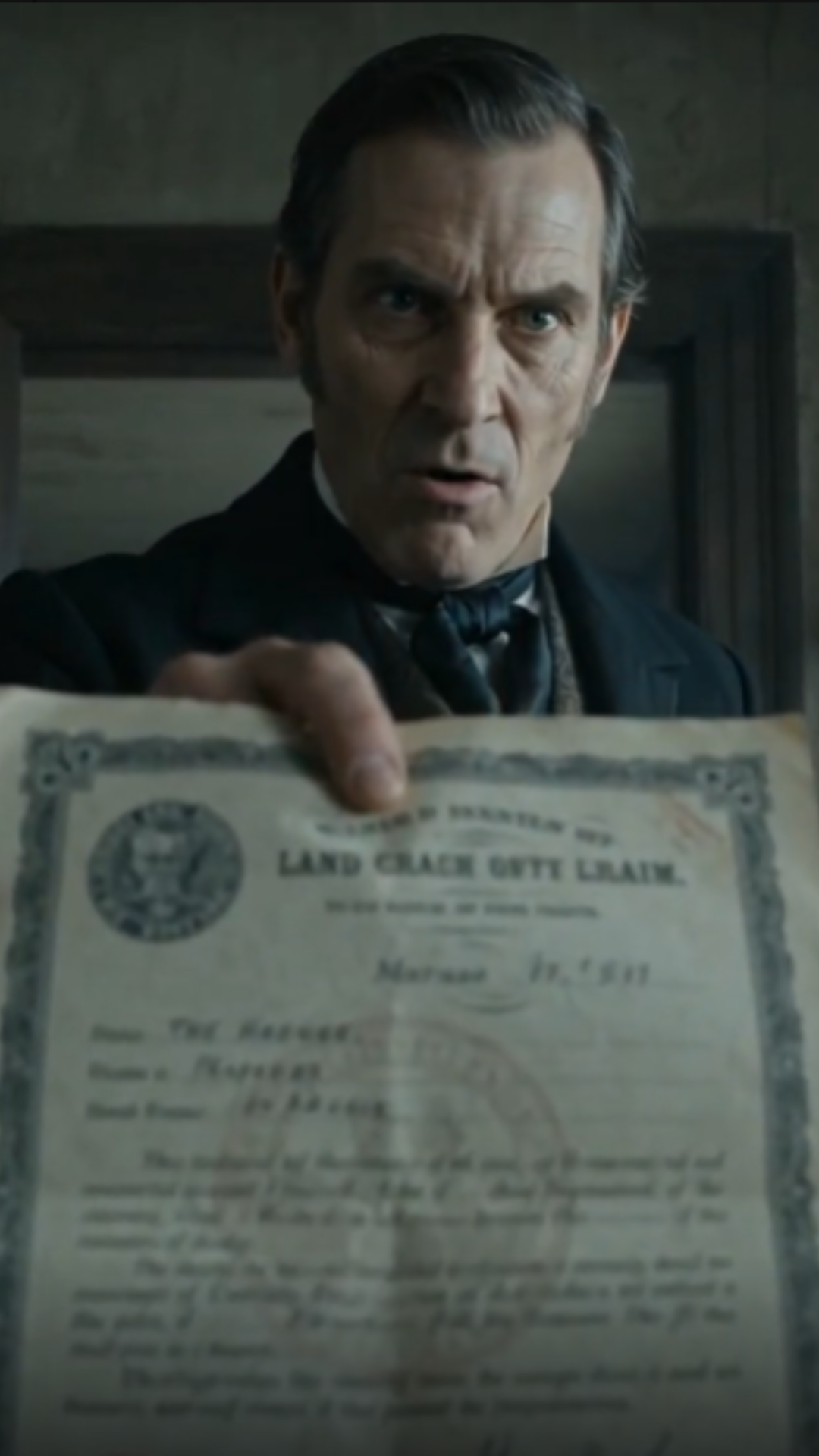
In October 1867, a young woman arrived at my Leavenworth infirmary holding a handwritten marriage proposal from a brain-injured Civil War veteran.
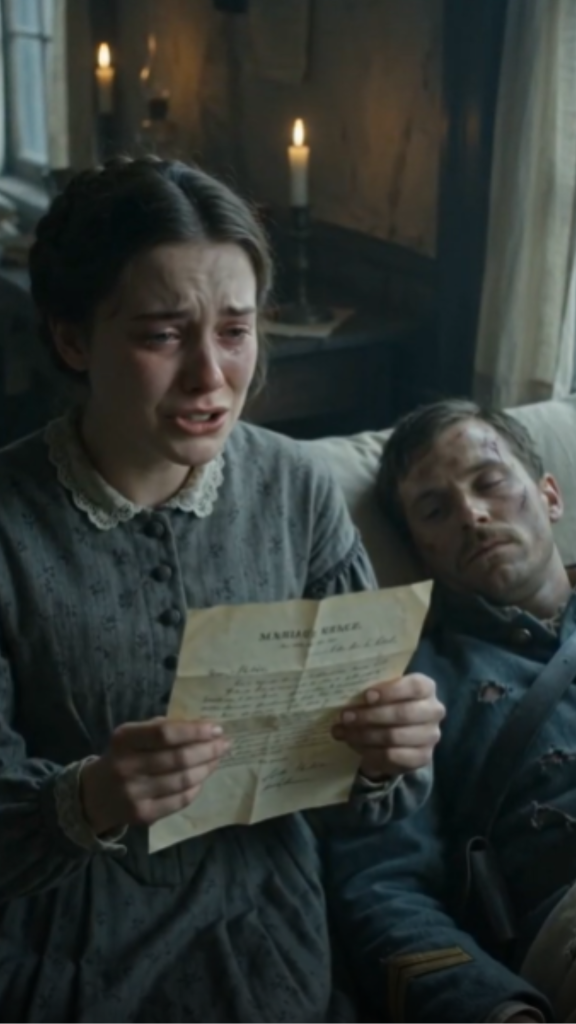


I stumbled back to the infirmary, my mind racing. Sundown. That was barely a few hours away. Thomas would be gone. The evidence in my hands, the truth of his injury, of Silas’s fraud, would mean nothing.
Martha found me in the common room, pacing. George and Eli were out, presumably preparing for Thomas’s transfer. She saw the despair on my face.
“Doctor?” she whispered, her eyes wide with fear. “What’s happening?”
I explained the asylum petition, the judge’s order, the deputy’s imminent arrival. Her face drained of color.
“No,” she breathed, shaking her head. “No, we can’t let them take him. He’s not insane. He’s just… lost.”
“I know,” I said, running a hand through my thin hair. “I have Jedidiah’s ledger. It proves he was in a coma on the date Silas claims. But they won’t even look at it until next month.”
Martha looked around, then grabbed my arm. “Doctor, come with me. To the barn. Now.”
Her urgency was absolute. I followed her, my confusion warring with a sliver of desperate hope. The infirmary barn was dark and cool, smelling of old hay and damp earth. She led me to a small, secluded stall, pulling a loose board from the wall.
Behind it, carefully wrapped in oilskin, was a worn leather-bound Bible. It was small, well-used, and looked like a soldier’s personal item.
“This was Caleb’s,” Martha explained, her voice trembling. “My brother’s. He kept it with him always.”
She opened it to a specific page, worn and creased, tucked inside the Psalms. It wasn’t a religious verse, but a piece of paper, folded and flattened. She pulled it out and handed it to me.
It was a meticulous, handwritten list.
“What is this?” I asked, my eyes straining in the dim light.
“Caleb started it in late ’64,” Martha whispered. “When he was still in the quartermaster depot, before he got sick. He was helping Silas Crain, signing off on paperwork. But then he saw things.”
I held the paper closer. The list contained names, dates, and amounts. Beside each name, in a small, neat script, was the word “Forged.”
“He saw Silas signing other men’s names,” Martha explained, her voice gaining strength. “On discharge papers. On supply requisitions. On promissory notes for land.”
The list was a catalog of Silas Crain’s forgeries, going back to 1864, the very year Hester said he was known for skimming and extortion. It detailed dates, names of soldiers, and the specific documents forged – mostly discharge deeds and land claims.
“Caleb was scared,” Martha continued. “He knew what Silas was doing. He knew Silas was cheating men out of their land grants. So he started keeping his own record. He told me, on his deathbed, to bring this to Kansas. To find Thomas. To make sure no one took his land.”
My breath caught in my throat. “You came here… not for Thomas’s proposal, or for marriage money.”
“No, Doctor,” she said, looking me directly in the eye. “I came for this. Caleb said Thomas was one of the men Silas had targeted, long before his injury. He told me to protect him. To make sure Thomas got his due.”
The “marriage proposal,” authentic in spirit, had been a secondary mission, perhaps even a cover. Martha was not an opportunist; she was carrying out a sacred deathbed promise. She was a guardian, not a claimant.
This list. This was a direct accusation, from a witness who served alongside Silas. It wasn’t just proof of Thomas’s incapacity; it was proof of Silas Crain’s long pattern of criminal deceit.
Caleb Gable, even in death, had delivered the weapon.
More Stories





+ There are no comments
Add yours