
At sixty-eight years old, I took in Major, an eight-year-old retired arson hound left homeless after the county disbanded his unit.



Brody’s threat hung in the air like a storm cloud, but it didn’t break me. It only solidified my resolve. George hadn’t banked on that. He thought money, or the lack of it, would stop me. He was wrong.
My old Station 4 had been decommissioned a decade ago, replaced by a modern complex across town. Now, it stood mostly empty, a ghost of roaring engines and hurried alarms, used mainly for storage. I still had my master key. Old habits.
The night air was damp and cold, a heavy fog rolling in from the creek. Major was asleep in my truck, his arthritic hips protesting long shifts, but his ears twitched as I slipped out. I left him, knowing this was a solo mission.
The main door groaned as I pushed it open. Inside, the station smelled of dust, mildew, and faint, stale smoke from fires long past. My flashlight beam cut through the gloom, dancing over idle fire poles and empty truck bays.
I headed for the storage basement. The steps were concrete, worn smooth, descending into deeper shadows. The air grew colder, heavier. Water dripped somewhere, a slow, rhythmic plink.
The boiler room was in the farthest corner, a maze of ancient pipes and rusted machinery. I remembered Chief Kincaid, a gruff but fair man, always tinkering down here. He called it his “office” when he wanted quiet.
My flashlight swept over the cinderblock wall. It was grimy, covered in cobwebs. But I remembered. A specific block, near a drain pipe, that always seemed a little loose.
I ran my hand along the coarse concrete, feeling for the slight give. There. My fingers found the seam. I braced myself and pulled.
With a grinding scrape, the cinderblock slid out. Behind it, in a small, hollowed-out space, nestled among a few forgotten tools, was a slim, leather-bound ledger. It was covered in a fine layer of dust, but otherwise perfectly preserved.
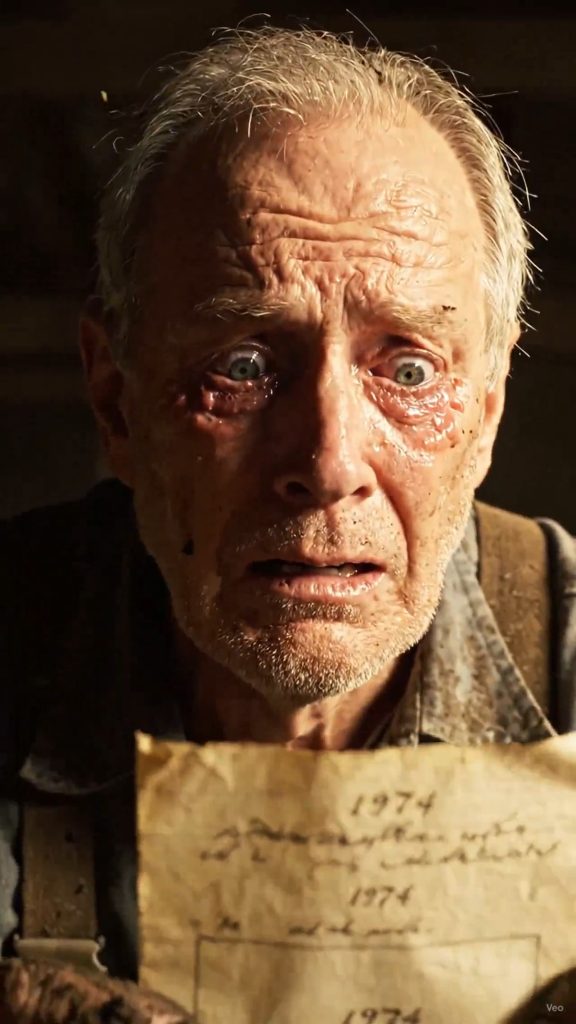
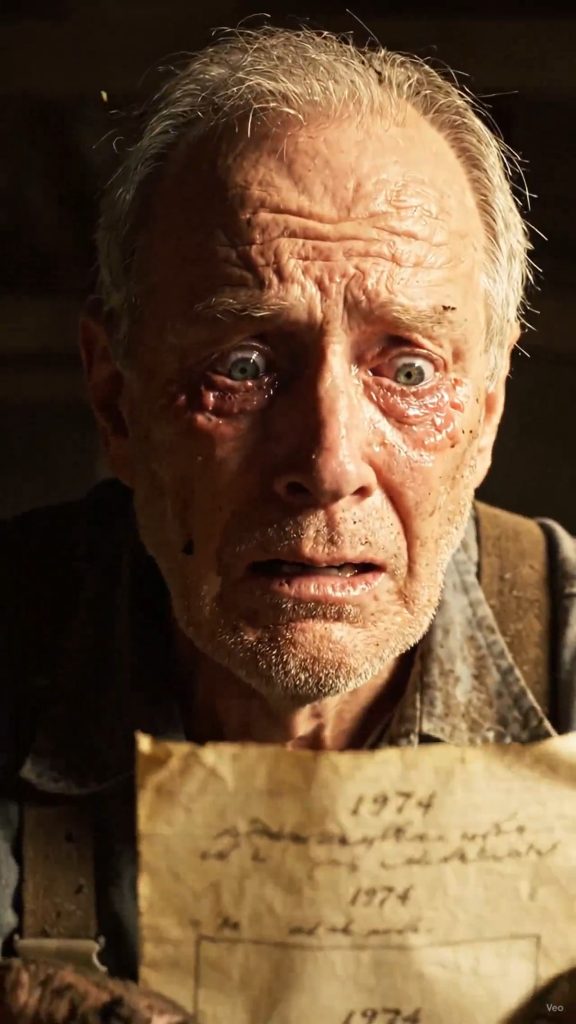
I carefully pulled it free. The leather was dry and cracked, the gold lettering on the spine faded: “Station 4 – 1974.” Kincaid’s ledger.
I carried it back upstairs, to the dim light of an emergency bulb in the old bunk room. My hands trembled slightly as I opened it.
The pages were filled with Kincaid’s precise, looping handwriting. Fire reports, equipment logs, personnel schedules. Then, deeper in, towards the back, marked only with a small “P” in the corner of the page, were entries that made my blood run cold.
“Oct 16, 1974 – Rec’d $12,000 cash from G. Higgins. Re: Pine Creek Timber land incident. Classify as ‘electrical accident’.”
My eyes darted to the next entry, just two weeks later.
“Nov 2, 1974 – Rec’d $10,000 cash from G. Higgins. Follow-up. Assure no further investigation.”
And then, a third, almost a month later.
“Nov 28, 1974 – Rec’d $14,000 cash from G. Higgins. Final payment. Close file. Incident: ‘wiring fault’.”
Three payments. A total of $36,000. For an electrical accident.
The ledger dropped onto the bunk bed beside me, its pages fluttering open. $36,000. That was a fortune in 1974, especially for a fire chief. This wasn’t just Kincaid turning a blind eye. This was a direct, calculated transaction. My father, George, had bought the silence. He hadn’t just arranged the fire; he had meticulously covered his tracks with cash.
I ran my thumb over the neat handwriting, the clinical notes detailing the destruction of my family, reduced to a line item in a bribery scheme. My mother’s letter had revealed the intent. This ledger laid bare the chilling mechanics of the cover-up. It wasn’t an accidental fire; it was a deliberate, paid-for classification.
I understood then that my initial belief, that George had taken me in out of some belated form of remorse, was completely naive. He wasn’t acting out of guilt. He was cementing his control, making sure no one ever questioned his version of events. And he kept me close to ensure he maintained a hold on any potential inherited land rights.
I snapped a dozen photos of the relevant pages with my phone. The camera flash briefly illuminated the dusty room, reflecting in the empty spaces where my childhood had once been. This wasn’t just a scrap of paper. This was concrete evidence. This had to be enough.
More Stories






+ There are no comments
Add yours